TCI C3663, with the CAS number 20999-38-6, is a chemical compound widely used in the research and development of perovskite solar cells (PSCs). This material plays a crucial role in the active layer of PSCs, where it contributes to light absorption and the generation of electric current. Its integration into the cell structure is essential for achieving high-performance photovoltaic devices. In laboratory settings, TCI C3663 is a key component in the pursuit of improved efficiency and stability in solar cell technology, which are central to renewable energy research.
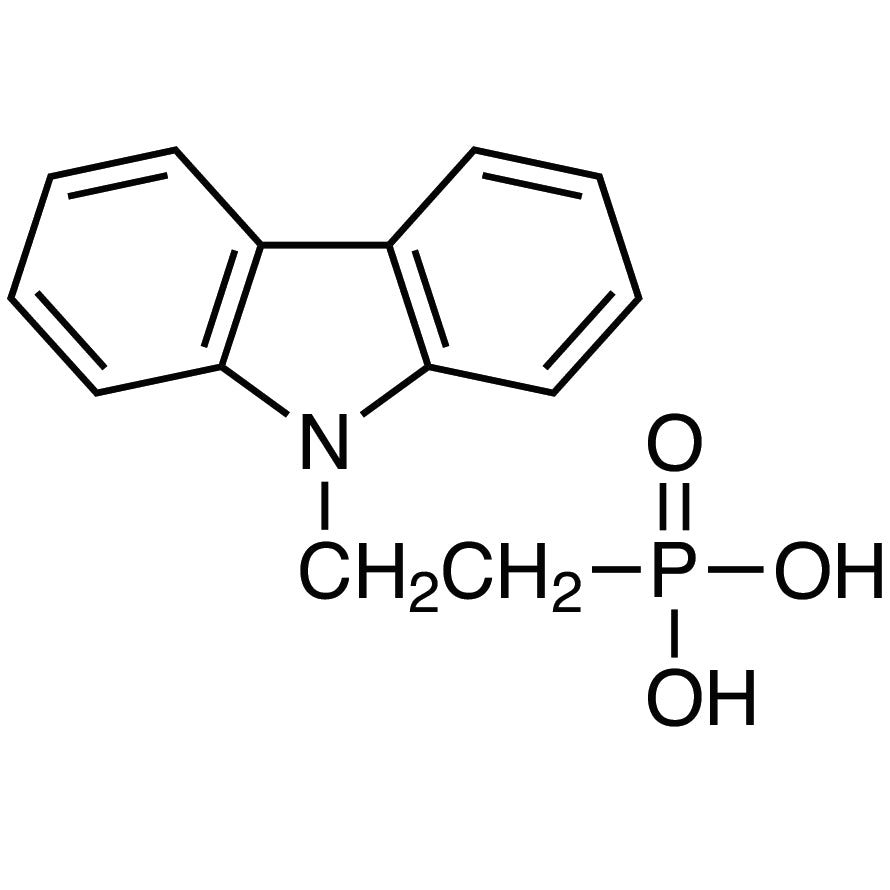
The chemical properties of TCI C3663 make it a preferred choice for researchers. Its stable chemical nature allows it to interact effectively with other materials in perovskite systems. The molecular structure of this compound enables the optimization of optical and electronic properties, which are vital for the performance of solar cells. These characteristics make TCI C3663 a reliable and versatile material for experimental applications in the field of photovoltaics.
In Indonesian laboratories, TCI C3663 is commonly used in research focused on renewable energy and innovative materials. Scientists at educational institutions and research organizations frequently utilize this compound in experiments aimed at enhancing the efficiency and sustainability of solar energy technologies. Its application is particularly relevant in the development of next-generation photovoltaic devices.
Advantages (TCI brochure)
- Enables efficient, versatile and stable solar cell devices without additives, interlayers or dopants
- Self-assembly gives conformal coverage of oxide surfaces, including textured ones
- Simple, scalable and extremely cost-effective processing
TCI brochures (PDF)
- Hole-selective SAM Forming Agent Contributing to Improved Performance of OPVs Cl-2PACz 2024-01-26 · p. 1
- For Highly Efficient Solar Cells, Hole-Selective, Self-Assembled Monolayer (SAM)-Forming Agents 2024-09-02 · p. 1
- n-Type SAM Forming Agent Enabling Efficient Perovskite Solar Cell PANDI 2026-09-10 · p. 2
- SAM Forming Agent Enabling a Superwetting Layer for Uniform Perovskite Formation: MPA-CPA 2026-07-07 · p. 2
- SAM-Forming Agent for Efficient NBG-Type Perovskite Solar Cells: BrNH3-4PACz 2025-10-22 · p. 2
- Carbazoles 2025-06-27 · p. 4
Related TCI products
- TCI Z0037 14320-04-8 Zinc Phthalocyanine (purified by sublimation)
- TCI T3656 952431-34-4 N,N,N',N'-Tetra([1,1'-biphenyl]-4-yl)[1,1':4',1''-terphenyl]-4,4''-diamine
- TCI T3634 189363-47-1 2,2',7,7'-Tetrakis(diphenylamino)-9,9'-spirobi[9H-fluorene]
- TCI T3266 15546-43-7 N,N,N',N'-Tetraphenylbenzidine (purified by sublimation)
- TCI T2233 517-51-1 5,6,11,12-Tetraphenylnaphthacene (purified by sublimation)
- TCI T1812 15546-43-7 N,N,N',N'-Tetraphenylbenzidine
- Perovskite Solar Cell Development: TCI C3663 is ideal for creating and optimizing active layers in PSCs due to its light absorption properties and compatibility with other perovskite materials.
- Material Characterization Studies: Its stable chemical nature makes it suitable for testing interactions with various compounds in perovskite systems, aiding in material optimization.
- Efficiency Enhancement Research: The compound's ability to improve photovoltaic performance supports studies focused on increasing the efficiency of solar cells.
- Stability Testing in Photovoltaic Systems: TCI C3663 is used to evaluate the long-term stability of perovskite-based solar cells under different environmental conditions.
- Renewable Energy Innovation Projects: Its role in developing high-performance solar cells aligns with broader goals in renewable energy research and sustainable technology development.
From the TCI brochure
- Hole-selective layer in p-i-n (inverted) perovskite solar cells
- Silicon/CsMAFA tandem solar cells
- Ternary BHJ organic photovoltaics
| Brand | TCI |
|---|---|
| CAS number | 20999-38-6 |
| Molecular formula | — |
| Purity | — |
| Category | Materials Science > Electronic Materials > Perovskite Solar Cell (PSC) Materials |
| Pack sizes | — |
| Physical form | — |
| Storage | Store in a cool, dry place away from direct sunlight |
Data from the TCI brochure
| PCE CsMAFA | 20.8% (stabilized) |
|---|---|
| PCE MAFA | 21.1% (stabilized) |
| PCE slot-die coated MAPbI3 | 20.8% (stabilized) |
| PCE Silicon/CsMAFA tandem | 27.36% (stabilized) |
| PCE OPV ternary BHJ | 18.03% (stabilized) |
Source: TCI brochure FF092 (2024-09-02)
TCI C3663 should be stored in a cool, dry environment to maintain its chemical stability. It is recommended to use airtight containers to prevent exposure to moisture and air, which could affect its performance. In laboratory settings, it is important to handle the compound with appropriate safety measures, such as using gloves and ensuring proper ventilation. Avoid contact with incompatible materials to prevent any adverse reactions. Regular monitoring of storage conditions ensures the material remains suitable for use in research applications. Proper storage practices help preserve the integrity of the compound and support its effectiveness in experimental work.
—
Produk Terkait
-
ZincPhthalocyanine(purifiedbysublimation) TCI Z0037
Regular price Rp 4.954.950,00Regular priceRp 3.480.750,00Sale price Rp 4.954.950,00 -
N,N,N',N'-Tetra([1,1'-biphenyl]-4-yl)[1,1':4',1''-terphenyl]-4,4''-diamine TCI T3656
Regular price Rp 4.001.550,00Regular priceRp 2.814.000,00Sale price Rp 4.001.550,00 -
2,2',7,7'-Tetrakis(diphenylamino)-9,9'-spirobi[9H-fluorene] TCI T3634
Regular price Rp 4.531.800,00Regular priceRp 3.184.650,00Sale price Rp 4.531.800,00 -
N,N,N',N'-Tetraphenylbenzidine(purifiedbysublimation) TCI T3266
Regular price From Rp 2.173.500,00Regular priceRp 1.535.100,00Sale price From Rp 2.173.500,00 -
5,6,11,12-Tetraphenylnaphthacene(purifiedbysublimation) TCI T2233
Regular price From Rp 2.279.550,00Regular priceRp 1.593.900,00Sale price From Rp 2.279.550,00 -
N,N,N',N'-Tetraphenylbenzidine TCI T1812
Regular price From Rp 2.173.500,00Regular priceRp 1.535.100,00Sale price From Rp 2.173.500,00 -
Bis-PCBM(mixtureofisomers) TCI B4576
Regular price Rp 6.545.700,00Regular priceRp 4.576.950,00Sale price Rp 6.545.700,00 -
Bathophenanthroline(purifiedbysublimation) TCI B2695
Regular price Rp 5.485.200,00Regular priceRp 3.851.400,00Sale price Rp 5.485.200,00