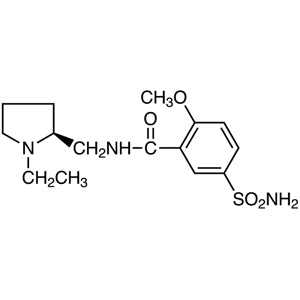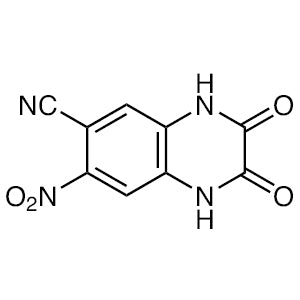
CNQX (Canavanine) is a chemical compound widely used in pharmacological and biochemical research to study the mechanisms of NMDA (N-Methyl-D-Aspartate) receptor function in the brain. As a key reagent in experimental settings, it plays a vital role in understanding neural signaling pathways and their modulation. This compound is essential for researchers aiming to explore the interactions between neurotransmitters and receptor sites, particularly in the context of neuropharmacology. Its versatility makes it a valuable tool in both academic and industrial research environments.
CNQX is favored for its chemical stability under controlled conditions and its solubility in organic solvents such as ethyl acetate and acetone. These properties allow for easy integration into various analytical techniques, including chromatography and spectroscopy. Its reactivity with a range of chemical reagents further enhances its utility in molecular synthesis and modification processes. This combination of stability and reactivity ensures that CNQX remains a reliable choice for laboratory applications.
In Indonesian laboratories, CNQX is commonly used in academic and research institutions focused on neuroscience and pharmacology. It supports studies aimed at understanding neurodegenerative diseases and the development of synthetic-based therapies. Its relevance in both educational and research settings underscores its importance in advancing scientific knowledge in the region.
TCI brochures (PDF)
- Pharmaceutical Ingredients for Research and Experimental Use 2026-03-09 · p. 26
- Neuropharmacological research utilizes CNQX to investigate the effects of stimulants and inhibitors on neural systems, providing insights into drug mechanisms.
- Toxicological studies benefit from CNQX as it aids in assessing the safety and potential side effects of new compounds in experimental models.
- Molecular synthesis applications rely on CNQX due to its reactivity with various reagents, enabling the creation of complex chemical structures.
- Neurological disorder research employs CNQX to explore the role of NMDA receptors in conditions such as Alzheimer’s and Parkinson’s disease.
- Educational institutions use CNQX in teaching and research to train students in biochemical techniques and pharmacological experimentation.
| Brand | TCI |
|---|---|
| CAS number | 115066-14-3 |
| Molecular formula | — |
| Purity | — |
| Category | Life Science > Biochemicals and Reagents > Pharmaceutical Research Reagents |
| Pack sizes | Available in standard laboratory quantities |
| Physical form | Solid or powder, depending on formulation |
| Storage | Store in a cool, dry place away from light and incompatible substances |
CNQX should be stored in a cool, dry environment, away from direct sunlight and sources of heat. It is recommended to keep the compound in a tightly sealed container to prevent moisture absorption and contamination. Due to its chemical reactivity, it should be handled in a well-ventilated area, preferably with appropriate personal protective equipment. Storage should avoid exposure to incompatible substances such as strong oxidizers or acids. Regular inspection of storage conditions is advised to ensure the integrity of the material. Proper labeling and segregation of reagents are essential to maintain a safe laboratory environment.
—
Product Categories
- Biochemicals and ReagentsPharmaceutical Research Reagents (for Experimental Use)Neurotransmitter Agent Ingredients (for Research and Experimental Use)
- Pharmaceutical Development and Drug Discovery ResearchPharmaceutical Research Reagents (for Experimental Use)Neurotransmitter Agent Ingredients (for Research and Experimental Use)
Produk Terkait
-
(S)-(-)-Sulpiride TCI I0821
Regular price Rp 2.252.250,00Regular priceRp 1.590.750,00Sale price Rp 2.252.250,00 -
IpratropiumBromideMonohydrate TCI I0907
Regular price Rp 2.677.500,00Regular priceRp 1.887.900,00Sale price Rp 2.677.500,00 -
AtropineSulfateMonohydrate TCI A0550
Regular price Rp 1.908.900,00Regular priceRp 1.350.300,00Sale price Rp 1.908.900,00 -
Zotepine TCI Z0054
Regular price Rp 6.756.750,00Regular priceRp 4.740.750,00Sale price Rp 6.756.750,00 -
AcetylcholineChloride TCI A0084
Regular price Rp 1.405.950,00Regular priceRp 998.550,00Sale price Rp 1.405.950,00 -
ZiprasidoneHydrochlorideMonohydrate TCI Z0032
Regular price Rp 1.008.000,00Regular priceRp 720.300,00Sale price Rp 1.008.000,00 -
Zolmitriptan TCI Z0024
Regular price Rp 1.776.600,00Regular priceRp 1.257.900,00Sale price Rp 1.776.600,00