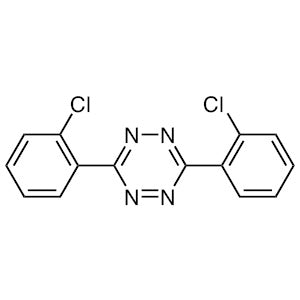
Clofentezine is a chemical compound widely utilized in research within the fields of nutrition and cell biology. As a crystalline solid, it plays a crucial role in laboratory settings by enabling scientists to investigate the effects of compounds on metabolic processes. Its unique pharmacological activity makes it a valuable tool for studying how substances interact with biological systems. This compound is particularly relevant in experiments focused on understanding nutrient metabolism and the physiological responses of organisms to various chemical stimuli.
Clofentezine is preferred due to its chemical stability under specific conditions, which facilitates long-term storage and consistent experimental results. It also exhibits solubility in certain organic solvents, making it versatile for a range of laboratory procedures. These properties ensure that it remains a reliable reagent for researchers seeking to explore the biochemical mechanisms underlying nutrition and cellular function. Its stability and solubility characteristics enhance its usability in both basic and applied research environments.
In Indonesian laboratories, Clofentezine is commonly used in academic and research institutions. It supports studies in nutrition, pharmacology, and biochemistry, particularly in laboratories focused on health and nutritional research. Its application is essential for developing models that simulate metabolic processes and evaluate the impact of compounds on biological systems. The compound’s unique properties make it a key component in advancing scientific understanding in these fields.
TCI brochures (PDF)
- Agrochemical Ingredients for Research and Experimental Use 2026-01-08 · p. 5
- Plant Research Reagents 2026-02-24 · p. 12
- Nutritional Metabolism Studies - Clofentezine is ideal for investigating how compounds affect metabolic pathways in cells, providing insights into nutrient utilization and energy conversion.
- Pharmacological Research - Its pharmacological activity makes it suitable for studying drug interactions and the physiological effects of compounds on biological systems.
- Cellular Biochemistry Experiments - The compound’s solubility and stability support its use in biochemical assays that examine cellular responses to various stimuli.
- Nutrient Absorption Modeling - Clofentezine aids in developing models that simulate nutrient absorption and transport mechanisms within biological systems.
- Health and Nutrition Research - It is frequently used in studies aimed at understanding the impact of dietary compounds on health outcomes and metabolic efficiency.
| Brand | TCI |
|---|---|
| CAS number | 74115-24-5 |
| Molecular formula | — |
| Purity | — |
| Category | Life Science > Cell Biology > Nutrition Research |
| Pack sizes | — |
| Physical form | Crystalline solid |
| Storage | Store in a cool, dry place away from light |
Clofentezine should be stored in a cool, dry environment, away from direct sunlight and moisture. It is recommended to keep the compound in airtight containers to prevent exposure to air and humidity, which could affect its stability. Due to its crystalline form, it is best stored in glass or sealed plastic containers to maintain its integrity. Laboratory personnel should handle the compound with care, using appropriate personal protective equipment such as gloves and safety goggles. It is important to ensure that the storage area is well-ventilated to minimize any potential risks associated with handling chemical substances. Proper storage conditions help preserve the compound’s chemical properties and ensure its effectiveness in research applications.
—
Produk Terkait
-
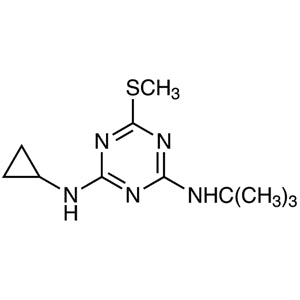
2-(tert-Butylamino)-4-(cyclopropylamino)-6-(methylthio)-1,3,5-triazine TCI I0842
Regular price Rp 1.696.800,00Regular priceRp 1.202.250,00Sale price Rp 1.696.800,00 -
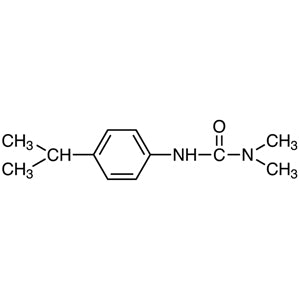
Isoproturon TCI I0843
Regular price Rp 1.351.350,00Regular priceRp 960.750,00Sale price Rp 1.351.350,00 -
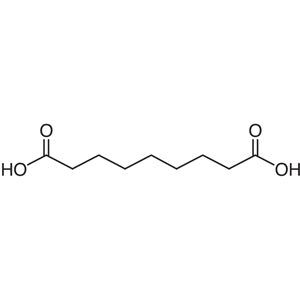
AzelaicAcid TCI A0561
Regular price Rp 557.550,00Regular priceRp 405.300,00Sale price Rp 557.550,00 -
AbieticAcid TCI A0001
Regular price Rp 1.563.450,00Regular priceRp 1.108.800,00Sale price Rp 1.563.450,00 -
Sulfentrazone TCI U0110
Regular price Rp 2.464.350,00Regular priceRp 1.738.800,00Sale price Rp 2.464.350,00 -
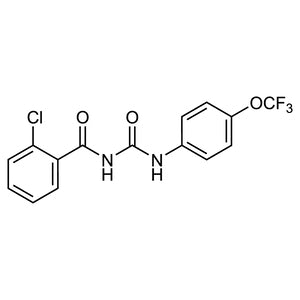
Triflumuron TCI T4364
Regular price Rp 1.272.600,00Regular priceRp 905.100,00Sale price Rp 1.272.600,00 -
Tralopyril TCI T4109
Regular price Rp 2.782.500,00Regular priceRp 1.961.400,00Sale price Rp 2.782.500,00 -
Tribenuron-methyl TCI T4085
Regular price Rp 2.411.850,00Regular priceRp 1.702.050,00Sale price Rp 2.411.850,00