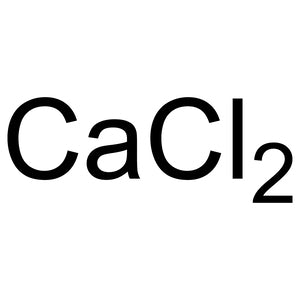
Calcium pyrophosphate is an inorganic compound widely utilized in chemical reactions and catalytic processes within laboratory settings. It serves as a versatile reagent or catalyst in both organic and inorganic synthesis, offering stability under various reaction conditions. Its crystalline structure provides a solid foundation for controlled chemical interactions, making it a reliable component in experimental protocols. This compound is particularly valued for its ability to support complex chemical transformations without undergoing significant degradation.
The chemical properties of calcium pyrophosphate make it a preferred choice in laboratory environments. It exhibits chemical inertness under normal conditions, which ensures it does not interfere with other reagents. However, it can react with strong acids or bases when required, allowing for its use in specific reaction pathways. Its high thermal and pressure resistance further enhances its suitability for applications requiring stability under extreme conditions. These characteristics contribute to its reliability in both academic and industrial research.
In Indonesian laboratories, calcium pyrophosphate is commonly used in pure chemical research and industrial applications. Its availability and consistent chemical behavior make it a go-to material for researchers and practitioners. It is frequently employed in academic institutions and industries for its predictable performance and wide range of applicability. Its role in supporting diverse chemical processes underscores its importance in the Indonesian scientific community.
Related TCI products
- Organic synthesis reactions benefit from calcium pyrophosphate due to its stable structure and catalytic properties.
- Inorganic compound preparation often uses calcium pyrophosphate as a reagent for controlled chemical transformations.
- Catalytic processes in material science research rely on calcium pyrophosphate for its inertness and reactivity under specific conditions.
- Industrial chemical applications utilize calcium pyrophosphate for its durability and resistance to extreme environments.
- Research in new material development leverages calcium pyrophosphate for its unique chemical behavior and stability.
| Brand | TCI |
|---|---|
| CAS number | 7790-76-3 |
| Molecular formula | — |
| Purity | — |
| Category | Chemistry > Catalysis and Inorganic Chemistry > Main-group Elements |
| Pack sizes | Available in various quantities as per standard laboratory supply |
| Physical form | Solid crystalline powder |
| Storage | Store in a cool, dry place away from moisture and direct sunlight |
Calcium pyrophosphate should be stored in a cool, dry environment to maintain its chemical integrity. It is recommended to keep it in airtight containers to prevent exposure to moisture and contaminants. Due to its inert nature, it does not require special handling under normal laboratory conditions. However, it is advisable to avoid direct contact with strong acids or bases unless intended for a specific reaction. Proper labeling and storage in a designated chemical cabinet are essential for safety and accessibility. Regular inspection of storage conditions ensures the compound remains stable and suitable for use in laboratory experiments.
—
Produk Terkait
-
PotassiumPyrophosphate TCI P3418
Regular price Rp 1.035.300,00Regular price -
SodiumPyrophosphate TCI O0748
Regular price From Rp 505.050,00Regular price -
MagnesiumPyrophosphate TCI M4065
Regular price From Rp 848.400,00Regular price -
Bis(tetrabutylammonium)DihydrogenPyrophosphate TCI B5440
Regular price From Rp 4.240.950,00Regular price -
TetrabenzylPyrophosphate TCI P1223
Regular price Rp 2.016.000,00Regular price -
CalciumL-Threonate TCI T1799
Regular price Rp 1.298.850,00Regular price -
CalciumMethanesulfonate TCI M0549
Regular price From Rp 2.782.500,00Regular price -
CalciumChlorideAnhydrous(Powder) TCI C4209
Regular price Rp 689.850,00Regular price