TCI D0633 Dimethyl Acetal is the trade name for acetaldehyde dimethyl acetal, also known as 1,1-dimethoxyethane. It is a derivative of acetaldehyde in which the carbonyl group has been converted into an acetal carrying two methoxy groups. In the laboratory it serves as a non-heterocyclic building block and as an easier-to-handle source of acetaldehyde. It is also used as a reagent for forming acetals and for acetal exchange (transacetalization) in organic synthesis, which makes it useful across a wide range of synthetic routes.
The main advantage of an acetal is how it behaves under different conditions. It stays stable under basic and neutral conditions but readily releases its parent aldehyde under aqueous acidic conditions. This makes dimethyl acetal a practical way to generate acetaldehyde in a controlled manner inside a reaction mixture, so chemists do not have to handle free acetaldehyde, which is highly volatile. The compound can also introduce an ethylidene group to protect diols, which makes it valuable in carbohydrate chemistry and in the synthesis of polyhydroxy compounds. These properties give researchers a predictable reagent that fits well into multistep protection and deprotection strategies.
In Indonesia, this material is relevant to organic synthesis laboratories at universities, where students and researchers study acetal chemistry, carbonyl protection, and building-block strategies. Pharmaceutical research laboratories that need functional-group protection strategies can use it when designing synthetic routes to complex molecules containing several hydroxyl groups. Flavour and aroma laboratories also find it relevant because of its close relationship to acetaldehyde. AMI Scientific supplies this TCI reagent to support these research, teaching, and development activities in laboratories across the country.
Related TCI products
- TCI B1901 36255-44-4 3-Bromopropionaldehyde Dimethyl Acetal
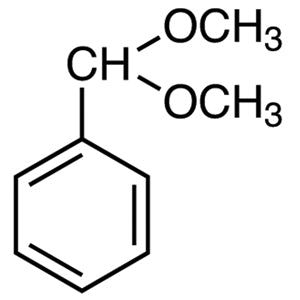
- TCI B1197 1125-88-8 Benzaldehyde Dimethyl Acetal
- TCI B1097 7252-83-7 Bromoacetaldehyde Dimethyl Acetal (stabilized with K2CO3)
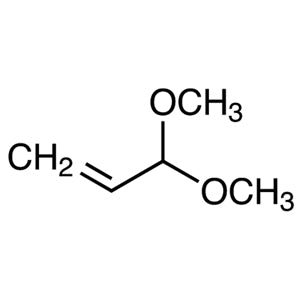
- TCI A2455 6044-68-4 Acrolein Dimethyl Acetal
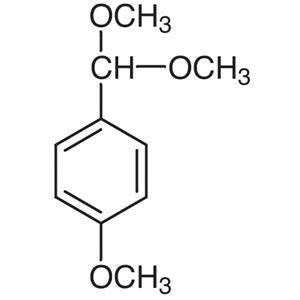
- TCI A1247 2186-92-7 p-Anisaldehyde Dimethyl Acetal
- TCI A0801 22483-09-6 Aminoacetaldehyde Dimethyl Acetal
- Controlled acetaldehyde generation: the acetal releases acetaldehyde under aqueous acidic conditions, so chemists can produce the aldehyde inside the reaction mixture without handling the highly volatile free aldehyde.
- Acetal formation and transacetalization: the compound acts as a reagent for forming acetals and exchanging acetal groups, which is a common step in multistep organic synthesis routes.
- Diol protection with an ethylidene group: it introduces an ethylidene group that protects diols, giving chemists a stable protecting group under basic and neutral conditions that can be removed in acid.
- Carbohydrate chemistry and polyhydroxy compound synthesis: its ability to protect diols makes it useful for sugars and other molecules with several hydroxyl groups that need selective modification.
- Non-heterocyclic building block in research synthesis: university and pharmaceutical research laboratories use it as a simple acetaldehyde-derived building block when designing and testing new synthetic routes.
| Brand | TCI (product code D0633) |
|---|---|
| CAS number | 534-15-6 |
| Molecular formula | — |
| Purity | — |
| Category | Chemistry > Building Blocks > Non-Heterocyclic Building Blocks |
| Pack sizes | see the available options on the product page |
| Physical form | — |
| Storage | keep tightly closed in a cool, dry, well-ventilated area away from acids and ignition sources |
- Chemical identity: acetaldehyde dimethyl acetal (1,1-dimethoxyethane)
Store the product in its original, tightly sealed container in a cool, dry, well-ventilated area, away from heat, sparks, open flames, and other ignition sources. Keep it separate from acids and strong oxidizing agents, because acidic moisture can hydrolyze the acetal and release volatile acetaldehyde. Handle it in a fume hood and wear safety glasses, chemical-resistant gloves, and a laboratory coat. Keep containers closed when not in use to limit evaporation and moisture uptake. Use clean, dry glassware, and always read the supplier's Safety Data Sheet before use for detailed hazard, first-aid, and disposal information. Dispose of waste according to institutional and local regulations.
—
Produk Terkait
-
3-BromopropionaldehydeDimethylAcetal TCI B1901
Regular price From Rp 2.359.350,00Regular priceRp 1.649.550,00Sale price From Rp 2.359.350,00 -
BenzaldehydeDimethylAcetal TCI B1197
Regular price From Rp 477.750,00Regular priceRp 333.900,00Sale price From Rp 477.750,00 -
BromoacetaldehydeDimethylAcetal(stabilizedwithK2CO3) TCI B1097
Regular price From Rp 1.298.850,00Regular priceRp 908.250,00Sale price From Rp 1.298.850,00 -
AcroleinDimethylAcetal TCI A2455
Regular price From Rp 2.757.300,00Regular priceRp 1.927.800,00Sale price From Rp 2.757.300,00 -
p-AnisaldehydeDimethylAcetal TCI A1247
Regular price From Rp 1.803.900,00Regular priceRp 1.261.050,00Sale price From Rp 1.803.900,00 -
AminoacetaldehydeDimethylAcetal TCI A0801
Regular price Rp 1.590.750,00Regular priceRp 1.127.700,00Sale price Rp 1.590.750,00 -
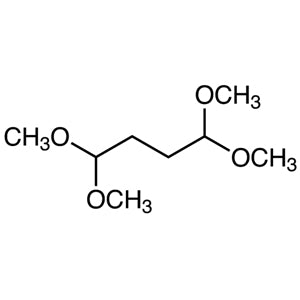
SuccinaldehydeBis(dimethylAcetal) TCI S0371
Regular price From Rp 2.439.150,00Regular priceRp 1.705.200,00Sale price From Rp 2.439.150,00 -
PyruvicAldehydeDimethylAcetal TCI P1264
Regular price From Rp 1.618.050,00Regular priceRp 1.146.600,00Sale price From Rp 1.618.050,00