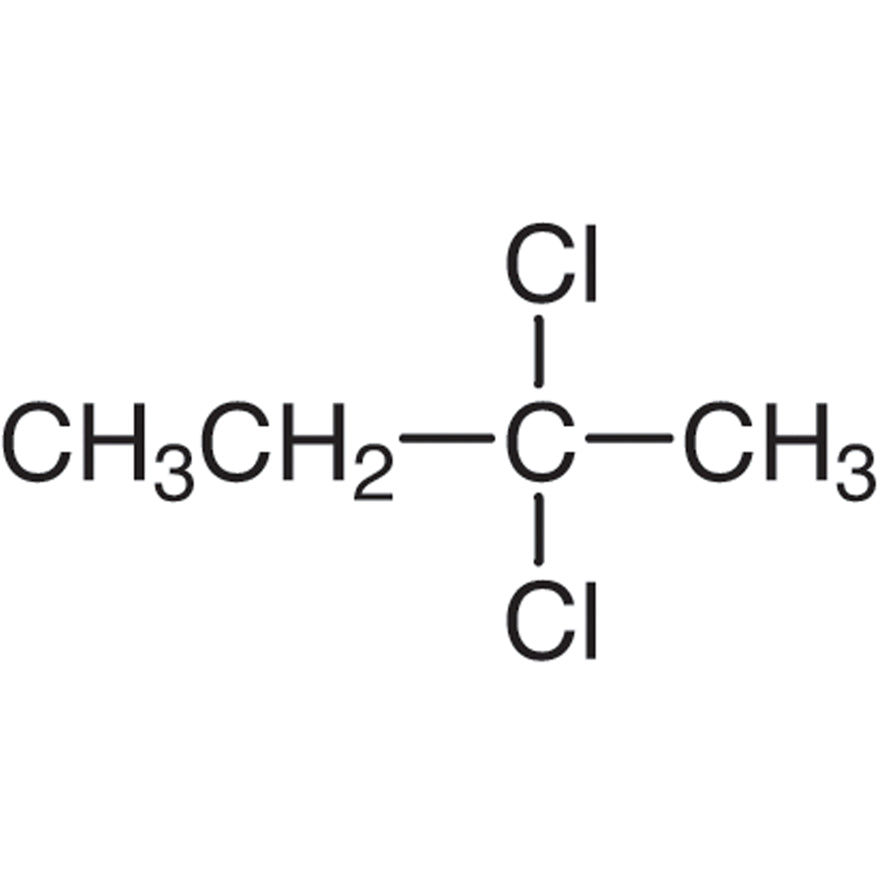
2,2-Dichlorobutane is an organic chemical compound widely used in various laboratory reactions. As a key component in chemical synthesis, it serves as a building block for creating more complex organic molecules. Its simple molecular structure allows for versatile chemical transformations, making it a valuable resource in synthetic chemistry. This compound is particularly useful in halogenation reactions, where it can be modified through substitution or elimination processes to produce a wide range of derivatives. Its role in laboratory settings extends to both research and educational environments, where it supports the development of new materials and the understanding of chemical behavior.
The compound's low polarity and high volatility make it an ideal candidate for processes requiring evaporation and separation. These physical properties enhance its usability in experimental setups that demand efficiency and precision. Additionally, its reactivity and stability under controlled conditions contribute to its popularity among chemists. The ease with which it can be manipulated in various reaction conditions ensures that it remains a reliable and practical choice for a wide range of chemical applications.
In Indonesian laboratories, 2,2-Dichlorobutane is commonly used in organic synthesis, chemical analysis, and the development of new materials. It is frequently found in university-level experiments and research projects, supporting both academic and industrial chemical investigations. Its availability and reliability make it a standard component in many laboratory workflows, particularly in fields that require precise chemical manipulation and synthesis.
- Organic synthesis: 2,2-Dichlorobutane is widely used in organic synthesis due to its reactivity and ability to undergo substitution and elimination reactions.
- Chemical analysis: It serves as a reference compound in analytical chemistry for testing and calibration of instruments.
- Material development: Its versatility allows it to be used in the synthesis of new materials, including polymers and pharmaceuticals.
- Educational experiments: It is commonly used in university-level chemistry courses to demonstrate halogenation and substitution reactions.
- Industrial research: It supports research in the chemical industry for the development of new compounds and processes.
| Brand | TCI |
|---|---|
| CAS number | 4279-22-5 |
| Molecular formula | — |
| Purity | — |
| Category | Chemistry > Building Blocks > Non-Heterocyclic Building Blocks |
| Pack sizes | Available in various quantities as per standard laboratory supply |
| Physical form | Liquid |
| Storage | Store in a cool, dry, and well-ventilated area away from direct sunlight |
2,2-Dichlorobutane should be stored in a cool, dry, and well-ventilated area, away from direct sunlight and sources of heat. It is recommended to use sealed containers made of materials compatible with its chemical properties, such as glass or high-density polyethylene. Due to its high volatility, it should be handled in a fume hood to minimize exposure. Always ensure proper ventilation when working with this compound. Avoid contact with skin and eyes, and use appropriate personal protective equipment. Keep the container tightly closed when not in use to prevent evaporation and contamination. Ensure that storage areas are secure and inaccessible to unauthorized personnel.
—
Produk Terkait
-
2,3-Dichlorobutane TCI D6276
Regular price Rp 3.738.000,00Regular price -
1,4-Dichlorobutane TCI D0349
Regular price From Rp 505.050,00Regular price -
1,3-Dichlorobutane TCI D0348
Regular price Rp 1.670.550,00Regular price -
1,2-Dichlorobutane TCI D0347
Regular price From Rp 1.167.600,00Regular price -
2-Chlorobutane TCI C0143
Regular price From Rp 1.035.300,00Regular price -
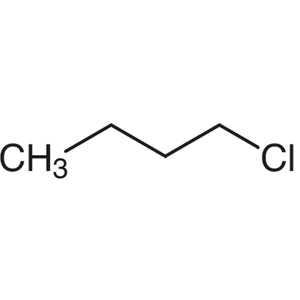
1-Chlorobutane TCI C0142
Regular price From Rp 452.550,00Regular price -
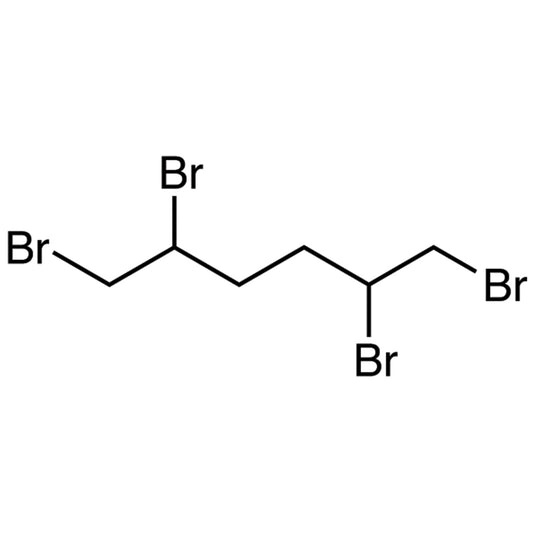
1,2,5,6-Tetrabromohexane(mixtureofdiastereoisomers) TCI T2983
Regular price From Rp 3.367.350,00Regular price -
1,1,1,3-Tetrachloropropane TCI T2426
Regular price Rp 1.856.400,00Regular price