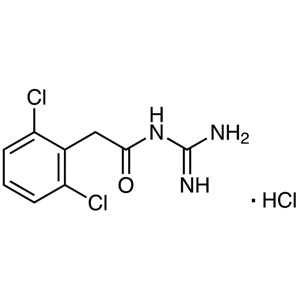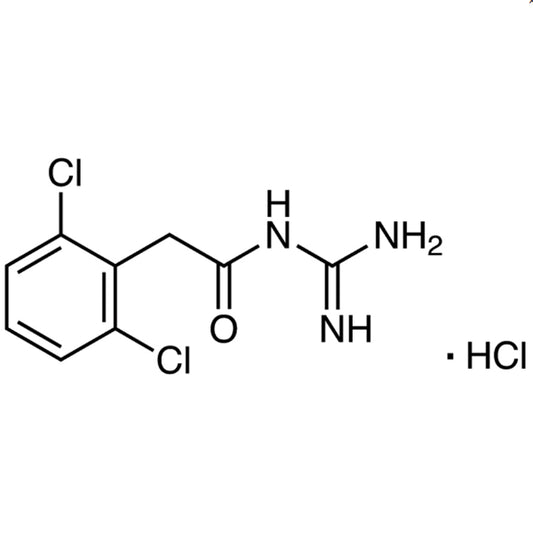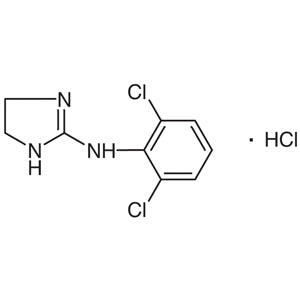
Clonidine Hydrochloride is a chemical compound widely used in pharmacological and biochemical research. It plays a crucial role in laboratory settings, particularly in studies related to the central nervous system, including investigations into blood pressure regulation and neurological responses. As a pharmaceutical research reagent, it is essential for drug testing and therapeutic development, offering researchers a reliable tool to explore the mechanisms of various medications. Its application extends to clinical research, where it helps in understanding the effects of drugs on the nervous system and their potential therapeutic applications.
The compound is favored for its chemical stability, high purity, and consistent quality across all packaging units. These properties make it ideal for experiments requiring precision and reliability. Clonidine Hydrochloride is a solid, white substance with good solubility in organic solvents, which enhances its versatility in different experimental setups. Its non-toxic nature at specific dosages also makes it a safe choice for research involving safe and effective therapeutic applications.
In Indonesian laboratories, Clonidine Hydrochloride is a vital component in pharmacological and biomedical studies. It is commonly used by scientists and researchers to analyze the effects of drugs on the central nervous system, contributing to advancements in medical science. Its availability and reliability ensure that it remains a preferred choice for both academic and industrial research in the region.
TCI brochures (PDF)
- Pharmaceutical Ingredients for Research and Experimental Use 2026-03-09 · p. 20
- Pharmacological research involving central nervous system activity due to its ability to modulate blood pressure and neurological responses.
- Development of therapeutic agents for hypertension and neurological disorders as it interacts with specific receptors in the brain.
- Clinical trials focused on drug efficacy and safety, where precise dosing and controlled environments are essential.
- Biochemical experiments that require a stable and pure compound for accurate results and reproducibility.
- Medical research into neurological conditions, leveraging its role in regulating autonomic functions and neurotransmitter activity.
| Brand | TCI |
|---|---|
| CAS number | 4205-91-8 |
| Molecular formula | — |
| Purity | — |
| Category | Life Science > Biochemicals and Reagents > Pharmaceutical Research Reagents |
| Pack sizes | Available in various quantities as per standard laboratory requirements |
| Physical form | Solid, white powder |
| Storage | Store in a cool, dry place away from light and moisture |
Clonidine Hydrochloride should be stored in a cool, dry environment, away from direct sunlight and moisture to maintain its chemical stability. It is recommended to use airtight containers to prevent exposure to humidity and contaminants. Since it is a solid and non-toxic at specified dosages, general laboratory safety protocols apply, including proper labeling and secure storage. Researchers should handle the compound with care, using appropriate personal protective equipment when necessary. Its high purity and consistent quality ensure that it remains a reliable reagent for experimental use, provided it is stored under suitable conditions.
—
Product Categories
- Biochemicals and ReagentsPharmaceutical Research Reagents (for Experimental Use)Antihypertensive Ingredients (for Research and Experimental Use)
- Biochemicals and ReagentsPharmaceutical Research Reagents (for Experimental Use)Neurotransmitter Agent Ingredients (for Research and Experimental Use)
- Biochemicals and Reagents
- Pharmaceutical Development and Drug Discovery ResearchPharmaceutical Research Reagents (for Experimental Use)Antihypertensive Ingredients (for Research and Experimental Use)
- Pharmaceutical Development and Drug Discovery ResearchPharmaceutical Research Reagents (for Experimental Use)Neurotransmitter Agent Ingredients (for Research and Experimental Use)
Produk Terkait
-
GuanfacineHydrochloride TCI G0414
Regular price From Rp 2.571.450,00Regular price -
Isradipine TCI I0876
Regular price Rp 7.659.750,00Regular price -
Irbesartan TCI I0859
Regular price From Rp 955.500,00Regular price -
VerapamilHydrochloride TCI V0118
Regular price From Rp 1.565.550,00Regular price -
Valsartan TCI V0112
Regular price From Rp 1.035.300,00Regular price -
TimololMaleate TCI T2905
Regular price Rp 3.525.900,00Regular price -
Telmisartan TCI T2861
Regular price From Rp 1.961.400,00Regular price -
Tetrabenazine TCI T2839
Regular price From Rp 2.969.400,00Regular price