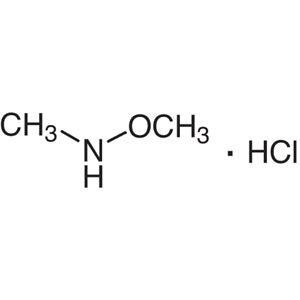
N,O-Dimethylhydroxylamine Hydrochloride is a chemical compound widely used in laboratory settings for organic synthesis reactions. It serves as a versatile building block in the creation of complex organic molecules and heterocyclic compounds. This reagent plays a crucial role in substitution and oxidation reactions, making it an essential component in synthetic chemistry workflows. Its ability to participate in various reaction mechanisms allows chemists to design and execute a wide range of chemical transformations with high efficiency and selectivity.
The compound is known for its stability in solid form and its solubility in organic solvents such as ethyl acetate and acetone. These properties make it particularly suitable for reactions that require the use of organic solvents. Its reactivity and solubility characteristics ensure that it can be effectively integrated into diverse experimental setups. Additionally, its relatively safe handling profile under normal conditions contributes to its popularity among laboratory professionals.
In Indonesian laboratories, N,O-Dimethylhydroxylamine Hydrochloride is commonly used in both fundamental and applied chemical research. Educational and research institutions rely on this compound for specific chemical reactions that are critical to their experimental protocols. Its availability in the local market makes it a practical choice for laboratory needs, supporting both academic and industrial chemical studies.
TCI brochures (PDF)
- MAC-TBS Reagent Useful for Three-component Reactions 2025-04-18 · p. 1
Related TCI products
- TCI B4780 85006-25-3 N,O-Bis(tert-butoxycarbonyl)hydroxylamine
- TCI B4589 39684-28-1 O-(tert-Butyl)hydroxylamine Hydrochloride
- TCI B1700 57497-39-9 N-(tert-Butyl)hydroxylamine Hydrochloride
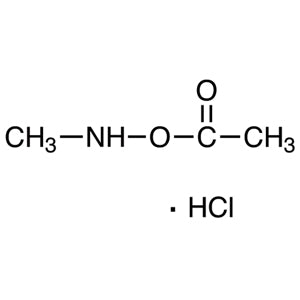
- TCI A2365 19689-95-3 O-Acetyl-N-methylhydroxylamine Hydrochloride
- TCI M0886 593-56-6 O-Methylhydroxylamine Hydrochloride (ca 40% in Water, ca 54mol/L)
- TCI M0804 4229-44-1 N-Methylhydroxylamine Hydrochloride
- Heterocyclic Compound Synthesis: This compound is ideal for creating heterocyclic structures due to its reactivity and ability to participate in various reaction mechanisms.
- Organic Reaction Optimization: Its solubility in organic solvents makes it suitable for reactions requiring efficient mixing and dissolution of reactants.
- Oxidation Reactions: The compound’s reactivity supports oxidation processes, enabling the synthesis of complex organic molecules with high yield.
- Substitution Reactions: Its role in substitution reactions allows for the selective modification of organic molecules, enhancing the versatility of synthetic pathways.
- Educational Research Experiments: It is frequently used in academic settings to teach and demonstrate key chemical reaction principles and synthetic techniques.
| Brand | TCI |
|---|---|
| CAS number | 6638-79-5 |
| Molecular formula | — |
| Purity | — |
| Category | Chemistry > Building Blocks > Non-Heterocyclic Building Blocks |
| Pack sizes | Available in various quantities as per standard laboratory supply formats |
| Physical form | Solid |
| Storage | Store in a cool, dry place away from direct sunlight and moisture |
Data from the TCI brochure
| Kemasan | 25g / 100g / 500g |
|---|
Source: TCI brochure RR113 (2025-04-18)
This compound should be stored in a cool, dry environment to maintain its stability and reactivity. It is recommended to use airtight containers to prevent moisture absorption and contamination. Proper labeling of storage containers is essential to ensure safe handling and easy identification. Due to its chemical nature, it should be handled with appropriate personal protective equipment, such as gloves and safety goggles, to minimize exposure. Regular inspection of storage conditions and containers is advised to maintain the integrity of the compound. Always ensure that the compound is kept away from incompatible materials to prevent any potential chemical interactions.
References cited in the TCI brochure
- Hisao Nemoto. Direct One-Pot Synthesis of α-Siloxy-Weinreb Amides from Aldehydes The Journal of Organic Chemistry, 2007. doi:10.1021/jo701859a
Produk Terkait
-
N,O-Bis(tert-butoxycarbonyl)hydroxylamine TCI B4780
Regular price From Rp 1.378.650,00Regular price -
O-(tert-Butyl)hydroxylamineHydrochloride TCI B4589
Regular price From Rp 2.597.700,00Regular price -
N-(tert-Butyl)hydroxylamineHydrochloride TCI B1700
Regular price From Rp 1.326.150,00Regular price -
O-Acetyl-N-methylhydroxylamineHydrochloride TCI A2365
Regular price From Rp 2.571.450,00Regular price -
O-MethylhydroxylamineHydrochloride(ca40%inWater,ca54mol/L) TCI M0886
Regular price Rp 1.485.750,00Regular price -
N-MethylhydroxylamineHydrochloride TCI M0804
Regular price From Rp 1.988.700,00Regular price -
O-MethylhydroxylamineHydrochloride TCI M0343
Regular price From Rp 1.431.150,00Regular price -
HydroxylamineHydrochloride TCI H1581
Regular price From Rp 477.750,00Regular price