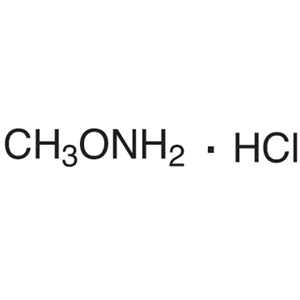
O-Methylhydroxylamine Hydrochloride (OMHCl) is a chemical compound widely used in laboratory settings for the synthesis of complex molecules. It serves as a key reagent in organic chemistry, particularly in reactions involving nitrogen-containing compounds. OMHCl is commonly utilized in the preparation of heterocyclic structures and other nitrogen-based molecules, making it an essential building block for chemists. Its versatility allows it to participate in various reaction mechanisms, including substitution and nucleophilic reactions, contributing to the development of new chemical compounds.
The chemical properties of OMHCl make it a preferred choice for researchers. It exhibits stability under certain conditions while remaining highly reactive in others, which is crucial for its application in synthetic processes. Its molecular structure is simple yet effective, enabling it to act as a reactive intermediate in a wide range of chemical transformations. The reactivity of OMHCl allows it to be a valuable reagent in reactions requiring high reactivity, making it a staple in both academic and industrial laboratories.
In Indonesian laboratories, OMHCl is extensively used in chemical research, especially in organic synthesis and analytical chemistry. It is particularly relevant for educational institutions and research centers that focus on the development of new compounds and the study of chemical reactions. Its availability in various packaging options ensures ease of use across different experimental scales, supporting both small-scale research and larger chemical processes.
Related TCI products
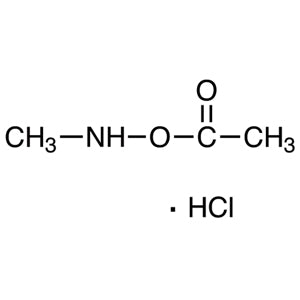
- TCI A2365 19689-95-3 O-Acetyl-N-methylhydroxylamine Hydrochloride
- TCI M0886 593-56-6 O-Methylhydroxylamine Hydrochloride (ca 40% in Water, ca 54mol/L)
- TCI M0804 4229-44-1 N-Methylhydroxylamine Hydrochloride
- TCI B4780 85006-25-3 N,O-Bis(tert-butoxycarbonyl)hydroxylamine
- TCI B4589 39684-28-1 O-(tert-Butyl)hydroxylamine Hydrochloride
- TCI B1700 57497-39-9 N-(tert-Butyl)hydroxylamine Hydrochloride
- Organic synthesis where nitrogen-containing compounds are required due to its role in forming heterocyclic structures.
- Nucleophilic substitution reactions where OMHCl acts as a reactive intermediate for the creation of new chemical bonds.
- Analytical chemistry applications for the detection and quantification of nitrogen-based compounds in complex mixtures.
- Research in medicinal chemistry for the development of pharmaceutical compounds involving nitrogen functionalities.
- Teaching and experimental setups in Indonesian universities for demonstrating key chemical reaction mechanisms.
| Brand | TCI |
|---|---|
| CAS number | 593-56-6 |
| Molecular formula | — |
| Purity | — |
| Category | Chemistry > Building Blocks > Non-Heterocyclic Building Blocks |
| Pack sizes | Available in various sizes to suit different experimental needs |
| Physical form | White crystalline solid |
| Storage | — |
OMHCl should be stored in a cool, dry place away from direct sunlight and sources of heat. It is recommended to keep the material in a tightly sealed container to prevent moisture absorption, which can affect its reactivity. Due to its high reactivity, it should be handled in a well-ventilated area, preferably under a fume hood, to minimize exposure. Avoid contact with incompatible substances such as strong oxidizing agents. Always use appropriate personal protective equipment, including gloves and safety goggles, when handling this compound. Proper storage and handling ensure the stability and effectiveness of OMHCl in laboratory applications.
—
Produk Terkait
-
O-Acetyl-N-methylhydroxylamineHydrochloride TCI A2365
Regular price From Rp 2.571.450,00Regular price -
O-MethylhydroxylamineHydrochloride(ca40%inWater,ca54mol/L) TCI M0886
Regular price Rp 1.485.750,00Regular price -
N-MethylhydroxylamineHydrochloride TCI M0804
Regular price From Rp 1.988.700,00Regular price -
N,O-Bis(tert-butoxycarbonyl)hydroxylamine TCI B4780
Regular price From Rp 1.378.650,00Regular price -
O-(tert-Butyl)hydroxylamineHydrochloride TCI B4589
Regular price From Rp 2.597.700,00Regular price -
N-(tert-Butyl)hydroxylamineHydrochloride TCI B1700
Regular price From Rp 1.326.150,00Regular price -
HydroxylamineHydrochloride TCI H1581
Regular price From Rp 477.750,00Regular price -
HydroxylamineSulfate TCI H0196
Regular price From Rp 477.750,00Regular price