2,6-Difluorobenzamide is a chemical compound widely used as a foundational building block in the synthesis of complex organic molecules. It plays a crucial role in laboratory settings, particularly in the development of new compounds in pharmaceutical and materials science research. This compound is commonly employed in chemical reactions that involve fluorine substitution on aromatic structures, making it an essential reagent for synthetic chemists. Its versatility allows it to participate in various reaction types, including substitution and covalent bonding, which are fundamental in creating functionalized derivatives.
The compound is valued for its chemical stability under specific reaction conditions and its ability to interact with a wide range of functional groups. These properties make it a preferred choice for researchers seeking reliable and predictable outcomes in their synthetic processes. Its relatively neutral chemical nature further simplifies handling and manipulation in laboratory environments, contributing to its widespread use. Additionally, its consistent performance across different experimental setups enhances its reliability in both academic and industrial research.
In Indonesian laboratories, 2,6-Difluorobenzamide is extensively utilized in scientific research, particularly by chemists and pharmacologists. It is an integral component of experiments aimed at developing new compounds with specific properties. Its availability in the local market ensures easy access for researchers, supporting ongoing studies and innovation in the field of organic chemistry.
TCI brochures (PDF)
- Fluorination Reagents, Fluorinated Building Blocks 2026-03-18 · p. 30
- Organic synthesis applications benefit from 2,6-Difluorobenzamide due to its ability to participate in substitution reactions and form stable intermediates.
- Pharmaceutical research utilizes this compound for the development of new drug molecules through functional group modification and structural diversification.
- Materials science experiments rely on 2,6-Difluorobenzamide to create fluorinated compounds with unique physical and chemical properties.
- Analytical chemistry uses this compound as a reference standard for spectroscopic and chromatographic analyses.
- Environmental studies incorporate 2,6-Difluorobenzamide to investigate the behavior and degradation of fluorinated compounds in different matrices.
| Brand | TCI |
|---|---|
| CAS number | 18063-03-1 |
| Molecular formula | — |
| Purity | — |
| Category | Chemistry > Building Blocks > Fluorinated Building Blocks |
| Pack sizes | Available in various quantities as per standard laboratory requirements |
| Physical form | Solid |
| Storage | Store in a cool, dry place away from light and moisture |
2,6-Difluorobenzamide should be stored in a cool, dry environment to maintain its chemical stability. It is recommended to keep it in a tightly sealed container to prevent moisture absorption and contamination. The compound is generally non-hazardous under normal laboratory conditions but should be handled with care to avoid direct contact with skin or eyes. It is advisable to use appropriate personal protective equipment, such as gloves and safety goggles, when handling this material. Proper labeling of storage containers is essential for safety and identification purposes. Regular inspection of storage conditions ensures the compound remains in optimal condition for use in research applications.
—
Produk Terkait
-
2-Amino-5-fluorobenzamide TCI A3181
Regular price Rp 1.458.450,00Regular price -
4-Amino-2,3,5,6-tetrafluorobenzamide TCI A0949
Regular price From Rp 769.650,00Regular price -
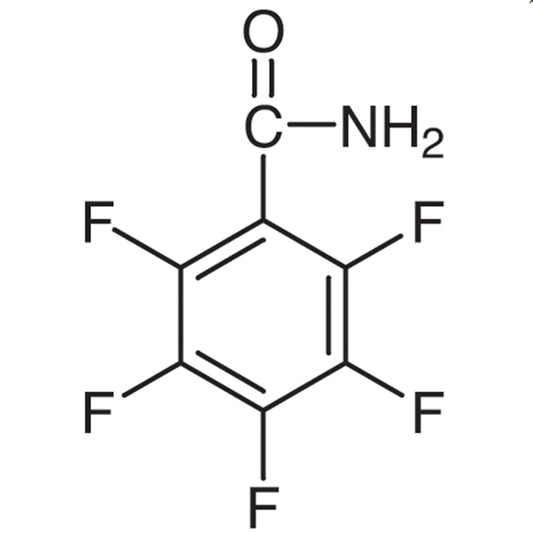
Pentafluorobenzamide TCI P0929
Regular price From Rp 1.167.600,00Regular price -
4-Fluorobenzamide TCI F0279
Regular price From Rp 848.400,00Regular price -
2-Fluorobenzamide TCI F0278
Regular price Rp 1.881.600,00Regular price -
3-Fluorobenzamide TCI F0266
Regular price Rp 1.670.550,00Regular price -
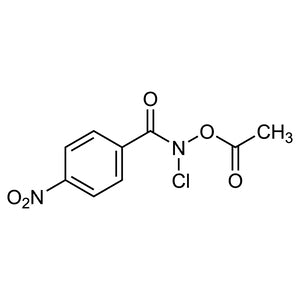
N-Acetoxy-N-chloro-4-nitrobenzamide TCI A3694
Regular price From Rp 2.411.850,00Regular price -
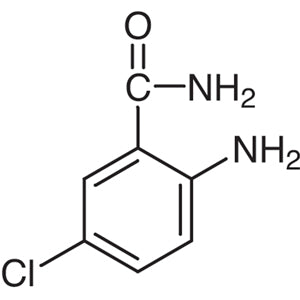
2-Amino-5-chlorobenzamide TCI A1970
Regular price From Rp 664.650,00Regular price