

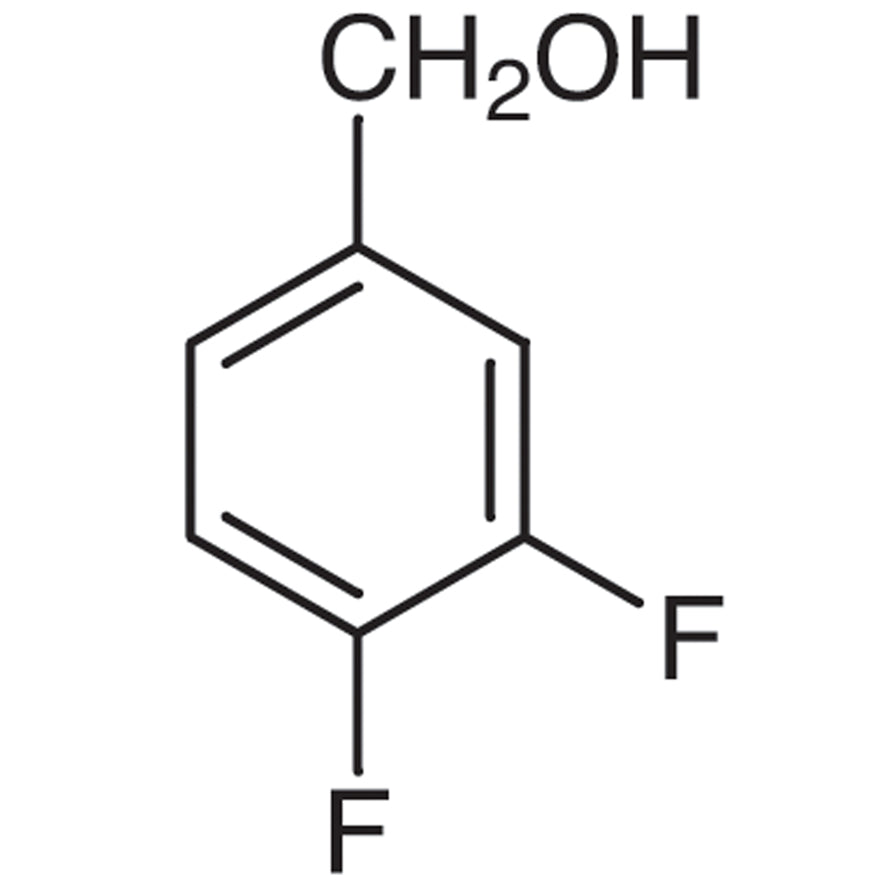
3,4-Difluorobenzyl Alcohol is a chemical compound widely used in organic reactions and the synthesis of complex molecules. As a fluorinated building block, it serves as a foundational element in the development of various chemical structures through substitution or other chemical reactions. This compound plays a crucial role in laboratory settings where the creation of intricate molecular frameworks is required. Its unique structure allows for versatile modifications, making it an essential tool for chemists working in diverse research fields.
The compound's properties, including its fluorine atoms at positions 3 and 4 on the benzene ring, contribute to its distinct electronic and reactive characteristics. These features make it particularly suitable for nucleophilic substitution and hydroxyl replacement reactions. Additionally, its good solubility in organic solvents enhances its usability in a wide range of experimental conditions. This solubility facilitates efficient processing and application in various laboratory procedures, ensuring reliable results in chemical synthesis.
In Indonesian laboratories, 3,4-Difluorobenzyl Alcohol is commonly used in organic chemistry research, especially in academic and research institutions focused on the synthesis of bioactive compounds. It is a key component in the development of pharmaceuticals and advanced materials, supporting innovation in both academic and industrial research. Its reliability and versatility make it a preferred choice for scientists aiming to explore new chemical pathways and applications.
TCI brochures (PDF)
- Fluorination Reagents, Fluorinated Building Blocks 2026-03-18 · p. 28
Related TCI products
- Organic synthesis research utilizes this compound for constructing complex molecular frameworks due to its reactivity and structural versatility.
- Pharmaceutical development benefits from its role in synthesizing bioactive compounds, supporting drug discovery and innovation.
- Material science applications leverage its fluorinated structure for creating advanced functional materials with unique properties.
- Academic institutions incorporate it into teaching and research programs to train students in advanced chemical synthesis techniques.
- Industrial research labs use it for developing new chemical products, enhancing the efficiency of synthesis processes and product quality.
| Brand | TCI |
|---|---|
| CAS number | 85118-05-4 |
| Molecular formula | — |
| Purity | — |
| Category | Chemistry > Building Blocks > Fluorinated Building Blocks |
| Pack sizes | Available in standard laboratory quantities as per supplier specifications |
| Physical form | Liquid |
| Storage | Store in a cool, dry place away from light and incompatible materials |
This compound should be stored in a cool, dry environment, away from direct sunlight and sources of heat. It is recommended to use airtight containers made of materials compatible with organic solvents to prevent contamination and evaporation. Due to its chemical nature, it should be kept separate from strong oxidizers and reactive substances to avoid potential hazards. Laboratory personnel should handle it with appropriate personal protective equipment, including gloves and safety goggles, to ensure safe handling. Regular monitoring of storage conditions is advised to maintain the integrity and stability of the compound during long-term storage.
—
Produk Terkait
-
4-Bromo-2,6-difluorobenzylAlcohol TCI B5090
Regular price From Rp 1.035.300,00Regular price -
2,3-DifluorobenzylAlcohol TCI D4619
Regular price Rp 1.431.150,00Regular price -
2,5-DifluorobenzylAlcohol TCI D2818
Regular price Rp 1.353.450,00Regular price -
3,5-DifluorobenzylAlcohol TCI D2559
Regular price Rp 1.140.300,00Regular price -
2,6-DifluorobenzylAlcohol TCI D2507
Regular price From Rp 717.150,00Regular price -
2,4-DifluorobenzylAlcohol TCI D1838
Regular price Rp 2.199.750,00Regular price -
2,3,5,6-TetrafluorobenzylAlcohol TCI T1884
Regular price From Rp 610.050,00Regular price -
2,3,4,5-TetrafluorobenzylAlcohol TCI T1883
Regular price Rp 903.000,00Regular price


