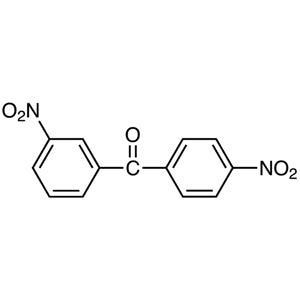
3,4'-Dinitrobenzophenone is a chemical compound widely used as a building block in the synthesis of complex molecules. It serves as a versatile substrate or reagent in various chemical reactions, particularly in organic chemistry. Its aromatic structure provides stability, making it suitable for use in controlled laboratory environments. This compound is commonly employed in the development of new materials, pharmaceuticals, and functional compounds, offering researchers a reliable foundation for molecular design.
The compound's chemical stability and controlled reactivity make it a preferred choice for laboratory applications. It exhibits favorable properties for participation in substitution, redox, and condensation reactions, enabling precise chemical transformations. Its predictable behavior under different reaction conditions ensures reproducibility and reliability in experimental outcomes. These characteristics make it an essential tool for chemists seeking high precision and control in their work.
In Indonesian laboratories, 3,4'-Dinitrobenzophenone is highly relevant for organic chemistry research, especially in academic and research institutions. Its availability supports the development of new drugs, industrial chemicals, and advanced materials. The compound's role in creating complex molecular structures makes it a valuable resource for both educational and applied research projects.
- Organic synthesis applications benefit from its stable aromatic structure and reactivity, enabling the creation of complex molecules with high precision.
- Pharmaceutical research utilizes this compound as a key building block in the development of new drug candidates due to its functional versatility.
- Material science experiments leverage its reactivity in condensation and substitution reactions to design advanced polymers and functional materials.
- Industrial chemical production relies on its controlled reactivity for the synthesis of specialty chemicals and intermediates.
- Educational laboratories use it as a teaching tool to demonstrate fundamental chemical reactions and molecular synthesis techniques.
| Brand | TCI |
|---|---|
| CAS number | 1469-74-5 |
| Molecular formula | — |
| Purity | — |
| Category | Chemistry > Building Blocks > Non-Heterocyclic Building Blocks |
| Pack sizes | Available in standard laboratory quantities |
| Physical form | Solid |
| Storage | Store in a cool, dry place away from direct sunlight |
This compound should be stored in a cool, dry place, away from direct sunlight and sources of heat. It is recommended to use airtight containers to prevent moisture absorption and contamination. Due to its chemical stability, it does not require refrigeration but should be kept in a secure location to avoid accidental exposure. Proper labeling and storage conditions ensure the compound remains effective for laboratory use. General laboratory safety practices, such as using appropriate personal protective equipment, should be followed when handling this material.
—
Produk Terkait
-
3,3'-Dinitrobenzophenone TCI D1688
Regular price From Rp 6.440.700,00Regular price -
3,4-DinitrobenzoicAcid TCI D0823
Regular price From Rp 1.298.850,00Regular price -
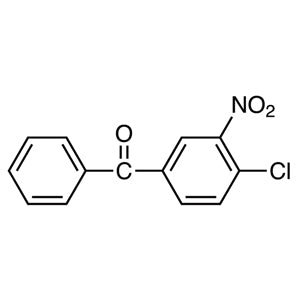
4-Chloro-3-nitrobenzophenone TCI C2906
Regular price From Rp 689.850,00Regular price -
2,4-Dinitrobenzaldehyde TCI D6153
Regular price From Rp 1.193.850,00Regular price -
2-Amino-5-chlorobenzophenone TCI A0079
Regular price From Rp 848.400,00Regular price -
4-Bromo-4'-chlorobenzophenone TCI B4224
Regular price From Rp 3.340.050,00Regular price -
2-Amino-2'-chloro-5-nitrobenzophenone TCI A1754
Regular price From Rp 1.829.100,00Regular price -
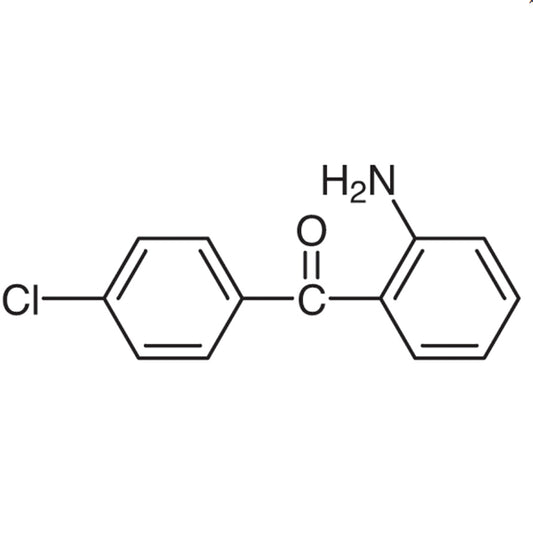
2-Amino-4'-chlorobenzophenone TCI A1244
Regular price From Rp 1.431.150,00Regular price