4-(Dimethylamino)butyraldehyde Dimethyl Acetal is an organic synthesis reagent that packs two useful functional groups into a single short-chain molecule: an aldehyde already protected as its dimethyl acetal at one end, and a tertiary dimethylamino amine at the other. In the laboratory, the compound acts as a masked aldehyde source, meaning the carbonyl group can be carried through reaction steps that would be unfriendly to a free aldehyde, then released again at the appropriate moment by hydrolysis under acidic aqueous conditions. This dual role is what makes it a practical building block for installing an aminobutyl chain onto a target molecular framework.
The characteristics that make it a widely chosen reagent are the stability of the acetal toward bases, nucleophiles, and many organometallic reagents, so researchers can carry out alkylation, coupling, or ring formation without worrying about side reactions at the carbonyl. On the other hand, the dimethylamino group is basic and readily protonated, giving the target molecule hydrophilic character, salt-forming capability, and an ionic interaction point that is often required in the design of bioactive compounds. The four-carbon chain provides a spacer of convenient length between the two functional groups.
In Indonesian laboratories, this reagent is typically used in university and institutional organic synthesis groups, medicinal chemistry programmes, and pharmaceutical research and development work where an aminoalkyl side chain has to be attached to a scaffold and the aldehyde later unmasked. It suits multi-step synthesis routes on a research scale, method development work, and the preparation of intermediates and reference materials, where a protected building block simplifies planning and reduces the number of separate protection steps.
Related TCI products
- TCI A1364 19060-15-2 4-Aminobutyraldehyde Dimethyl Acetal
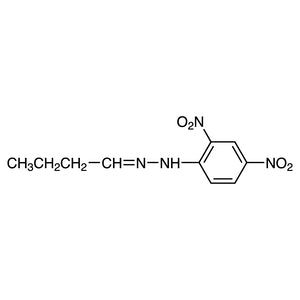
- TCI B1594 1527-98-6 Butyraldehyde 2,4-Dinitrophenylhydrazone
- TCI I0438 2057-82-1 Isobutyraldehyde 2,4-Dinitrophenylhydrazone
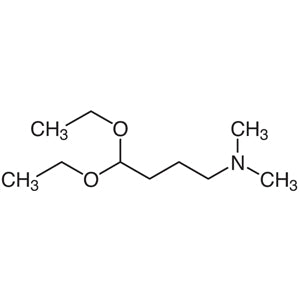
- TCI D3973 1116-77-4 4-(Dimethylamino)butyraldehyde Diethyl Acetal
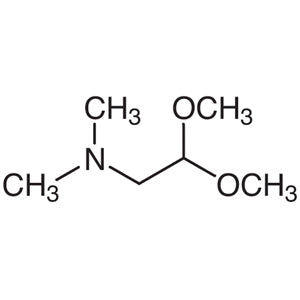
- TCI D1704 38711-20-5 (Dimethylamino)acetaldehyde Dimethyl Acetal
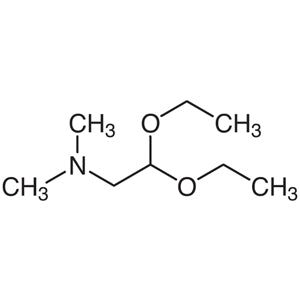
- TCI D1703 3616-56-6 (Dimethylamino)acetaldehyde Diethyl Acetal
- Masked aldehyde introduction — the protected acetal carries a latent carbonyl safely through basic, nucleophilic, or organometallic steps before controlled acidic aqueous hydrolysis reveals the free aldehyde.
- Aminobutyl side-chain installation — the four-carbon spacer bearing a terminal dimethylamino group lets researchers append a basic aminoalkyl arm directly onto a target molecular framework.
- Medicinal chemistry scaffold design — the readily protonated tertiary amine confers hydrophilicity, salt-forming ability, and an ionic interaction point frequently sought in bioactive compound design.
- Ring formation and cyclisation routes — the acetal remains intact during ring-closing chemistry, so the unmasked aldehyde can later drive condensation or annulation onto the newly formed core.
- Alkylation and coupling sequences — the reagent tolerates alkylation and coupling conditions without competing carbonyl side reactions, making it suitable for building multi-step synthetic intermediates.
| Brand | TCI |
|---|---|
| CAS number | 19718-92-4 |
| Molecular formula | — |
| Purity | — |
| Category | Chemistry > Building Blocks > Non-Heterocyclic Building Blocks |
| Pack sizes | research and laboratory-scale packaging as offered by the manufacturer; please confirm the available size when ordering |
| Physical form | — |
| Storage | keep tightly closed in a cool, dry place away from moisture and acids |
- Product code: D3535
Store the reagent in its original tightly closed container in a cool, dry, well-ventilated area, protected from moisture and kept away from acids, since acidic aqueous conditions hydrolyse the acetal and release the free aldehyde prematurely. Amber glass or the supplier's original bottle is suitable, and containers should be resealed promptly after each withdrawal to limit exposure to atmospheric humidity. Handle in a fume hood using safety glasses, gloves, and a laboratory coat, transfer with clean dry glassware or syringes, and avoid contact with skin, eyes, and clothing. Label all secondary containers clearly, keep the reagent away from ignition sources, and consult the manufacturer's safety data sheet before use and for waste disposal.
—
Produk Terkait
-
4-AminobutyraldehydeDimethylAcetal TCI A1364
Regular price Rp 7.182.000,00Regular price -
Butyraldehyde2,4-Dinitrophenylhydrazone TCI B1594
Regular price From Rp 1.298.850,00Regular price -
Isobutyraldehyde2,4-Dinitrophenylhydrazone TCI I0438
Regular price Rp 584.850,00Regular price -
4-(Dimethylamino)butyraldehydeDiethylAcetal TCI D3973
Regular price From Rp 637.350,00Regular price -
(Dimethylamino)acetaldehydeDimethylAcetal TCI D1704
Regular price Rp 2.545.200,00Regular price -
(Dimethylamino)acetaldehydeDiethylAcetal TCI D1703
Regular price Rp 1.829.100,00Regular price -
3-BromopropionaldehydeDimethylAcetal TCI B1901
Regular price From Rp 2.359.350,00Regular price -
BenzaldehydeDimethylAcetal TCI B1197
Regular price From Rp 477.750,00Regular price