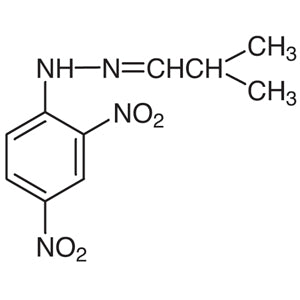
Isobutyraldehyde 2,4-Dinitrophenylhydrazone is a chemical compound widely used in laboratory settings for the identification and analysis of organic compounds. This compound is formed through the reaction between isobutyraldehyde and 2,4-dinitrophenylhydrazine, making it a valuable reagent in organic chemistry. It serves as a key component in the synthesis of various organic compounds and is commonly employed in hydrazone formation reactions. Its role in chemical analysis is crucial, particularly in determining the structure and identity of unknown substances through spectroscopic and chromatographic methods.
The compound is preferred due to its stability and controlled reactivity, which make it suitable for a wide range of experimental applications. Its chemical structure allows for specific interactions with aldehydes and ketones, enabling accurate and reliable analytical results. The compound's ability to form stable derivatives with these functional groups enhances its utility in qualitative and quantitative analysis. Additionally, its non-degradable nature and consistent availability ensure that it remains a practical and reliable choice for laboratory use.
In Indonesian laboratories, Isobutyraldehyde 2,4-Dinitrophenylhydrazone is extensively used in research focused on organic analysis and synthesis. It is commonly found in academic and industrial research settings where precise chemical identification and compound characterization are required. Its application in both teaching and research environments highlights its importance in advancing chemical knowledge and practical skills in the field of organic chemistry.
Related TCI products
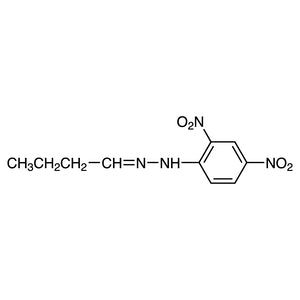
- TCI B1594 1527-98-6 Butyraldehyde 2,4-Dinitrophenylhydrazone
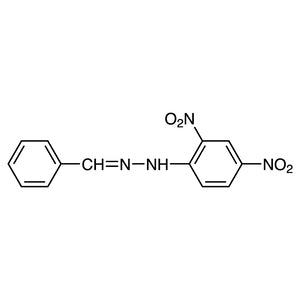
- TCI B1593 1157-84-2 Benzaldehyde 2,4-Dinitrophenylhydrazone
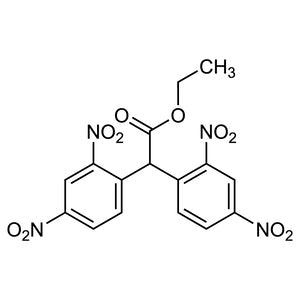
- TCI B0817 5833-18-1 Ethyl Bis(2,4-dinitrophenyl)acetate
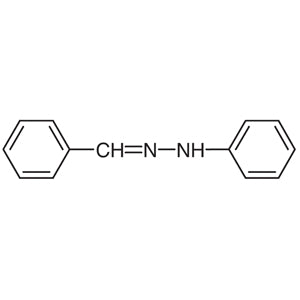
- TCI B0014 588-64-7 Benzaldehyde Phenylhydrazone
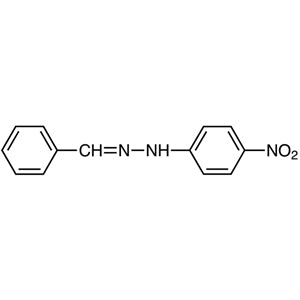
- TCI B0009 3078-09-9 Benzaldehyde 4-Nitrophenylhydrazone
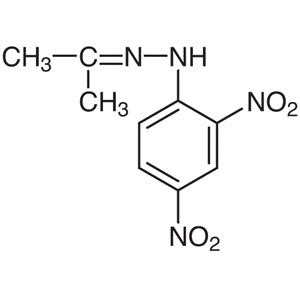
- TCI A1273 1567-89-1 Acetone 2,4-Dinitrophenylhydrazone
- Organic compound identification and structural analysis due to its reactivity with aldehydes and ketones.
- Synthesis of complex organic molecules as a building block in chemical reactions.
- Qualitative analysis in chromatographic and spectroscopic techniques for compound detection.
- Research in analytical chemistry for determining functional groups in unknown substances.
- Educational purposes in teaching organic chemistry principles and reaction mechanisms.
| Brand | TCI |
|---|---|
| CAS number | 2057-82-1 |
| Molecular formula | — |
| Purity | — |
| Category | Chemistry > Building Blocks > Non-Heterocyclic Building Blocks |
| Pack sizes | Available in standard laboratory quantities |
| Physical form | Solid or crystalline, depending on manufacturer |
| Storage | Store in a cool, dry place away from light and moisture |
This compound should be stored in a cool, dry environment, away from direct light and moisture to maintain its stability and reactivity. It is recommended to use airtight containers made of glass or high-density polyethylene to prevent contamination and degradation. Due to its chemical nature, it should be handled with appropriate personal protective equipment, including gloves and safety goggles, to ensure laboratory safety. Avoid exposure to heat or open flames, as it may react with certain substances. Proper labeling and storage conditions are essential to ensure safe handling and long-term usability in laboratory settings.
—
Produk Terkait
-
Butyraldehyde2,4-Dinitrophenylhydrazone TCI B1594
Regular price From Rp 1.298.850,00Regular price -
Benzaldehyde2,4-Dinitrophenylhydrazone TCI B1593
Regular price From Rp 1.087.800,00Regular price -
EthylBis(2,4-dinitrophenyl)acetate TCI B0817
Regular price Rp 1.458.450,00Regular price -
BenzaldehydePhenylhydrazone TCI B0014
Regular price Rp 3.551.100,00Regular price -
Benzaldehyde4-Nitrophenylhydrazone TCI B0009
Regular price Rp 5.009.550,00Regular price -
Acetone2,4-Dinitrophenylhydrazone TCI A1273
Regular price From Rp 1.087.800,00Regular price -
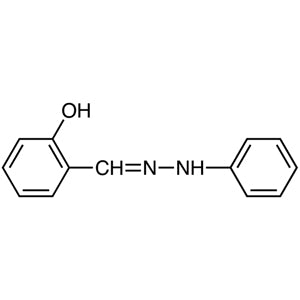
2-HydroxybenzaldehydePhenylhydrazone TCI H1478
Regular price From Rp 1.936.200,00Regular price -
EthylMethylKetone2,4-Dinitrophenylhydrazone TCI E0439
Regular price From Rp 1.167.600,00Regular price