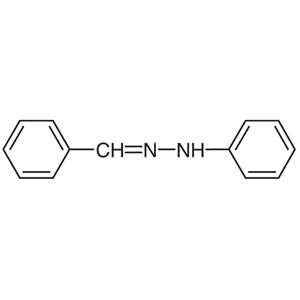
Benzaldehyde Phenylhydrazone is a chemical compound widely used in organic reactions, particularly in the synthesis of heterocyclic compounds and complex molecular structures. As a key building block in chemical research, it serves as a hydrazone donor, reacting with aldehydes or ketones to form stable hydrazone derivatives. This compound plays a crucial role in various synthetic pathways, enabling the formation of more complex molecules through condensation and substitution reactions. Its versatility makes it an essential reagent in both academic and industrial laboratories.
The compound is known for its chemical stability under controlled conditions, although it is highly sensitive to moisture and air exposure. Its simple molecular structure contributes to its reactivity and utility in synthetic chemistry. The ability to participate in multiple reaction types, such as condensation and substitution, makes it a preferred choice for chemists seeking reliable and predictable results. Its reactivity also allows for the synthesis of a wide range of derivatives, enhancing its value in research and development.
In Indonesian laboratories, Benzaldehyde Phenylhydrazone is frequently used in organic chemistry research, particularly in higher education institutions and research organizations. It is a key component in the development of new compounds and drug synthesis. Due to its importance in chemical synthesis, it is a commonly sought-after material among researchers and students in the field. Its role in advancing chemical knowledge and innovation is significant in the scientific community.
Related TCI products
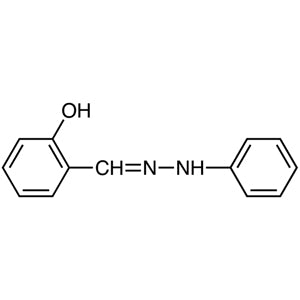
- TCI H1478 614-65-3 2-Hydroxybenzaldehyde Phenylhydrazone
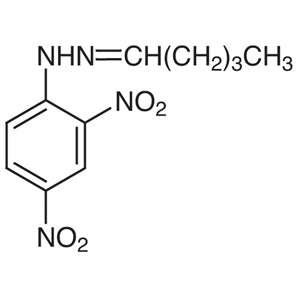
- TCI V0066 2057-84-3 Valeraldehyde 2,4-Dinitrophenylhydrazone
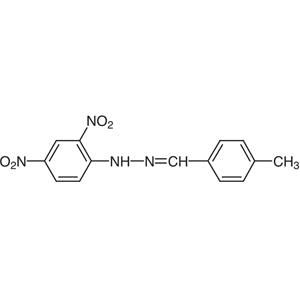
- TCI T1449 2571-00-8 p-Tolualdehyde 2,4-Dinitrophenylhydrazone
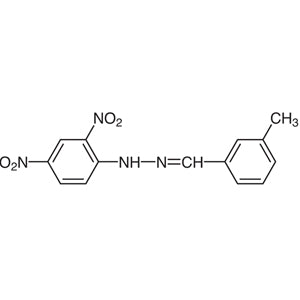
- TCI T1448 2880-05-9 m-Tolualdehyde 2,4-Dinitrophenylhydrazone
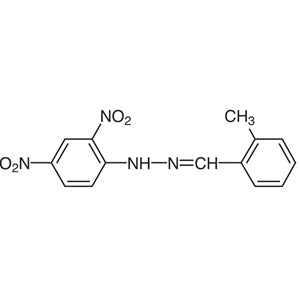
- TCI T1447 1773-44-0 o-Tolualdehyde 2,4-Dinitrophenylhydrazone
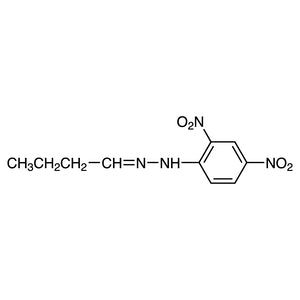
- TCI B1594 1527-98-6 Butyraldehyde 2,4-Dinitrophenylhydrazone
- Organic synthesis applications benefit from Benzaldehyde Phenylhydrazone due to its role in forming hydrazone derivatives, which are essential in the development of complex molecular structures.
- Drug synthesis research utilizes this compound for its ability to participate in condensation reactions, aiding in the creation of pharmaceutical compounds with desired properties.
- Academic research in chemistry relies on this material for its stability and reactivity, making it a valuable tool in teaching and experimental studies.
- Analytical chemistry laboratories use it as a reference compound for testing reaction mechanisms and evaluating synthetic pathways.
- Industrial chemical production incorporates this compound in the development of new materials and chemical products requiring controlled synthetic processes.
| Brand | TCI |
|---|---|
| CAS number | 588-64-7 |
| Molecular formula | — |
| Purity | — |
| Category | Chemistry > Building Blocks > Non-Heterocyclic Building Blocks |
| Pack sizes | Available in various sizes as per standard laboratory supply |
| Physical form | Solid |
| Storage | Requires storage in a dry, cool, and well-ventilated area away from moisture and air exposure |
Benzaldehyde Phenylhydrazone should be stored in a dry, cool, and well-ventilated area to prevent moisture and air exposure, which can degrade its stability. It is recommended to use airtight containers made of glass or inert materials to minimize contamination. Handling should be done with care to avoid direct contact with skin or inhalation of vapors. Proper personal protective equipment, such as gloves and safety goggles, should be worn during handling. The compound should be kept away from incompatible substances like strong oxidizers. Regular monitoring of storage conditions ensures the compound remains in optimal condition for use in laboratory applications.
—
Produk Terkait
-
2-HydroxybenzaldehydePhenylhydrazone TCI H1478
Regular price From Rp 1.936.200,00Regular price -
Valeraldehyde2,4-Dinitrophenylhydrazone TCI V0066
Regular price Rp 530.250,00Regular priceRp 386.400,00Sale price Rp 530.250,00 -
p-Tolualdehyde2,4-Dinitrophenylhydrazone TCI T1449
Regular price Rp 1.087.800,00Regular priceRp 775.950,00Sale price Rp 1.087.800,00 -
m-Tolualdehyde2,4-Dinitrophenylhydrazone TCI T1448
Regular price Rp 1.033.200,00Regular priceRp 738.150,00Sale price Rp 1.033.200,00 -
o-Tolualdehyde2,4-Dinitrophenylhydrazone TCI T1447
Regular price Rp 689.850,00Regular priceRp 497.700,00Sale price Rp 689.850,00 -
Butyraldehyde2,4-Dinitrophenylhydrazone TCI B1594
Regular price From Rp 1.298.850,00Regular price -
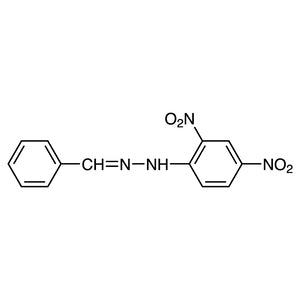
Benzaldehyde2,4-Dinitrophenylhydrazone TCI B1593
Regular price From Rp 1.087.800,00Regular price -
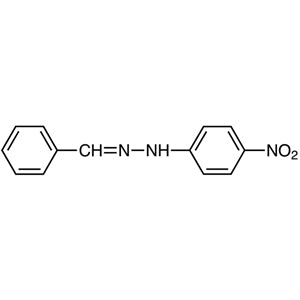
Benzaldehyde4-Nitrophenylhydrazone TCI B0009
Regular price Rp 5.009.550,00Regular price