Benzaldehyde 2,4-Dinitrophenylhydrazone is a chemical compound widely used in laboratory settings for its reactivity and specificity in identifying aromatic compounds. This reagent plays a crucial role in organic chemistry by participating in hydrazone formation reactions, which are essential for detecting aldehydes and ketones in various samples. Its application extends to analytical chemistry, where it aids in the structural analysis of organic molecules through colorimetric and spectroscopic methods. Due to its chemical stability under controlled conditions, it is a reliable tool for precise and reproducible results in chemical analysis.
The compound is preferred for its high reactivity and ability to form stable hydrazone derivatives with aromatic compounds. Its chemical properties allow for clear and consistent reactions, making it ideal for qualitative and quantitative analysis. The compound’s ability to undergo color changes or physical transformations during reactions enhances its utility in identifying molecular structures. These characteristics make it a valuable reagent in both research and educational laboratories.
In Indonesian laboratories, Benzaldehyde 2,4-Dinitrophenylhydrazone is commonly used in organic chemistry research and analytical testing. It is frequently employed in university and research institutions for experiments involving the identification of aromatic compounds. Its reliability and ease of use make it a staple in chemical analysis, supporting both academic and industrial research efforts.
Related TCI products
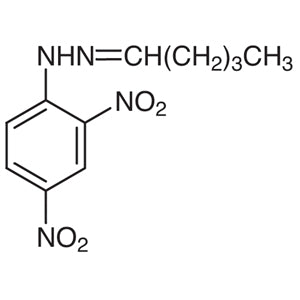
- TCI V0066 2057-84-3 Valeraldehyde 2,4-Dinitrophenylhydrazone
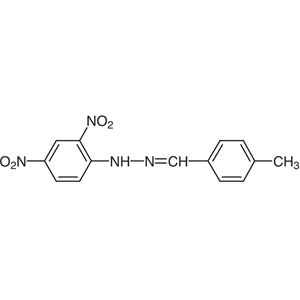
- TCI T1449 2571-00-8 p-Tolualdehyde 2,4-Dinitrophenylhydrazone
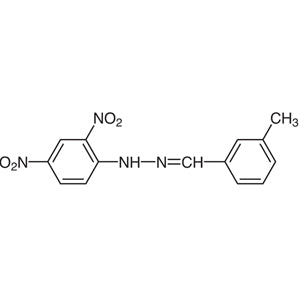
- TCI T1448 2880-05-9 m-Tolualdehyde 2,4-Dinitrophenylhydrazone
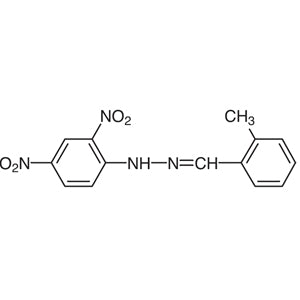
- TCI T1447 1773-44-0 o-Tolualdehyde 2,4-Dinitrophenylhydrazone
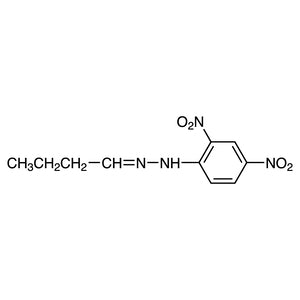
- TCI B1594 1527-98-6 Butyraldehyde 2,4-Dinitrophenylhydrazone
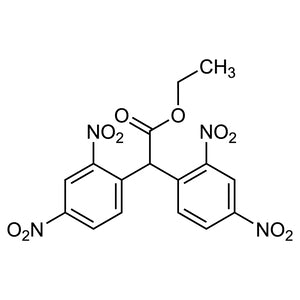
- TCI B0817 5833-18-1 Ethyl Bis(2,4-dinitrophenyl)acetate
- Organic synthesis applications benefit from this compound’s ability to form stable hydrazone derivatives, aiding in the structural elucidation of aromatic compounds.
- Analytical chemistry relies on its reactivity to detect aldehydes and ketones in complex samples, providing accurate and reproducible results.
- Qualitative analysis in research settings uses its colorimetric response to identify molecular structures through visible changes during reactions.
- Educational laboratories employ it for teaching hydrazone formation and chemical identification techniques to students.
- Structural analysis in chemical research utilizes its specificity to determine molecular composition in organic compounds.
| Brand | TCI |
|---|---|
| CAS number | 1157-84-2 |
| Molecular formula | — |
| Purity | — |
| Category | Chemistry > Building Blocks > Non-Heterocyclic Building Blocks |
| Pack sizes | — |
| Physical form | — |
| Storage | Store in a cool, dry place away from light |
This compound should be stored in a cool, dry place, away from direct light to maintain its chemical stability. It is recommended to use airtight containers to prevent exposure to moisture and air, which may affect its reactivity. Proper labeling of containers is essential to ensure safe handling and prevent accidental use. In laboratory settings, it should be handled with appropriate personal protective equipment, including gloves and safety goggles, to minimize exposure. Due to its chemical nature, it should be stored separately from incompatible substances to avoid potential reactions. Regular inspection of storage conditions is advised to ensure long-term stability and safety.
—
Produk Terkait
-
Valeraldehyde2,4-Dinitrophenylhydrazone TCI V0066
Regular price From Rp 530.250,00Regular priceRp 386.400,00Sale price From Rp 530.250,00 -
p-Tolualdehyde2,4-Dinitrophenylhydrazone TCI T1449
Regular price From Rp 1.087.800,00Regular priceRp 775.950,00Sale price From Rp 1.087.800,00 -
m-Tolualdehyde2,4-Dinitrophenylhydrazone TCI T1448
Regular price From Rp 1.033.200,00Regular priceRp 738.150,00Sale price From Rp 1.033.200,00 -
o-Tolualdehyde2,4-Dinitrophenylhydrazone TCI T1447
Regular price From Rp 689.850,00Regular priceRp 497.700,00Sale price From Rp 689.850,00 -
Butyraldehyde2,4-Dinitrophenylhydrazone TCI B1594
Regular price From Rp 1.351.350,00Regular priceRp 960.750,00Sale price From Rp 1.351.350,00 -
EthylBis(2,4-dinitrophenyl)acetate TCI B0817
Regular price Rp 1.510.950,00Regular priceRp 1.072.050,00Sale price Rp 1.510.950,00 -
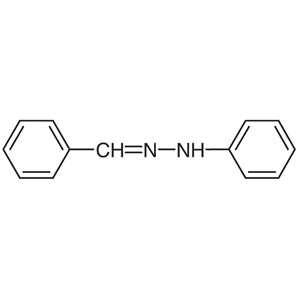
BenzaldehydePhenylhydrazone TCI B0014
Regular price Rp 3.603.600,00Regular priceRp 2.535.750,00Sale price Rp 3.603.600,00 -
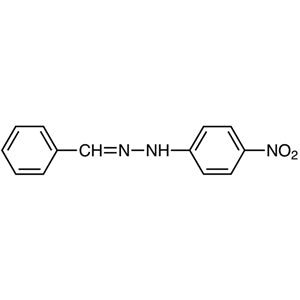
Benzaldehyde4-Nitrophenylhydrazone TCI B0009
Regular price Rp 5.062.050,00Regular priceRp 3.555.300,00Sale price Rp 5.062.050,00