Benzaldehyde 4-Nitrophenylhydrazone (BNPH) is a chemical compound widely used in organic chemistry reactions, particularly in the synthesis of heterocyclic compounds and complex molecular structures. As a key building block in chemical laboratories, BNPH plays a crucial role in enabling the formation of new compounds through its ability to react with various functional groups. Its versatility makes it an essential reagent for researchers aiming to develop novel chemical structures. BNPH is commonly employed in hydrazone formation reactions, which are integral to many synthetic strategies in organic chemistry.
The chemical properties of BNPH, including its stable molecular structure and high reactivity, make it a preferred choice for laboratory applications. It exhibits the ability to react with a wide range of substrates such as aldehydes, ketones, and aromatic compounds, allowing for the synthesis of diverse chemical products. Its reactivity and stability ensure consistent results in experimental settings, making it a reliable tool for both academic and industrial research. The compound’s broad applicability in different reaction conditions further enhances its value in chemical laboratories.
In Indonesian laboratories, BNPH is highly relevant for chemical research, especially in higher education institutions and research organizations. Its use supports the development of new synthetic methods and the exploration of complex molecular structures. BNPH is a valuable resource for researchers seeking to advance their work in organic chemistry and related fields. Its availability and performance make it a go-to reagent for a variety of laboratory applications in Indonesia.
Related TCI products
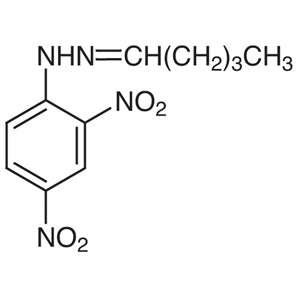
- TCI V0066 2057-84-3 Valeraldehyde 2,4-Dinitrophenylhydrazone
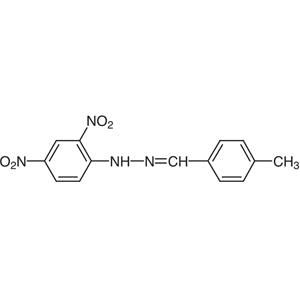
- TCI T1449 2571-00-8 p-Tolualdehyde 2,4-Dinitrophenylhydrazone
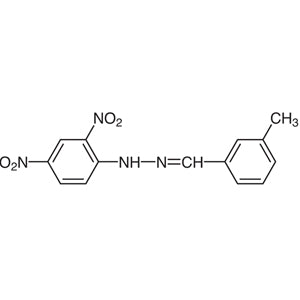
- TCI T1448 2880-05-9 m-Tolualdehyde 2,4-Dinitrophenylhydrazone
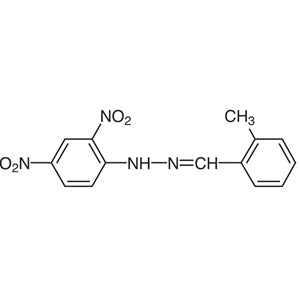
- TCI T1447 1773-44-0 o-Tolualdehyde 2,4-Dinitrophenylhydrazone
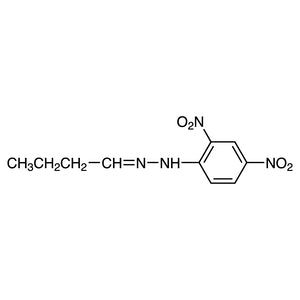
- TCI B1594 1527-98-6 Butyraldehyde 2,4-Dinitrophenylhydrazone
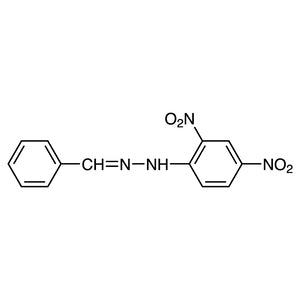
- TCI B1593 1157-84-2 Benzaldehyde 2,4-Dinitrophenylhydrazone
- Organic synthesis is a primary application where BNPH is used to form hydrazones, which are essential in constructing complex molecular frameworks.
- Heterocyclic compound synthesis benefits from BNPH due to its ability to react with various functional groups, enabling the creation of diverse ring structures.
- Analytical chemistry applications utilize BNPH for its reactivity with aromatic compounds, aiding in the detection and characterization of specific chemical species.
- Teaching laboratories incorporate BNPH to demonstrate hydrazone formation and reaction mechanisms, providing hands-on learning experiences for students.
- Industrial research and development employs BNPH to explore new synthetic pathways and optimize chemical processes for commercial applications.
| Brand | TCI |
|---|---|
| CAS number | 3078-09-9 |
| Molecular formula | — |
| Purity | — |
| Category | Chemistry > Building Blocks > Non-Heterocyclic Building Blocks |
| Pack sizes | Available in various quantities as per supplier specifications |
| Physical form | Solid or liquid, depending on the specific product formulation |
| Storage | Store in a cool, dry place away from direct sunlight and moisture |
BNPH should be stored in a cool, dry environment to maintain its chemical stability and prevent degradation. It is recommended to use airtight containers to protect it from moisture and air exposure. Due to its reactivity, it should be handled in a well-ventilated area, preferably under a fume hood, to minimize exposure to vapors. Avoid contact with incompatible substances such as strong oxidizing agents. Proper personal protective equipment, including gloves and safety goggles, should be worn during handling. Regular monitoring of storage conditions ensures the compound remains effective for laboratory use.
—
Produk Terkait
-
Valeraldehyde2,4-Dinitrophenylhydrazone TCI V0066
Regular price From Rp 477.750,00Regular price -
p-Tolualdehyde2,4-Dinitrophenylhydrazone TCI T1449
Regular price From Rp 1.035.300,00Regular price -
m-Tolualdehyde2,4-Dinitrophenylhydrazone TCI T1448
Regular price From Rp 980.700,00Regular price -
o-Tolualdehyde2,4-Dinitrophenylhydrazone TCI T1447
Regular price From Rp 637.350,00Regular price -
Butyraldehyde2,4-Dinitrophenylhydrazone TCI B1594
Regular price From Rp 1.298.850,00Regular price -
Benzaldehyde2,4-Dinitrophenylhydrazone TCI B1593
Regular price From Rp 1.087.800,00Regular price -
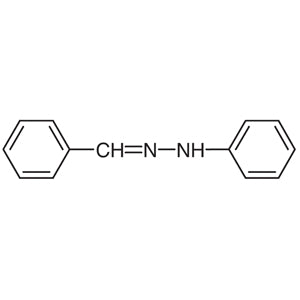
BenzaldehydePhenylhydrazone TCI B0014
Regular price Rp 3.551.100,00Regular price -
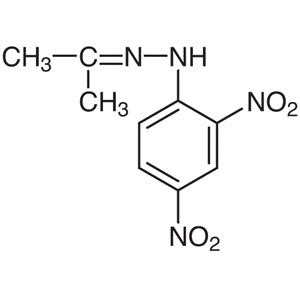
Acetone2,4-Dinitrophenylhydrazone TCI A1273
Regular price From Rp 1.087.800,00Regular price