Acetone 2,4-Dinitrophenylhydrazone (ADNPH) is a chemical compound widely used in the laboratory for the qualitative and quantitative analysis of carbonyl compounds such as aldehydes and ketones. It functions as a reagent in hydrazone reactions, aiding in the identification and separation of organic compounds. ADNPH is a key component in various scientific fields, including organic chemistry, analytical chemistry, and pharmacological research. Its role in forming stable hydrazones makes it an essential tool for structural elucidation and compound characterization.
ADNPH is valued for its chemical stability and consistent reactivity towards carbonyl compounds. It does not readily decompose under normal conditions, ensuring reliable results across repeated experiments. Its predictable reaction behavior and high reactivity make it a preferred choice for analytical applications where accuracy and precision are critical. The compound’s ability to form stable derivatives enhances its utility in both research and educational settings, supporting a wide range of experimental needs.
In Indonesian laboratories, ADNPH is commonly used in pure chemical research and sample analysis. It is particularly relevant for academic institutions, research organizations, and industries requiring high-quality chemical reagents. Its availability in the local market facilitates continuous research and development activities. The compound’s reliability and versatility make it a staple in chemical laboratories across Indonesia.
Related TCI products
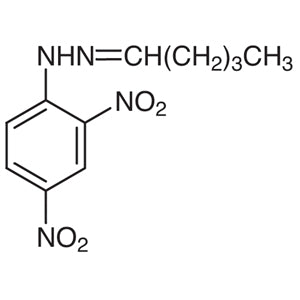
- TCI V0066 2057-84-3 Valeraldehyde 2,4-Dinitrophenylhydrazone
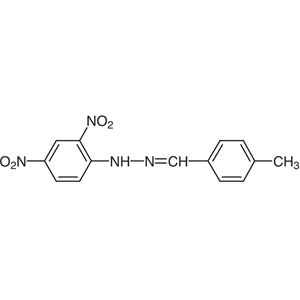
- TCI T1449 2571-00-8 p-Tolualdehyde 2,4-Dinitrophenylhydrazone
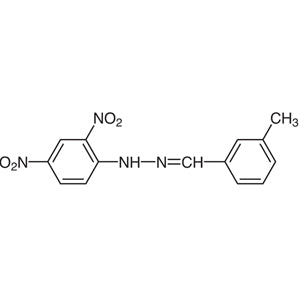
- TCI T1448 2880-05-9 m-Tolualdehyde 2,4-Dinitrophenylhydrazone
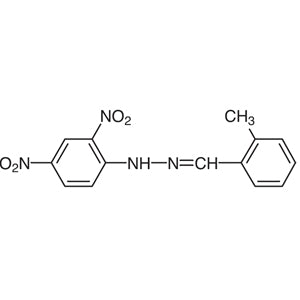
- TCI T1447 1773-44-0 o-Tolualdehyde 2,4-Dinitrophenylhydrazone
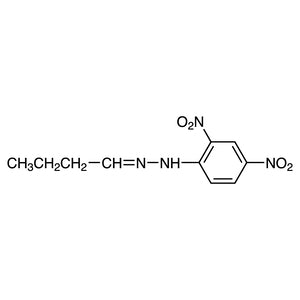
- TCI B1594 1527-98-6 Butyraldehyde 2,4-Dinitrophenylhydrazone
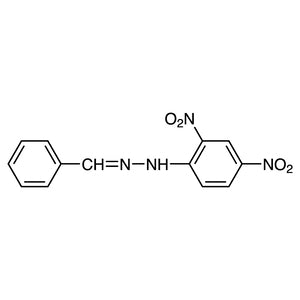
- TCI B1593 1157-84-2 Benzaldehyde 2,4-Dinitrophenylhydrazone
- Qualitative Analysis: ADNPH is ideal for identifying carbonyl compounds due to its consistent reactivity and stable hydrazone formation.
- Organic Chemistry Research: Its use in hydrazone reactions supports structural analysis and compound characterization in synthetic chemistry.
- Pharmacological Studies: ADNPH aids in the analysis of drug compounds, helping to determine their molecular structure and functional groups.
- Sample Analysis: It is widely used in analytical laboratories for the detection and quantification of aldehydes and ketones in complex mixtures.
- Educational Purposes: ADNPH is a valuable teaching tool in chemistry courses, providing hands-on experience in analytical techniques and reaction mechanisms.
| Brand | TCI |
|---|---|
| CAS number | 1567-89-1 |
| Molecular formula | — |
| Purity | — |
| Category | Chemistry > Building Blocks > Non-Heterocyclic Building Blocks |
| Pack sizes | Available in standard laboratory quantities |
| Physical form | Solid |
| Storage | Store in a cool, dry place away from direct sunlight |
ADNPH should be stored in a cool, dry environment, away from direct sunlight and sources of heat. It is recommended to keep the compound in a sealed container to prevent moisture absorption and contamination. Due to its chemical stability, it does not require refrigeration but should be protected from prolonged exposure to air. In laboratory settings, it is important to handle ADNPH with care, using appropriate personal protective equipment such as gloves and safety goggles. The compound is non-hazardous under normal conditions but should be treated with standard chemical safety protocols to ensure safe handling and storage.
—
Produk Terkait
-
Valeraldehyde2,4-Dinitrophenylhydrazone TCI V0066
Regular price From Rp 530.250,00Regular priceRp 386.400,00Sale price From Rp 530.250,00 -
p-Tolualdehyde2,4-Dinitrophenylhydrazone TCI T1449
Regular price From Rp 1.087.800,00Regular priceRp 775.950,00Sale price From Rp 1.087.800,00 -
m-Tolualdehyde2,4-Dinitrophenylhydrazone TCI T1448
Regular price From Rp 1.033.200,00Regular priceRp 738.150,00Sale price From Rp 1.033.200,00 -
o-Tolualdehyde2,4-Dinitrophenylhydrazone TCI T1447
Regular price From Rp 689.850,00Regular priceRp 497.700,00Sale price From Rp 689.850,00 -
Butyraldehyde2,4-Dinitrophenylhydrazone TCI B1594
Regular price From Rp 1.351.350,00Regular priceRp 960.750,00Sale price From Rp 1.351.350,00 -
Benzaldehyde2,4-Dinitrophenylhydrazone TCI B1593
Regular price From Rp 1.140.300,00Regular priceRp 812.700,00Sale price From Rp 1.140.300,00 -
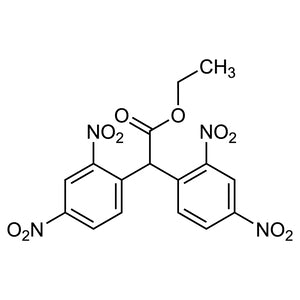
EthylBis(2,4-dinitrophenyl)acetate TCI B0817
Regular price Rp 1.510.950,00Regular priceRp 1.072.050,00Sale price Rp 1.510.950,00 -
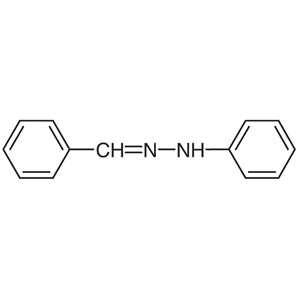
BenzaldehydePhenylhydrazone TCI B0014
Regular price Rp 3.603.600,00Regular priceRp 2.535.750,00Sale price Rp 3.603.600,00