TCI D3562 Dimethyl 4-Hydroxyisophthalate is an aromatic diester that carries a phenolic hydroxyl group adjacent to one of its ester groups. The combination of two methyl ester groups and one phenol group on a single benzene ring makes this compound a highly flexible building block. In the laboratory, the material is used as a precursor to dicarboxylic acid ligands, as a starting material for the synthesis of oxygen-containing heterocycles, and as a scaffold for constructing fluorescent molecules. The 1,3-diester substitution pattern with a hydroxyl group at the 4-position gives the molecule a distinctive geometry that is straightforward to exploit synthetically.
The characteristic that leads researchers to select this compound is the presence of three functional groups whose reactivities can be differentiated. The phenol group can be selectively alkylated, acylated, or triflated without disturbing the esters, while the two esters can be hydrolysed to the corresponding dicarboxylic acid, a popular linker in the synthesis of metal-organic frameworks. The proximity of the hydroxyl group to the ester group also permits the formation of an intramolecular hydrogen bond that stabilises the conformation and imparts interesting optical properties, including excited-state proton transfer that is exploited in the design of dyes and related functional materials.
Within Indonesian laboratories, this building block is typically encountered in university synthetic chemistry groups, materials research centres, and institutional research units working on coordination polymers, organic dyes, and small-molecule scaffolds. It is normally ordered as a catalogue research chemical in small quantities suitable for bench-scale reaction development, method optimisation, and student research projects, then stored in a shared chemical store alongside other TCI building blocks used in multi-step synthesis campaigns.
Related TCI products
- TCI F0310 3328-70-9 4-Hydroxyisophthalaldehyde
- TCI D6113 84501-28-0 5-tert-Butyl-2-hydroxyisophthalaldehyde
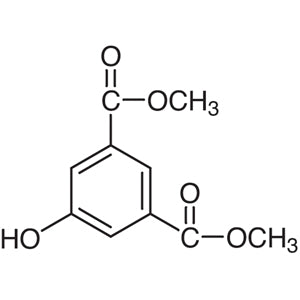
- TCI H1007 13036-02-7 Dimethyl 5-Hydroxyisophthalate
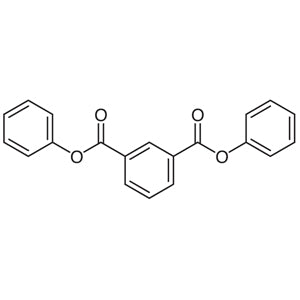
- TCI I0416 744-45-6 Diphenyl Isophthalate
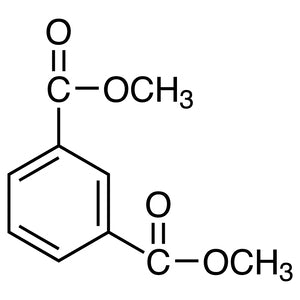
- TCI I0157 1459-93-4 Dimethyl Isophthalate
- TCI H1546 172611-72-2 2-(1-Hydroxy-3-methylbutylidene)-5,5-dimethyl-1,3-cyclohexanedione
- Dicarboxylic acid ligand preparation: hydrolysis of both methyl esters delivers a rigid aromatic dicarboxylic acid that serves as a linker for coordination polymer and metal-organic framework construction.
- Oxygen-containing heterocycle synthesis: the phenol positioned next to an ester group allows intramolecular cyclisation routes toward benzofused oxygen heterocycles under standard bench conditions.
- Fluorescent molecule scaffolding: the compound provides an aromatic core whose intramolecular hydrogen bonding and excited-state proton transfer behaviour underpin the design of emissive dye systems.
- Selective phenol derivatisation studies: the free hydroxyl can be alkylated, acylated, or triflated without touching either ester, making the substrate useful for chemoselectivity and protecting-group work.
- Multi-step building block chemistry: three differentiable functional groups on one benzene ring let researchers elaborate the ring stepwise when assembling larger, more complex target molecules.
| Brand | TCI |
|---|---|
| CAS number | 5985-24-0 |
| Molecular formula | — |
| Purity | — |
| Category | Chemistry > Building Blocks > Non-Heterocyclic Building Blocks |
| Pack sizes | available in standard TCI catalogue research-quantity packs; please confirm the currently offered sizes when ordering |
| Physical form | — |
| Storage | keep in the tightly closed original container, protected from light and moisture, in a cool and well-ventilated chemical store |
- Chemical name: Dimethyl 4-Hydroxyisophthalate (aromatic diester bearing a phenolic hydroxyl group)
Store the material in its original tightly closed container in a cool, dry, well-ventilated area away from direct sunlight, heat sources, and strong oxidising agents. Amber glass or the supplied container is preferred to limit light and moisture exposure, and the cap should be replaced immediately after each weighing. Handle the solid inside a fume hood or a well-ventilated workspace using nitrile gloves, safety goggles, and a laboratory coat, and avoid generating or inhaling dust. Weigh with clean, dry spatulas to prevent contamination, keep the container clearly labelled, and dispose of residues and contaminated consumables through the laboratory's chemical waste stream in accordance with institutional procedures. Always consult the manufacturer's safety data sheet before first use.
—
Produk Terkait
-
4-Hydroxyisophthalaldehyde TCI F0310
Regular price From Rp 3.127.950,00Regular price -
5-tert-Butyl-2-hydroxyisophthalaldehyde TCI D6113
Regular price From Rp 3.127.950,00Regular price -
Dimethyl5-Hydroxyisophthalate TCI H1007
Regular price From Rp 1.298.850,00Regular price -
DiphenylIsophthalate TCI I0416
Regular price From Rp 1.298.850,00Regular price -
DimethylIsophthalate TCI I0157
Regular price From Rp 452.550,00Regular price -
2-(1-Hydroxy-3-methylbutylidene)-5,5-dimethyl-1,3-cyclohexanedione TCI H1546
Regular price From Rp 2.121.000,00Regular price -
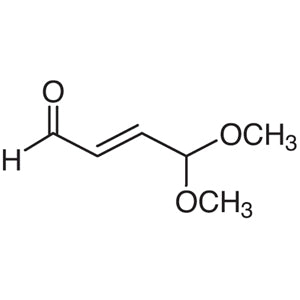
FumaraldehydeMono(dimethylAcetal)(stabilizedwithHQ) TCI F0350
Regular price From Rp 6.281.100,00Regular price -
Ethyl2-(2,4-Dimethyl-1,3-dioxolan-2-yl)acetate(mixtureofdiastereoisomers) TCI E1417
Regular price From Rp 610.050,00Regular price