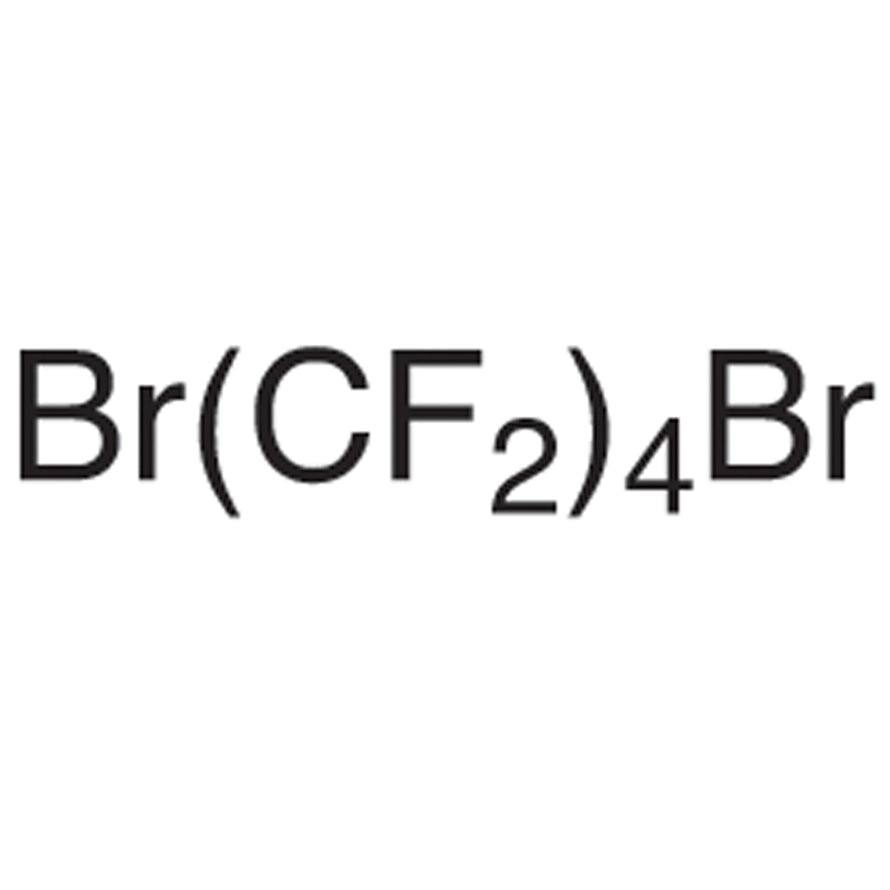
TCI D3573 1,4-Dibromooctafluorobutane is a fluorinated building block from TCI consisting of a short perfluorobutane chain carrying a bromine atom at each end of the chain. Every hydrogen position on its four carbon atoms has been replaced by fluorine, producing a compact perfluoroalkyl segment that nevertheless retains two reactive sites. Its role in the laboratory is to supply a short perfluorinated linker that can be inserted into molecules, polymer chains, or surface layers without adding excessive chain length, so that the physical properties of the final product remain easier to control.
The properties behind its selection are the very high stability of the carbon–fluorine bonds combined with the reactivity of the carbon–bromine bonds at the chain termini. The perfluorinated segment is inert towards oxidation, thermally resistant, and produces low surface energy, while the bromide groups are ready to be converted into perfluoroalkyl radicals or organometallic species for coupling onto other substrates. Compared with longer-chain homologues, this four-carbon version contributes a lighter fluorous character, so the solubility of the resulting product in ordinary organic solvents is generally better preserved.
In Indonesian laboratories, this type of fluorinated building block is typically used in university and institutional research groups working on fluorine chemistry, specialty polymers, and surface modification, as well as in industrial R&D units developing coating and material formulations. It is normally handled in small synthetic batches on a bench scale, where a defined bifunctional reagent is needed so that the fluorinated segment introduced into the target structure is consistent from one experiment to the next.
TCI brochures (PDF)
- Fluorous Chemistry 2025-01-21 · p. 8
- Fluorination Reagents, Fluorinated Building Blocks 2026-03-18 · p. 52
Related TCI products
- TCI O0114 355-80-6 2,2,3,3,4,4,5,5-Octafluoro-1-pentanol
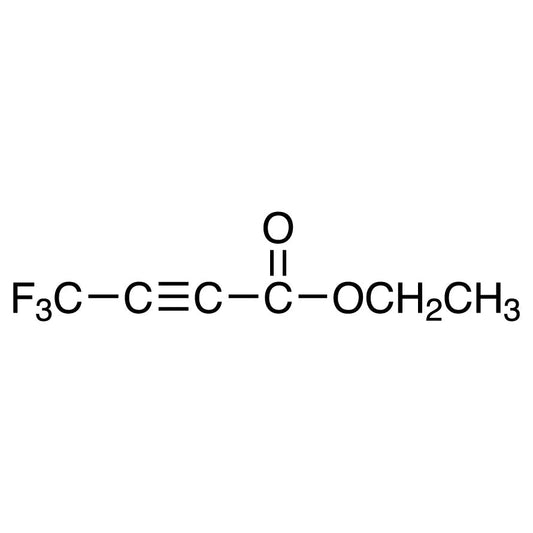
- TCI E1495 79424-03-6 Ethyl 4,4,4-Trifluorobut-2-ynoate
- TCI D1519 2200-70-6 Octafluoro-4,4'-biphenol
- TCI N0677 79963-95-4 2,2,2-Trifluoroethyl Nonafluorobutanesulfonate
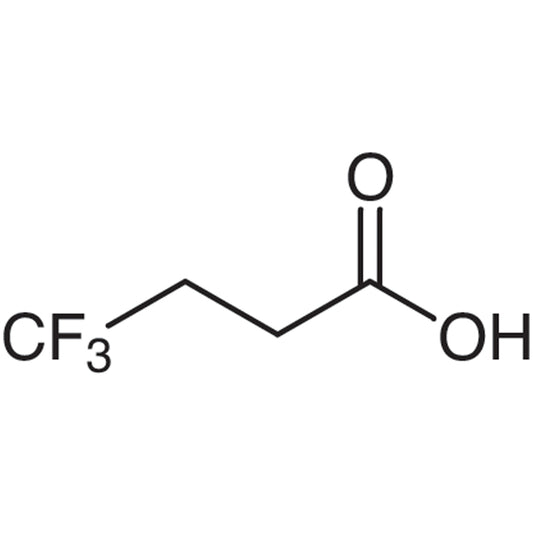
- TCI T2670 406-93-9 4,4,4-Trifluorobutyric Acid
- TCI E0830 371-26-6 Ethyl 4,4,4-Trifluorobutyrate
- Synthesis of perfluoroalkyl intermediates: the two terminal bromine atoms provide defined reaction points, allowing the four-carbon perfluorinated segment to be attached to another molecular framework in a controlled way.
- Bifunctional fluorinated linker chemistry: because both chain ends are reactive, the compound can bridge two substrates while contributing a short, chemically inert perfluoroalkyl spacer between them.
- Fluorinated polymer and copolymer preparation: the perfluorobutane unit can be incorporated into polymer chains to add thermal resistance and low surface energy without lengthening the chain excessively.
- Surface modification and low-surface-energy layers: the perfluorinated segment yields low-energy surfaces, while the bromide termini allow anchoring of that segment onto a surface layer or support.
- Radical and organometallic coupling studies: the bromide groups are readily converted into perfluoroalkyl radicals or organometallic species, making the material useful for methodology work on fluorous coupling reactions.
| Brand | TCI |
|---|---|
| CAS number | 335-48-8 |
| Molecular formula | — |
| Purity | — |
| Category | Chemistry > Building Blocks > Fluorinated Building Blocks |
| Pack sizes | available in standard TCI laboratory pack sizes; please refer to the catalogue listing for the sizes currently offered |
| Physical form | — |
| Storage | keep in a tightly closed original container, protected from moisture and away from heat and ignition sources |
- Product code: D3573
Store the container tightly closed in a cool, dry, and well-ventilated area, away from heat, direct sunlight, and sources of ignition, and keep it separated from strong oxidising agents and strong bases. The original manufacturer packaging is the most suitable container; if transfer is necessary, use chemically compatible glassware and close it securely to limit moisture ingress and vapour loss. Handle the material inside a fume hood and wear standard laboratory personal protective equipment, including safety glasses, chemical-resistant gloves, and a laboratory coat. Avoid inhaling vapours and avoid contact with skin and eyes, and collect halogenated residues as separate chemical waste in accordance with the applicable institutional procedures. Always consult the manufacturer safety data sheet before use.
—
Produk Terkait
-
2,2,3,3,4,4,5,5-Octafluoro-1-pentanol TCI O0114
Regular price From Rp 795.900,00Regular price -
Ethyl4,4,4-Trifluorobut-2-ynoate TCI E1495
Regular price Rp 6.651.750,00Regular price -
Octafluoro-4,4'-biphenol TCI D1519
Regular price Rp 5.539.800,00Regular price -
2,2,2-TrifluoroethylNonafluorobutanesulfonate TCI N0677
Regular price Rp 2.386.650,00Regular price -
4,4,4-TrifluorobutyricAcid TCI T2670
Regular price From Rp 848.400,00Regular price -
Ethyl4,4,4-Trifluorobutyrate TCI E0830
Regular price From Rp 848.400,00Regular price -
1,8-Dibromooctane TCI D1064
Regular price From Rp 1.749.300,00Regular price -
Trifluoromethyl1,1,2,2,3,3,4,4,4-Nonafluorobutane-1-sulfonate TCI T4150
Regular price From Rp 2.889.600,00Regular price