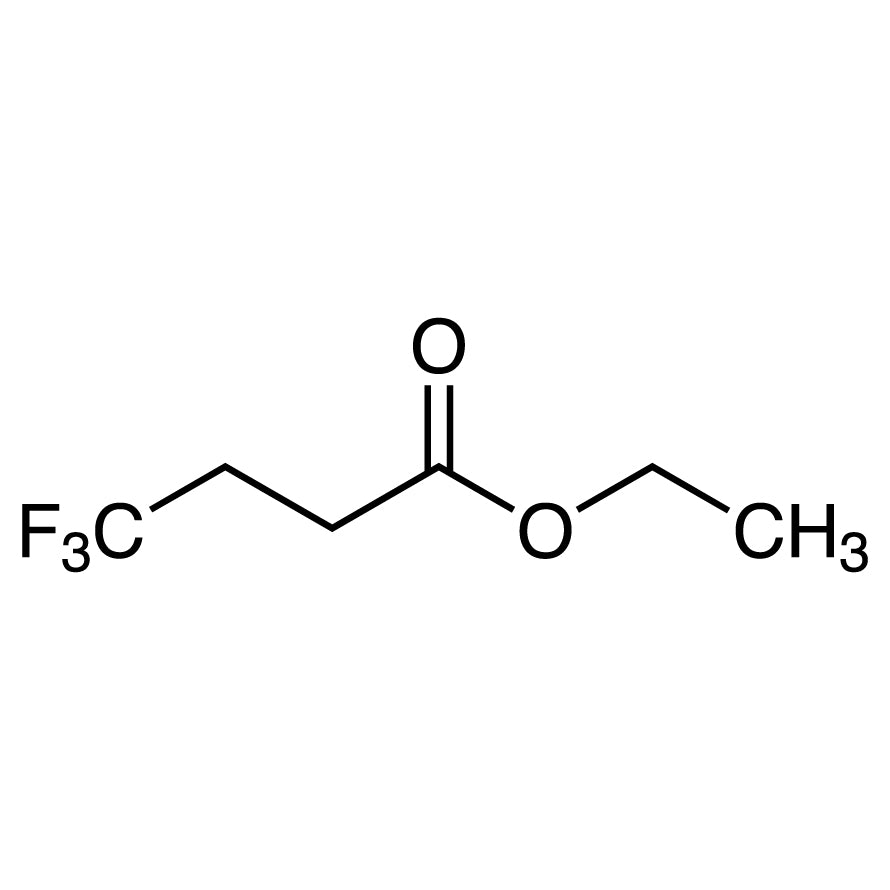
TCI E0830 Ethyl 4,4,4-Trifluorobutyrate is the ethyl ester of butyric acid in which the three hydrogen atoms on the terminal carbon have been replaced by fluorine atoms, forming a trifluoromethyl group. The material belongs to the fluorinated building blocks family, a class of reagents used specifically to introduce fluorine into target molecules. In the laboratory its role is to deliver a CF3 unit already attached to a short aliphatic chain while simultaneously providing an ester group as a point of connection. Researchers therefore do not need to carry out direct fluorination reactions, which generally demand hazardous reagents and special conditions; instead they simply work with a ready-made ester.
The properties that make this material sought after come from the character of the trifluoromethyl group itself. Fluorine is highly electronegative, so the CF3 group withdraws electrons strongly, lowering the basicity of neighbouring groups, increasing the metabolic stability of the molecule, and improving the ability of a compound to cross lipid membranes. In synthetic practice, the presence of CF3 also activates the ester carbonyl toward nucleophilic attack and facilitates enolate formation at the alpha position. The ester group itself is flexible: it can be hydrolysed to the corresponding acid, reduced to the alcohol, converted to an amide, or condensed with other partners, so a single reagent opens several downstream routes.
In Indonesian laboratories, this kind of fluorinated building block is typically used in university and institutional research groups working on medicinal chemistry, agrochemical intermediates, and materials synthesis, as well as in industrial R&D units developing new active compounds. Because the CF3 unit is already installed, the reagent fits well into laboratories that do not have dedicated fluorination infrastructure, and it is normally purchased in small research quantities for method development and small-scale preparative work.
TCI brochures (PDF)
- Fluorous Chemistry 2025-01-21 · p. 7
- Fluorination Reagents, Fluorinated Building Blocks 2026-03-18 · p. 52
Related TCI products
- TCI H1033 356-24-1 Methyl Heptafluorobutyrate
- TCI H0594 356-27-4 Ethyl Heptafluorobutyrate
- TCI H0508 375-16-6 Heptafluorobutyryl Chloride [for Heptafluorobutyration]
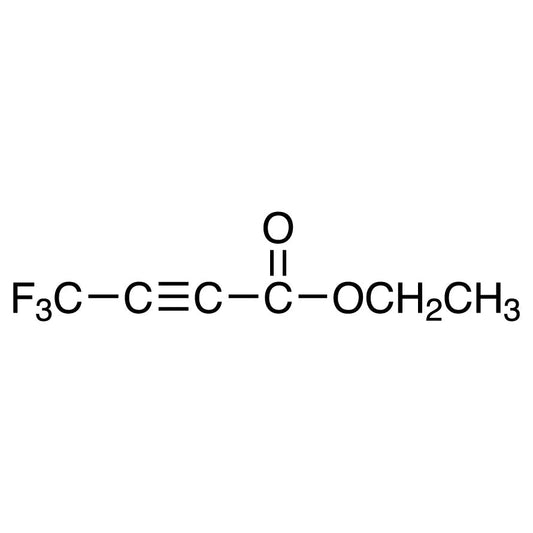
- TCI E1495 79424-03-6 Ethyl 4,4,4-Trifluorobut-2-ynoate
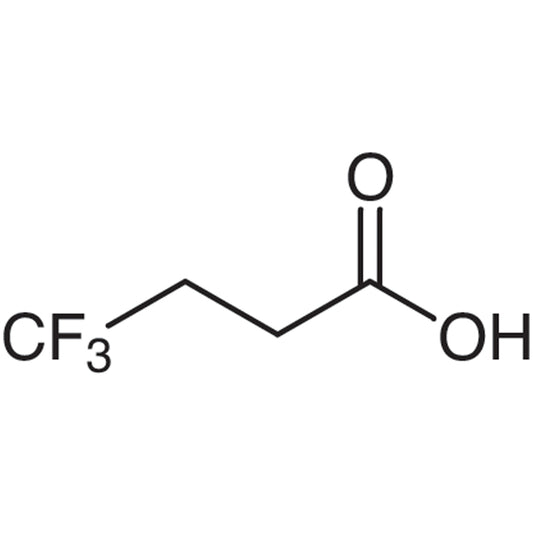
- TCI T2670 406-93-9 4,4,4-Trifluorobutyric Acid
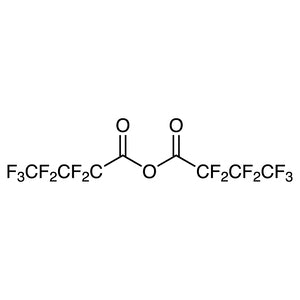
- TCI H0337 336-59-4 Heptafluorobutyric Anhydride
- Medicinal chemistry intermediate synthesis: the pre-installed CF3 unit raises metabolic stability and membrane permeability of candidate molecules without the need for hazardous direct fluorination steps in the laboratory.
- Introduction of trifluoromethyl groups into target molecules: the reagent serves as a ready CF3 source on a short aliphatic chain, avoiding specialised fluorinating reagents and the special handling conditions that they require.
- Alpha-functionalisation through enolate chemistry: the strongly electron-withdrawing CF3 group facilitates enolate formation at the alpha position, allowing alkylation, condensation, and related carbon–carbon bond-forming reactions to proceed.
- Ester transformation routes: the ester group can be hydrolysed to the acid, reduced to the alcohol, or converted to an amide, giving a single reagent several distinct downstream synthetic pathways.
- Agrochemical and materials research: fluorinated building blocks of this type are used to modify electronic character and stability of target structures, making the reagent useful in exploratory synthesis programmes.
| Brand | TCI |
|---|---|
| CAS number | 371-26-6 |
| Molecular formula | — |
| Purity | — |
| Category | Chemistry > Building Blocks > Fluorinated Building Blocks |
| Pack sizes | available in research-scale packaging; please confirm the currently available sizes when ordering |
| Physical form | — |
| Storage | keep in a cool, dry place in a tightly closed original container, away from heat and ignition sources |
- Catalogue code: E0830
Store the container tightly closed in a cool, dry, well-ventilated area, away from direct sunlight, heat, open flames, and other ignition sources. Keep the material in its original manufacturer container or in a compatible tightly sealed glass container, and keep it separated from strong oxidising agents, strong bases, and moisture, which may promote hydrolysis of the ester. Handle inside a fume hood, wearing safety goggles, chemical-resistant gloves, and a laboratory coat, and avoid inhaling vapours or allowing contact with skin and eyes. Transfer only the quantity required for the work at hand, return the container promptly to its designated storage location after use, and consult the manufacturer safety data sheet before first use and before disposal of residues.
—
Produk Terkait
-
MethylHeptafluorobutyrate TCI H1033
Regular price From Rp 1.035.300,00Regular price -
EthylHeptafluorobutyrate TCI H0594
Regular price From Rp 928.200,00Regular price -
HeptafluorobutyrylChloride[forHeptafluorobutyration] TCI H0508
Regular price From Rp 1.485.750,00Regular price -
Ethyl4,4,4-Trifluorobut-2-ynoate TCI E1495
Regular price Rp 6.651.750,00Regular price -
4,4,4-TrifluorobutyricAcid TCI T2670
Regular price From Rp 848.400,00Regular price -
HeptafluorobutyricAnhydride TCI H0337
Regular price Rp 2.279.550,00Regular price -
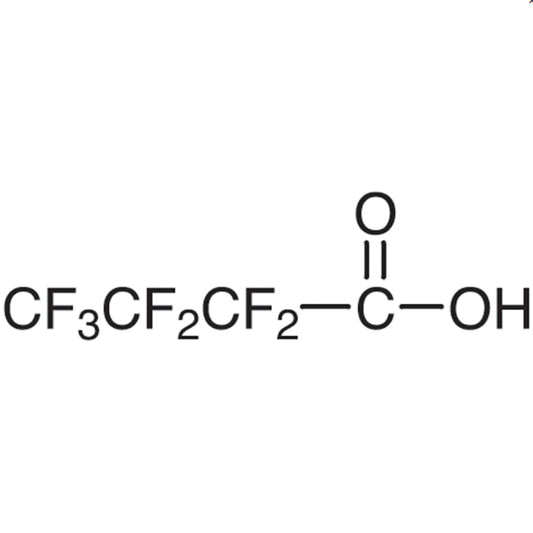
HeptafluorobutyricAcid TCI H0024
Regular price From Rp 2.545.200,00Regular price -
4-Chloro-4'-fluorobutyrophenone TCI C1294
Regular price Rp 769.650,00Regular price


![Heptafluorobutyryl Chloride [for Heptafluorobutyration] (CAS 375-16-6) - TCI H0508 - AMI Scientific](http://amiscientific.com/cdn/shop/files/TCI2510H0508.jpg?v=1768360590&width=533)