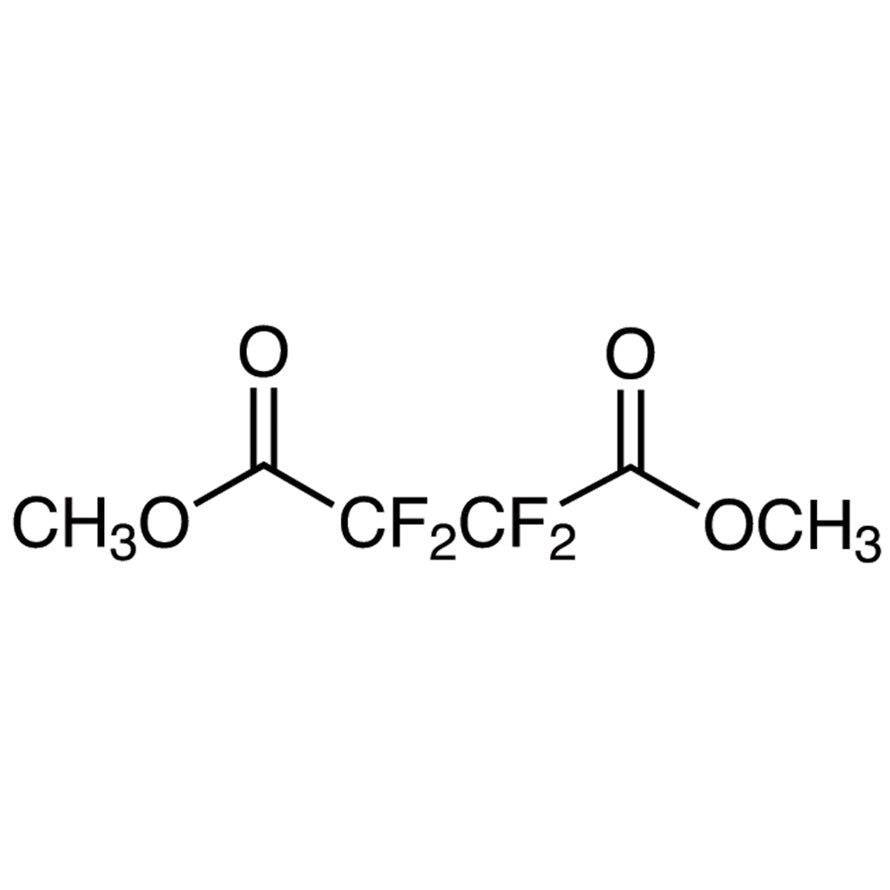
TCI D3588 Dimethyl Tetrafluorosuccinate is the dimethyl ester of tetrafluorosuccinic acid, a four-carbon dicarboxylic acid in which every methylene position has been replaced by fluorine atoms. The compound belongs to the family of fluorinated building blocks that are widely sought after in modern organic synthesis, because it presents two reactive ester groups flanked by a short perfluorinated segment. In the laboratory, this material serves as a precursor for preparing diols, diamides, polyesters, and fluorinated ligands, as well as an intermediate in the preparation of active compounds that require electronic modulation through a strongly electron-withdrawing group.
The characteristic that makes it attractive is the strong influence of the fluorine atoms on the reactivity of the adjacent ester groups. The electron-withdrawing inductive effect of the four fluorine atoms increases the electrophilicity of the carbonyl carbons, so that hydrolysis, transesterification, aminolysis, and reduction reactions proceed more readily than with ordinary aliphatic esters. The perfluorinated segment also lowers the basicity and improves the oxidative stability of its derivative products, properties that are highly valued in the design of materials and bioactive compounds. It is supplied as a liquid.
In Indonesian laboratories, this building block is typically used in university and institutional research settings working on organofluorine chemistry, medicinal chemistry intermediates, and specialty polymer development. It is normally handled at bench scale in small research quantities, where its two ester handles allow chemists to build symmetric or differentiated derivatives from a single starting material. Groups working on fluorinated ligands and fluorine-containing active compounds generally keep it on hand as a difunctional entry point rather than as a bulk reagent.
TCI brochures (PDF)
- Fluorous Chemistry 2025-01-21 · p. 7
- Fluorination Reagents, Fluorinated Building Blocks 2026-03-18 · p. 52
Related TCI products
- Diol synthesis: reduction of both ester groups yields tetrafluorinated diols, and the activated carbonyl carbons make this reduction proceed more readily than with ordinary aliphatic esters.
- Diamide preparation: aminolysis with primary or secondary amines is favoured by the heightened electrophilicity of the carbonyl carbons created by the four adjacent fluorine atoms.
- Fluorinated polyester production: the two ester groups allow transesterification-based polymerisation, while the perfluorinated backbone segment imparts improved oxidative stability to the resulting polymer.
- Fluorinated ligand construction: the compound provides a short, rigid perfluorinated spacer with two functionalisable termini, useful for building ligands with reduced basicity at donor sites.
- Medicinal chemistry intermediates: it serves as an intermediate for active compounds whose properties must be tuned electronically through the introduction of a strongly electron-withdrawing perfluorinated segment.
| Brand | TCI |
|---|---|
| CAS number | 356-36-5 |
| Molecular formula | — |
| Purity | — |
| Category | Chemistry > Building Blocks > Fluorinated Building Blocks |
| Pack sizes | available in standard TCI research-scale packaging; please confirm the pack size options when ordering |
| Physical form | liquid |
| Storage | keep in a tightly closed container in a cool, dry, well-ventilated place |
- Catalogue number: D3588
Store the material in its original tightly closed container in a cool, dry, well-ventilated area, away from heat sources, ignition sources, and incompatible substances such as strong bases, strong oxidising agents, and moisture, since the activated ester groups are susceptible to hydrolysis. Because the product is a liquid, use glass or other chemically compatible containers and keep them upright and clearly labelled. Handle inside a working fume hood using safety glasses, chemical-resistant gloves, and a laboratory coat. Avoid inhalation of vapours and contact with skin and eyes, transfer with dry glassware to limit moisture uptake, and always consult the manufacturer's safety data sheet before use and before arranging waste disposal.
—
Produk Terkait
-
TetrafluorosuccinicAnhydride TCI T2478
Regular price From Rp 1.936.200,00Regular price -
TetrafluorosuccinicAcid TCI T1621
Regular price From Rp 2.650.200,00Regular price -
2,3-Dimethyl-4-fluoronitrobenzene TCI D5187
Regular price From Rp 1.220.100,00Regular price -
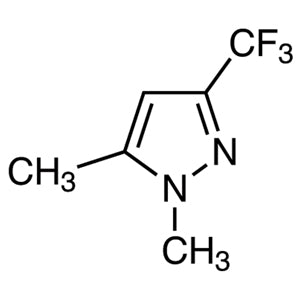
1,5-Dimethyl-3-(trifluoromethyl)pyrazole TCI D5071
Regular price From Rp 795.900,00Regular price -
DimethylOctafluoroadipate TCI D3590
Regular price From Rp 955.500,00Regular price -
DimethylHexafluoroglutarate TCI D3589
Regular price From Rp 903.000,00Regular price -
Dimethyl(methylthio)sulfoniumTetrafluoroborate TCI D1945
Regular price From Rp 2.041.200,00Regular price -
2,2-Dimethyl-6,6,7,7,8,8,8-heptafluoro-3,5-octanedione TCI D1729
Regular price Rp 1.908.900,00Regular price