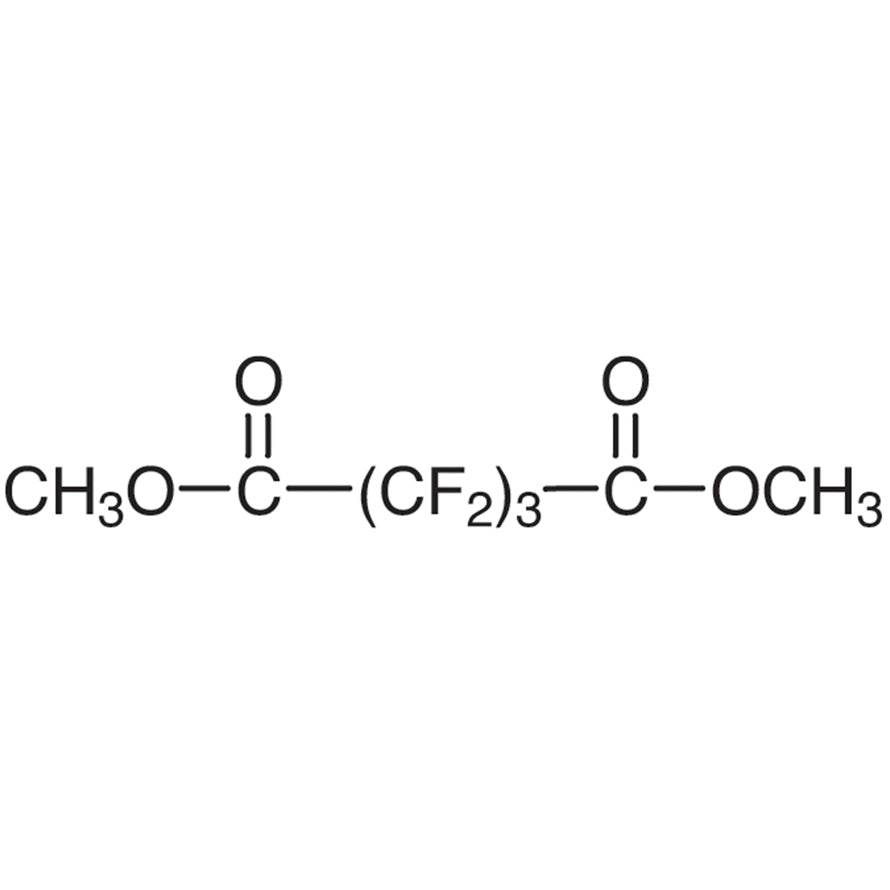
TCI D3589 Dimethyl Hexafluoroglutarate is the dimethyl diester of hexafluoroglutaric acid, a five-carbon dicarboxylic compound in which all three methylene units are fully fluorinated. The material belongs to the fluorinated building blocks category, providing a perfluoropropylene segment positioned between two reactive ester groups. Its role in the laboratory is that of a versatile synthetic intermediate: researchers use it to construct diamides, diols, specialty polyesters, and a range of other derivatives that require a fluorinated spacer of a specific length. With a chain length falling between succinate and adipate derivatives, it is a useful option whenever the distance between functional groups must be controlled carefully.
The principal property that makes this compound a preferred choice is the enhanced ester reactivity produced by the strong inductive effect of the six surrounding fluorine atoms. The carbonyl carbons become more electrophilic, so nucleophilic attack by amines or alcohols proceeds more rapidly than with ordinary aliphatic esters. The perfluoropropylene segment also contributes moderate conformational flexibility while maintaining chemical resistance, thermal stability, and low surface energy in the resulting products. Together these characteristics allow chemists to shorten reaction times, work under milder conditions, and transfer fluorinated character reliably into a target structure.
In Indonesian laboratories, this reagent is typically found in university research groups, government research institutes, and industrial R&D units working on fluorine chemistry, specialty polymers, and fine chemical intermediates. It is generally handled at bench scale on a fume hood, weighed for multi-step synthesis routes, and used in method development work where a defined fluorinated spacer is needed. Because it is supplied as a catalogue research chemical from TCI, it also supports teaching and postgraduate laboratories that require consistent, well-characterised starting materials.
TCI brochures (PDF)
- Fluorous Chemistry 2025-01-21 · p. 7
- Fluorination Reagents, Fluorinated Building Blocks 2026-03-18 · p. 52
Related TCI products
- TCI D5187 1736-87-4 2,3-Dimethyl-4-fluoronitrobenzene
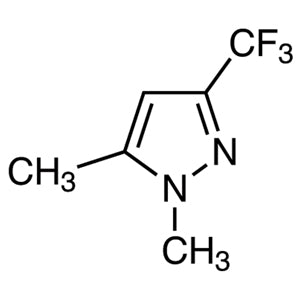
- TCI D5071 79080-31-2 1,5-Dimethyl-3-(trifluoromethyl)pyrazole
- TCI D3590 3107-98-0 Dimethyl Octafluoroadipate
- TCI D3588 356-36-5 Dimethyl Tetrafluorosuccinate
- TCI D1945 5799-67-7 Dimethyl(methylthio)sulfonium Tetrafluoroborate
- TCI D1729 17587-22-3 2,2-Dimethyl-6,6,7,7,8,8,8-heptafluoro-3,5-octanedione
- Diamide synthesis: the activated ester carbonyls react readily with primary and secondary amines, allowing fluorinated bis-amide structures to be assembled under comparatively mild laboratory conditions.
- Specialty polyester preparation: the difunctional ester serves as a monomer that introduces perfluoropropylene segments into polymer backbones, imparting chemical resistance and low surface energy.
- Fluorinated diol production: reduction of both ester groups gives a fluorinated diol spacer that is widely useful as a precursor for further functionalisation work.
- Spacer length control in molecular design: its five-carbon backbone sits between succinate and adipate analogues, giving chemists an intermediate option for tuning inter-functional distance.
- General fluorinated intermediate work: it acts as a convenient entry point for preparing derivatives where fluorine content must be introduced without building the fluorinated chain from scratch.
| Brand | TCI |
|---|---|
| CAS number | 1513-62-8 |
| Molecular formula | — |
| Purity | — |
| Category | Chemistry > Building Blocks > Fluorinated Building Blocks |
| Pack sizes | available in standard TCI research-scale catalogue pack sizes; please confirm the pack option when ordering. |
| Physical form | — |
| Storage | keep in a tightly closed original container in a cool, dry, well-ventilated area away from incompatible materials. |
- Catalogue code: D3589
Store the material in its original tightly closed container in a cool, dry, well-ventilated place, protected from direct sunlight, heat sources, and moisture. Containers should be chemically compatible and kept properly labelled; reseal immediately after each use to limit exposure to atmospheric humidity, since esters can undergo gradual hydrolysis. All handling should take place inside a functioning fume hood, using safety glasses, chemically resistant gloves, and a laboratory coat. Avoid contact with skin and eyes and avoid inhaling vapours. Keep the compound away from strong bases, strong oxidising agents, and nucleophilic reagents that may initiate unintended reaction. Consult the manufacturer's safety data sheet before use, and dispose of residues and contaminated materials in accordance with applicable chemical waste procedures.
—
Produk Terkait
-
2,3-Dimethyl-4-fluoronitrobenzene TCI D5187
Regular price From Rp 1.220.100,00Regular price -
1,5-Dimethyl-3-(trifluoromethyl)pyrazole TCI D5071
Regular price From Rp 795.900,00Regular price -
DimethylOctafluoroadipate TCI D3590
Regular price From Rp 955.500,00Regular price -
DimethylTetrafluorosuccinate TCI D3588
Regular price From Rp 610.050,00Regular price -
Dimethyl(methylthio)sulfoniumTetrafluoroborate TCI D1945
Regular price From Rp 2.041.200,00Regular price -
2,2-Dimethyl-6,6,7,7,8,8,8-heptafluoro-3,5-octanedione TCI D1729
Regular price Rp 1.908.900,00Regular price -
HexafluoroglutaricAcid TCI H0658
Regular price From Rp 1.431.150,00Regular price -
Dimethyl2-Oxoglutarate TCI K0013
Regular price From Rp 3.155.250,00Regular price