

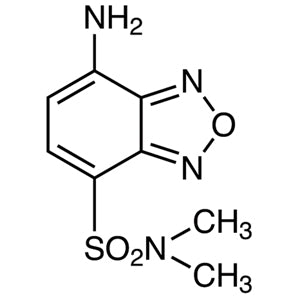
The 4-(N,N-Dimethylaminosulfonyl)-7-amino-2,1,3-benzoxadiazole from TCI, CAS number 147611-83-4, is a heterocyclic compound built on a benzoxadiazole (benzofurazan) framework that carries a dimethylaminosulfonyl group on one side of the ring and an amino group on the other. The benzoxadiazole framework is widely recognised in analytical laboratories as the core of fluorescence-conferring groups, so compounds of this class are used as labels and as building blocks for the preparation of derivatisation reagents. Its role is to supply a ready-to-use core motif for the development of probes, labels, and comparison compounds in analytical work as well as in chemical biology.
The property that makes this material a preferred choice is the combination of a conjugated aromatic system with a substituent pattern that places electron-withdrawing and electron-donating groups at opposite positions. This kind of push–pull arrangement is the basis of the fluorophoric character of the benzoxadiazole family, and it makes the optical properties of the molecule sensitive to the surrounding chemical environment. The free amino group serves as an attachment point for further modification, for example acylation or sulfonylation, so that the fluorescent core can be fixed onto a target molecule. Because fluorescence detection offers high sensitivity, compounds of this class are valued where small quantities of analyte must be observed reliably.
In Indonesian laboratories, a reagent of this type is normally held by analytical and chemical biology groups that prepare their own derivatisation reagents rather than buying finished kits. It suits university research laboratories, instrumentation service units, and research and development groups that carry out fluorescence-based analysis and need a defined heterocyclic core to work from. Because it is supplied as a research-grade building block, it is typically ordered in the small quantities appropriate to synthesis and method development work.
Related TCI products
- TCI B4473 273-09-6 2,1,3-Benzoxadiazole
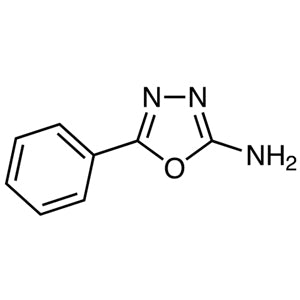
- TCI A3074 1612-76-6 2-Amino-5-phenyl-1,3,4-oxadiazole
- TCI A1315 138891-01-7 3-Acetyl-2-(methylaminosulfonyl)thiophene
- TCI P3198 15264-63-8 5-(Pyridin-4-yl)-1,3,4-oxadiazole-2(3H)-thione
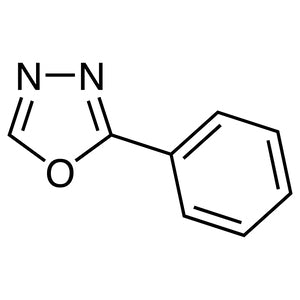
- TCI P2946 825-56-9 2-Phenyl-1,3,4-oxadiazole
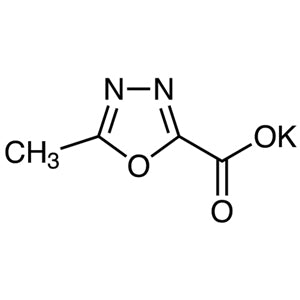
- TCI P2220 888504-28-7 Potassium 5-Methyl-1,3,4-oxadiazole-2-carboxylate
- Synthesis of fluorescent derivatisation reagents: the benzoxadiazole core already carries the push–pull substituent pattern responsible for fluorescence, so chemists start from a proven fluorophore rather than constructing one.
- Preparation of fluorescent labels for target molecules: the free amino group can be acylated or sulfonylated, allowing the fluorescent core to be attached covalently onto a molecule of interest.
- Development of fluorescent probes for chemical biology: the optical behaviour of the benzoxadiazole system responds to its chemical surroundings, which is the basis for probes that report on local environment.
- Heterocyclic building block work in synthetic chemistry: the substituted benzofurazan ring provides a defined starting scaffold for multi-step routes toward more elaborate heterocyclic targets.
- Preparation of comparison and reference compounds for analytical methods: a defined benzoxadiazole compound gives method developers a consistent material when establishing fluorescence-based detection procedures.
| Brand | TCI |
|---|---|
| CAS number | 147611-83-4 |
| Molecular formula | — |
| Purity | — |
| Category | Chemistry > Building Blocks > Heterocyclic Building Blocks |
| Pack sizes | research-scale packaging as offered by the manufacturer; please confirm the available pack size when ordering |
| Physical form | — |
| Storage | keep in the closed original container under the conditions stated on the manufacturer's label and safety data sheet |
- Chemical class: substituted 2,1,3-benzoxadiazole (benzofurazan) bearing dimethylaminosulfonyl and amino substituents
Store the material in its closed original container, in a cool, dry, well-ventilated place away from direct sunlight, heat sources, and incompatible chemicals, following the conditions given on the manufacturer's label and safety data sheet. Amber glass or the supplied container is appropriate for a light-sensitive fluorophoric compound, and containers should be kept tightly capped to limit exposure to moisture and air. Handle the solid in a fume hood, using gloves, safety glasses, and a laboratory coat, and avoid raising dust when weighing. Record the opening date, keep the safety data sheet accessible to all users, and dispose of residues and contaminated materials through the laboratory's chemical waste route.
—
Produk Terkait
-
2,1,3-Benzoxadiazole TCI B4473
Regular price From Rp 928.200,00Regular price -
2-Amino-5-phenyl-1,3,4-oxadiazole TCI A3074
Regular price From Rp 1.140.300,00Regular price -
3-Acetyl-2-(methylaminosulfonyl)thiophene TCI A1315
Regular price From Rp 1.961.400,00Regular price -
5-(Pyridin-4-yl)-1,3,4-oxadiazole-2(3H)-thione TCI P3198
Regular price From Rp 848.400,00Regular price -
2-Phenyl-1,3,4-oxadiazole TCI P2946
Regular price From Rp 2.016.000,00Regular price -
Potassium5-Methyl-1,3,4-oxadiazole-2-carboxylate TCI P2220
Regular price Rp 769.650,00Regular price -
4-Methoxy-7-nitrobenzo[c][1,2,5]oxadiazole TCI M3965
Regular price Rp 6.281.100,00Regular price -
2,5-Di(1-naphthyl)-1,3,4-oxadiazole TCI D2757
Regular price Rp 3.127.950,00Regular price



![18333-73-8 4-Methoxy-7-nitrobenzo[c][1,2,5]oxadiazole - AMI Scientific](http://amiscientific.com/cdn/shop/files/TCI2510M3965.jpg?v=1767129021&width=533)
