2-Amino-5-phenyl-1,3,4-oxadiazole is a chemical compound classified under the heterocyclic category, making it a valuable building block in organic chemistry. This compound is widely used in laboratory settings for the synthesis of complex molecules with biological activity. Its structural complexity allows it to participate in various chemical reactions, making it essential for researchers working on drug development and functional group modifications. Due to its chemical stability, it is a reliable reagent in synthetic pathways that require controlled reaction conditions.
The compound's unique heterocyclic structure contributes to its reactivity and versatility in chemical reactions. It can engage in substitution, condensation, and electrophilic reactions, making it a preferred choice for synthetic chemists. Its ability to interact with a variety of functional groups enhances its utility in the design of bioactive molecules. These properties make it an important tool in the development of pharmaceutical compounds and specialized chemical products.
In Indonesian laboratories, 2-Amino-5-phenyl-1,3,4-oxadiazole is commonly used in academic and research institutions. It plays a key role in pharmacological studies, organic synthesis, and the development of new chemical compounds. Its availability and reliability make it a staple in both educational and industrial research settings, supporting ongoing scientific innovation and discovery.
Related TCI products
- TCI B4473 273-09-6 2,1,3-Benzoxadiazole
- TCI B2169 2425-95-8 2,5-Bis(4-aminophenyl)-1,3,4-oxadiazole
- TCI B1066 1679-98-7 2,5-Bis(4-diethylaminophenyl)-1,3,4-oxadiazole
- TCI P3198 15264-63-8 5-(Pyridin-4-yl)-1,3,4-oxadiazole-2(3H)-thione
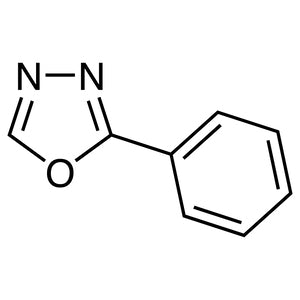
- TCI P2946 825-56-9 2-Phenyl-1,3,4-oxadiazole
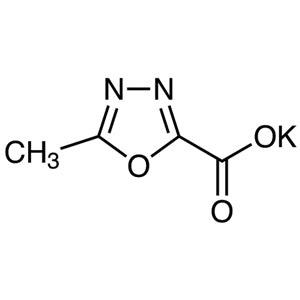
- TCI P2220 888504-28-7 Potassium 5-Methyl-1,3,4-oxadiazole-2-carboxylate
- Pharmacological research utilizes this compound for synthesizing bioactive molecules due to its structural versatility and reactivity.
- Organic chemistry experiments benefit from its ability to participate in substitution and condensation reactions, enhancing synthetic pathways.
- Drug development projects incorporate it as a building block for creating pharmaceutical compounds with targeted biological activity.
- Chemical reaction studies leverage its stability and reactivity to investigate reaction mechanisms and kinetic behavior.
- Academic research institutions use it extensively in teaching and experimental work to train students in advanced synthetic techniques.
| Brand | TCI |
|---|---|
| CAS number | 1612-76-6 |
| Molecular formula | — |
| Purity | — |
| Category | Chemistry > Building Blocks > Heterocyclic Building Blocks |
| Pack sizes | Available in standard laboratory quantities |
| Physical form | Solid powder |
| Storage | Store in a cool, dry place away from direct sunlight |
This compound should be stored in a cool, dry environment to maintain its chemical stability. It is recommended to keep it in a sealed container to prevent moisture absorption and contamination. Due to its reactivity, it should be handled in a well-ventilated area, and appropriate personal protective equipment should be worn. Avoid exposure to strong oxidizing agents or incompatible substances. The compound is generally stable under normal laboratory conditions, making it suitable for routine use in chemical synthesis and research applications. Always ensure proper disposal in accordance with local regulations to minimize environmental impact.
—
Produk Terkait
-
2,1,3-Benzoxadiazole TCI B4473
Regular price From Rp 980.700,00Regular priceRp 701.400,00Sale price From Rp 980.700,00 -
2,5-Bis(4-aminophenyl)-1,3,4-oxadiazole TCI B2169
Regular price From Rp 1.167.600,00Regular priceRp 831.600,00Sale price From Rp 1.167.600,00 -
2,5-Bis(4-diethylaminophenyl)-1,3,4-oxadiazole TCI B1066
Regular price Rp 1.431.150,00Regular priceRp 1.016.400,00Sale price Rp 1.431.150,00 -
5-(Pyridin-4-yl)-1,3,4-oxadiazole-2(3H)-thione TCI P3198
Regular price From Rp 900.900,00Regular priceRp 645.750,00Sale price From Rp 900.900,00 -
2-Phenyl-1,3,4-oxadiazole TCI P2946
Regular price From Rp 2.068.500,00Regular priceRp 1.461.600,00Sale price From Rp 2.068.500,00 -
Potassium5-Methyl-1,3,4-oxadiazole-2-carboxylate TCI P2220
Regular price Rp 822.150,00Regular priceRp 590.100,00Sale price Rp 822.150,00 -
1H-[1,2,4]Oxadiazolo[4,3-a]quinoxalin-1-one TCI O0400
Regular price Rp 5.592.300,00Regular priceRp 3.925.950,00Sale price Rp 5.592.300,00 -
4-Methoxy-7-nitrobenzo[c][1,2,5]oxadiazole TCI M3965
Regular price Rp 6.333.600,00Regular priceRp 4.444.650,00Sale price Rp 6.333.600,00