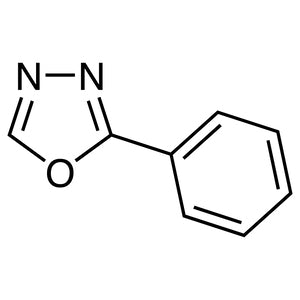
2,5-Bis(4-diethylaminophenyl)-1,3,4-oxadiazole is a chemical compound widely used in organic synthesis reactions within laboratory settings. As a heterocyclic building block, it plays a crucial role in the development of complex molecular structures. Its unique structure, featuring an oxadiazole ring connected to two diethylaminophenyl groups, makes it a versatile tool for chemists. This compound is particularly valuable in research focused on creating bioactive molecules, as its functional groups can participate in various chemical transformations.
The compound’s stability and reactivity make it a preferred choice for synthetic chemists. Its ability to undergo substitution, condensation, and electrophilic reactions allows for the synthesis of a wide range of derivatives. The presence of diethylaminophenyl groups enhances its reactivity and offers opportunities for structural modification. Additionally, its good solubility in organic solvents facilitates efficient handling and purification during laboratory procedures. These properties contribute to its popularity in both academic and industrial research environments.
In Indonesian laboratories, this compound is commonly used in chemical and pharmaceutical research. It supports the development of new compounds with potential therapeutic applications. Its role in building complex molecular frameworks is essential for drug discovery and synthetic chemistry projects. The compound’s reliability and compatibility with various synthetic methods make it a key component in modern laboratory workflows.
Related TCI products
- TCI B2169 2425-95-8 2,5-Bis(4-aminophenyl)-1,3,4-oxadiazole
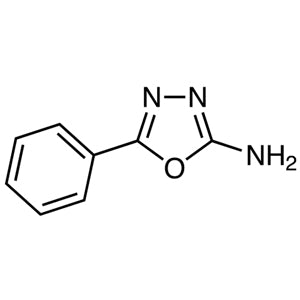
- TCI A3074 1612-76-6 2-Amino-5-phenyl-1,3,4-oxadiazole
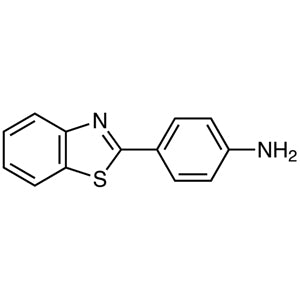
- TCI A2672 6278-73-5 2-(4-Aminophenyl)benzothiazole
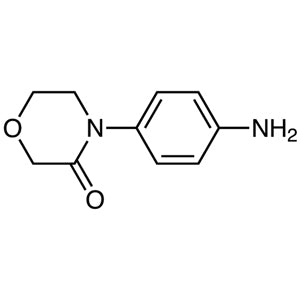
- TCI A2614 438056-69-0 4-(4-Aminophenyl)morpholin-3-one
- TCI A1966 84102-58-9 5-Amino-2-(4-aminophenyl)benzofuran
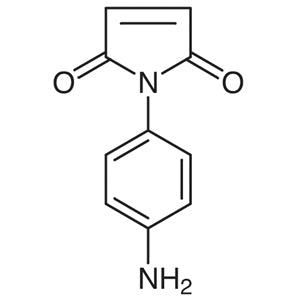
- TCI A0825 29753-26-2 N-(4-Aminophenyl)maleimide
- Organic synthesis: This compound is ideal for creating complex molecules due to its reactive heterocyclic structure and functional groups.
- Drug development: Its ability to form bioactive derivatives makes it valuable in pharmaceutical research for new therapeutic agents.
- Heterocyclic chemistry: It serves as a building block for synthesizing various heterocyclic compounds with diverse applications.
- Analytical chemistry: Its chemical stability and solubility make it suitable for use in analytical procedures and compound characterization.
- Research and development: It is frequently used in R&D settings to explore new synthetic pathways and molecular structures.
| Brand | TCI |
|---|---|
| CAS number | 1679-98-7 |
| Molecular formula | — |
| Purity | — |
| Category | Chemistry > Building Blocks > Heterocyclic Building Blocks |
| Pack sizes | Available in various quantities as per standard laboratory supply |
| Physical form | Solid |
| Storage | Store in a cool, dry place away from moisture and direct sunlight |
This compound should be stored in a cool, dry environment to maintain its chemical stability. It is recommended to keep it in a sealed container to prevent exposure to moisture and air. Due to its organic nature, it should be stored away from strong oxidizing agents and incompatible substances. Proper labeling of containers is essential for safe handling. In laboratory settings, it should be handled with appropriate personal protective equipment to ensure safety. Regular inspection of storage conditions is advised to maintain the integrity of the compound.
—
Produk Terkait
-
2,5-Bis(4-aminophenyl)-1,3,4-oxadiazole TCI B2169
Regular price From Rp 1.167.600,00Regular priceRp 831.600,00Sale price From Rp 1.167.600,00 -
2-Amino-5-phenyl-1,3,4-oxadiazole TCI A3074
Regular price From Rp 1.192.800,00Regular priceRp 849.450,00Sale price From Rp 1.192.800,00 -
2-(4-Aminophenyl)benzothiazole TCI A2672
Regular price Rp 1.351.350,00Regular priceRp 960.750,00Sale price Rp 1.351.350,00 -
4-(4-Aminophenyl)morpholin-3-one TCI A2614
Regular price From Rp 530.250,00Regular priceRp 386.400,00Sale price From Rp 530.250,00 -
5-Amino-2-(4-aminophenyl)benzofuran TCI A1966
Regular price Rp 3.285.450,00Regular priceRp 2.313.150,00Sale price Rp 3.285.450,00 -
N-(4-Aminophenyl)maleimide TCI A0825
Regular price Rp 3.445.050,00Regular priceRp 2.424.450,00Sale price Rp 3.445.050,00 -
5-(Pyridin-4-yl)-1,3,4-oxadiazole-2(3H)-thione TCI P3198
Regular price From Rp 900.900,00Regular priceRp 645.750,00Sale price From Rp 900.900,00 -
2-Phenyl-1,3,4-oxadiazole TCI P2946
Regular price From Rp 2.068.500,00Regular priceRp 1.461.600,00Sale price From Rp 2.068.500,00