


Potassium 5-Methyl-1,3,4-oxadiazole-2-carboxylate is a chemical compound widely used in organic reactions, particularly in the synthesis of heterocyclic compounds. It serves as a key building block in the development of complex molecules with ring structures, making it essential in chemical laboratories. This compound is commonly employed in research settings where the creation of structurally diverse and functionally relevant molecules is required. Its role in facilitating chemical transformations contributes significantly to the advancement of synthetic chemistry.
The compound’s unique chemical structure and high reactivity make it a preferred choice for researchers. It exhibits predictable chemical behavior, allowing for precise control during synthetic processes. Its ability to act as an electron donor or participate in substitution and covalent reactions enhances its versatility. Additionally, its solid form ensures ease of handling and storage, making it a reliable reagent for various laboratory applications. These properties collectively support its use in both academic and industrial research environments.
In Indonesian laboratories, this compound is integral to scientific research and the development of chemical products. It is widely used in educational institutions and research organizations to explore the properties and structures of heterocyclic compounds. Its availability in the local market ensures that researchers have access to this essential material for their experimental needs. The compound’s consistent performance and reliability make it a valuable asset in the chemical research community.
Related TCI products
- TCI B4473 273-09-6 2,1,3-Benzoxadiazole
- TCI B2169 2425-95-8 2,5-Bis(4-aminophenyl)-1,3,4-oxadiazole
- TCI B1066 1679-98-7 2,5-Bis(4-diethylaminophenyl)-1,3,4-oxadiazole
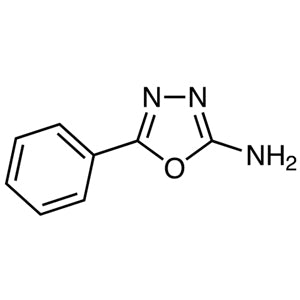
- TCI A3074 1612-76-6 2-Amino-5-phenyl-1,3,4-oxadiazole
- TCI P3198 15264-63-8 5-(Pyridin-4-yl)-1,3,4-oxadiazole-2(3H)-thione
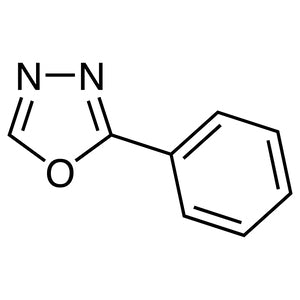
- TCI P2946 825-56-9 2-Phenyl-1,3,4-oxadiazole
- Synthesis of Heterocyclic Compounds: This compound is ideal for creating complex ring structures due to its reactivity and structural versatility.
- Organic Reaction Studies: It is frequently used in substitution and covalent reactions, offering researchers a reliable reagent for testing chemical mechanisms.
- Pharmaceutical Development: Its role in synthesizing bioactive molecules makes it valuable in drug discovery and development processes.
- Academic Research: It is commonly used in educational institutions to teach and demonstrate the principles of heterocyclic chemistry.
- Industrial Chemical Production: Its predictable behavior and availability make it suitable for large-scale chemical synthesis in industrial settings.
| Brand | TCI |
|---|---|
| CAS number | 888504-28-7 |
| Molecular formula | — |
| Purity | — |
| Category | Chemistry > Building Blocks > Heterocyclic Building Blocks |
| Pack sizes | — |
| Physical form | Solid |
| Storage | Store in a cool, dry place away from moisture and light |
This compound should be stored in a cool, dry environment to maintain its chemical integrity. It is recommended to use airtight containers to prevent exposure to moisture and air, which could affect its reactivity. As a solid, it is generally stable under normal laboratory conditions but should be kept away from heat sources. Proper labeling of containers is essential for safety and identification. Laboratory personnel should always wear appropriate personal protective equipment when handling this material to ensure safe and effective use. Regular monitoring of storage conditions helps maintain the compound’s quality and usability in research applications.
—
Product Categories
Produk Terkait
-
2,1,3-Benzoxadiazole TCI B4473
Regular price From Rp 928.200,00Regular price -
2,5-Bis(4-aminophenyl)-1,3,4-oxadiazole TCI B2169
Regular price From Rp 1.115.100,00Regular price -
2,5-Bis(4-diethylaminophenyl)-1,3,4-oxadiazole TCI B1066
Regular price Rp 1.378.650,00Regular price -
2-Amino-5-phenyl-1,3,4-oxadiazole TCI A3074
Regular price From Rp 1.140.300,00Regular price -
5-(Pyridin-4-yl)-1,3,4-oxadiazole-2(3H)-thione TCI P3198
Regular price From Rp 848.400,00Regular price -
2-Phenyl-1,3,4-oxadiazole TCI P2946
Regular price From Rp 2.016.000,00Regular price -
1H-[1,2,4]Oxadiazolo[4,3-a]quinoxalin-1-one TCI O0400
Regular price Rp 5.539.800,00Regular price -
4-Methoxy-7-nitrobenzo[c][1,2,5]oxadiazole TCI M3965
Regular price Rp 6.281.100,00Regular price



![41443-28-1 1H-[1,2,4]Oxadiazolo[4,3-a]quinoxalin-1-one - AMI Scientific](http://amiscientific.com/cdn/shop/files/TCI2510O0400.jpg?v=1767131865&width=533)
![18333-73-8 4-Methoxy-7-nitrobenzo[c][1,2,5]oxadiazole - AMI Scientific](http://amiscientific.com/cdn/shop/files/TCI2510M3965.jpg?v=1767129021&width=533)