
![41443-28-1 1H-[1,2,4]Oxadiazolo[4,3-a]quinoxalin-1-one - AMI Scientific](http://amiscientific.com/cdn/shop/files/TCI2510O0400.jpg?v=1767131865&width=1946)
![41443-28-1 1H-[1,2,4]Oxadiazolo[4,3-a]quinoxalin-1-one - AMI Scientific](http://amiscientific.com/cdn/shop/files/TCI2510O0400.jpg?v=1767131865&width=1445)
TCI O0400 41443-28-1 1H-[1,2,4]Oxadiazolo[4,3-a]quinoxalin-1-one is a chemical compound widely used in laboratory settings as a building block for the synthesis of heterocyclic compounds. This compound plays a crucial role in organic chemistry research, particularly in the development of complex molecular structures. Its unique chemical properties make it a valuable resource for scientists working on drug discovery and advanced chemical synthesis. Due to its structural complexity and reactivity, it is frequently used in both academic and industrial research environments.
The compound is known for its chemical stability and controlled reactivity, making it a preferred choice for researchers seeking reliable and consistent results. Its ability to participate in various chemical reactions allows for the creation of new compounds with tailored properties. The compound's resistance to evaporation and its durability under different chemical conditions contribute to its ease of handling and storage. These characteristics ensure that it remains a key component in many laboratory workflows.
In Indonesian laboratories, this compound is commonly used in chemical, pharmaceutical, and material science research. It is a staple in academic institutions and research centers, supporting the development of new drugs, polymers, and functional materials. Its versatility and reliability make it an essential tool for scientists aiming to advance their research in various fields of chemistry.
Related TCI products
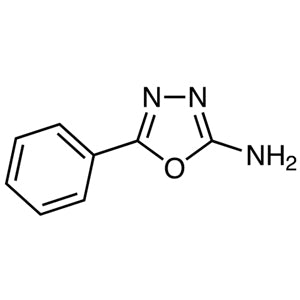
- TCI A3074 1612-76-6 2-Amino-5-phenyl-1,3,4-oxadiazole
- TCI P3198 15264-63-8 5-(Pyridin-4-yl)-1,3,4-oxadiazole-2(3H)-thione
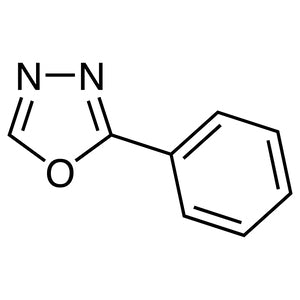
- TCI P2946 825-56-9 2-Phenyl-1,3,4-oxadiazole
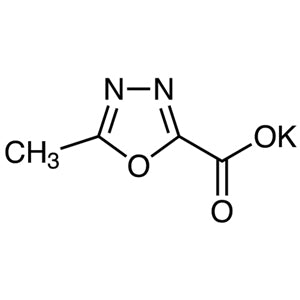
- TCI P2220 888504-28-7 Potassium 5-Methyl-1,3,4-oxadiazole-2-carboxylate
- TCI M3965 18333-73-8 4-Methoxy-7-nitrobenzo[c][1,2,5]oxadiazole
- TCI D2757 905-62-4 2,5-Di(1-naphthyl)-1,3,4-oxadiazole
- Drug discovery research utilizes this compound for the synthesis of novel pharmaceutical compounds due to its structural versatility and reactivity.
- Organic chemistry experiments benefit from its role as a heterocyclic building block, enabling the creation of complex molecular frameworks.
- Material science applications leverage its chemical stability to develop new polymers and functional materials with specific properties.
- Academic research in Indonesian universities relies on this compound for teaching and experimental purposes in advanced chemistry courses.
- Pharmaceutical development projects use it as a key intermediate in the synthesis of bioactive compounds for therapeutic applications.
| Brand | TCI |
|---|---|
| CAS number | 41443-28-1 |
| Molecular formula | — |
| Purity | — |
| Category | Chemistry > Building Blocks > Heterocyclic Building Blocks |
| Pack sizes | Available in various quantities as per standard laboratory supply options |
| Physical form | Solid, typically in crystalline or powder form |
| Storage | Store in a cool, dry place away from direct sunlight and moisture |
This compound should be stored in a cool, dry environment to maintain its chemical stability and prevent degradation. It is recommended to use airtight containers to protect it from moisture and air exposure. Due to its reactivity, it should be handled with care, using appropriate personal protective equipment such as gloves and safety goggles. It is advisable to store it in a well-ventilated area to minimize any potential risks associated with chemical fumes. Proper labeling of containers is essential to ensure safe handling and prevent accidental misuse in the laboratory.
—
Produk Terkait
-
2-Amino-5-phenyl-1,3,4-oxadiazole TCI A3074
Regular price From Rp 1.140.300,00Regular price -
5-(Pyridin-4-yl)-1,3,4-oxadiazole-2(3H)-thione TCI P3198
Regular price From Rp 848.400,00Regular price -
2-Phenyl-1,3,4-oxadiazole TCI P2946
Regular price From Rp 2.016.000,00Regular price -
Potassium5-Methyl-1,3,4-oxadiazole-2-carboxylate TCI P2220
Regular price Rp 769.650,00Regular price -
4-Methoxy-7-nitrobenzo[c][1,2,5]oxadiazole TCI M3965
Regular price Rp 6.281.100,00Regular price -
2,5-Di(1-naphthyl)-1,3,4-oxadiazole TCI D2757
Regular price Rp 3.127.950,00Regular price -
Benzo[g]quinoxaline TCI B4540
Regular price Rp 2.016.000,00Regular price -
Quinoxaline1,4-Dioxide TCI Q0110
Regular price From Rp 2.359.350,00Regular price

![18333-73-8 4-Methoxy-7-nitrobenzo[c][1,2,5]oxadiazole - AMI Scientific](http://amiscientific.com/cdn/shop/files/TCI2510M3965.jpg?v=1767129021&width=533)

![260-50-4 Benzo[g]quinoxaline - AMI Scientific](http://amiscientific.com/cdn/shop/files/TCI2510B4540.jpg?v=1767091332&width=533)
