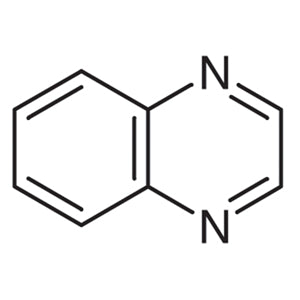
Benzo[g]quinoxaline is a chemical compound classified under the heterocyclic category, commonly used as a building block in the synthesis of complex molecules. This compound plays a crucial role in laboratory settings where the creation of intricate chemical structures is required. Its unique molecular structure enables it to participate in various chemical reactions, making it a versatile tool for researchers. In the field of organic chemistry, it is often employed to develop compounds with specific biological activities, such as pharmaceuticals and industrial chemicals.
The stability and controlled reactivity of Benzo[g]quinoxaline make it a preferred choice for laboratory applications. Its ability to undergo substitution and ring-opening reactions allows for the synthesis of a wide range of derivatives. The compound’s complex heterocyclic structure facilitates interactions with different reagents and reaction conditions, enhancing its utility in synthetic processes. These properties ensure that it remains a reliable and efficient component in the development of advanced chemical compounds.
In Indonesian laboratories, Benzo[g]quinoxaline is frequently used in research projects focused on drug discovery and chemical synthesis. Its high specificity and predictable behavior under controlled conditions make it ideal for applications requiring precision. Laboratories that specialize in organic chemistry and pharmacology often rely on this compound to produce compounds with targeted biological functions. Its stability and compatibility with various reagents further support its widespread use in both academic and industrial research settings.
- Drug discovery and development, as it serves as a core building block for synthesizing bioactive compounds with medicinal properties.
- Organic synthesis, due to its ability to participate in substitution and ring-opening reactions, enabling the creation of complex molecular structures.
- Pharmaceutical research, where its unique heterocyclic framework is used to design compounds with specific therapeutic effects.
- Chemical engineering applications, as it contributes to the production of industrial chemicals with tailored functional properties.
- Academic research in chemistry, where its predictable reactivity and structural versatility support the exploration of new synthetic methodologies.
| Brand | TCI |
|---|---|
| CAS number | 260-50-4 |
| Molecular formula | — |
| Purity | — |
| Category | Chemistry > Building Blocks > Heterocyclic Building Blocks |
| Pack sizes | Available in standard laboratory quantities |
| Physical form | Solid |
| Storage | Store in a cool, dry place away from light and moisture |
Benzo[g]quinoxaline should be stored in a cool, dry environment, away from direct light and moisture to maintain its chemical stability. It is recommended to use airtight containers to prevent exposure to air and moisture, which could affect its integrity. Due to its reactivity, it should be handled in a well-ventilated area, and appropriate personal protective equipment should be worn. The compound is generally non-hazardous under normal conditions, but care should be taken to avoid contamination during synthesis processes. Proper storage and handling ensure its effectiveness and safety in laboratory applications.
—
Produk Terkait
-
1,2,3,4-Tetrahydroquinoxaline TCI T2999
Regular price From Rp 795.900,00Regular priceRp 572.250,00Sale price From Rp 795.900,00 -
5,6,7,8-Tetrahydroquinoxaline TCI T1403
Regular price From Rp 900.900,00Regular priceRp 645.750,00Sale price From Rp 900.900,00 -
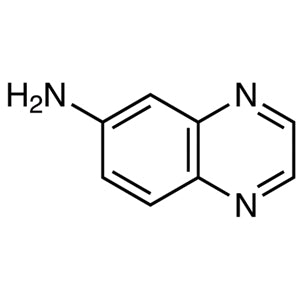
6-Aminoquinoxaline TCI A2490
Regular price From Rp 1.351.350,00Regular priceRp 960.750,00Sale price From Rp 1.351.350,00 -
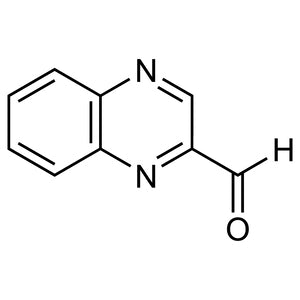
Quinoxaline-2-carbaldehyde TCI Q0121
Regular price From Rp 928.200,00Regular priceRp 664.650,00Sale price From Rp 928.200,00 -
Quinoxaline1,4-Dioxide TCI Q0110
Regular price From Rp 2.411.850,00Regular priceRp 1.702.050,00Sale price From Rp 2.411.850,00 -
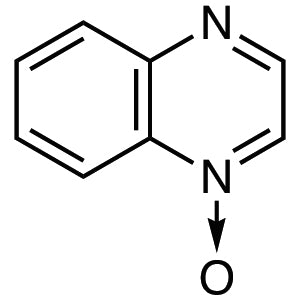
Quinoxaline1-Oxide TCI Q0108
Regular price From Rp 1.670.550,00Regular priceRp 1.183.350,00Sale price From Rp 1.670.550,00 -
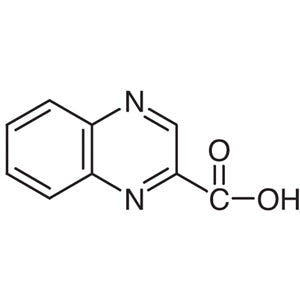
2-QuinoxalinecarboxylicAcid TCI Q0081
Regular price From Rp 662.550,00Regular priceRp 478.800,00Sale price From Rp 662.550,00 -
Quinoxaline TCI Q0020
Regular price Rp 1.590.750,00Regular priceRp 1.127.700,00Sale price Rp 1.590.750,00