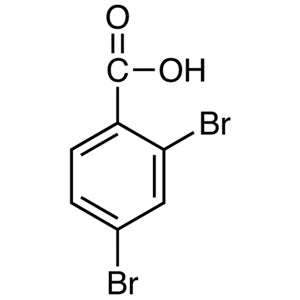
TCI D4278, CAS 611-00-7, is 2,4-Dibromobenzoic Acid, a non-heterocyclic building block consisting of a benzene ring bearing a carboxylic acid group together with two bromine atoms at the 2- and 4-positions. The combination of a single polar functional group and two halogen substituents at distinct ring positions makes this molecule highly useful in stepwise synthesis. In the laboratory, dihalogenated compounds of this type are frequently adopted as starting points for constructing complex molecules, because each position can be functionalized in sequence using a different strategy.
The property that drives its selection is the difference in electronic and steric environment between the bromine ortho to the carboxyl group and the one para to it. That difference opens the door to selectivity in metal-catalyzed cross-coupling reactions, allowing researchers to replace one bromine atom first before touching the other. The carboxylic acid group is itself highly versatile: it can be esterified, converted into an amide using coupling reagents, reduced to the corresponding benzylic alcohol, or used as a linker in the assembly of larger molecular frameworks. The same group can also act as a directing group in certain transformations.
In Indonesian laboratories, this material is typically used in academic and industrial research settings where multi-step organic synthesis is carried out — university chemistry departments, research institutes, and R&D units developing new molecules. It is commonly requested by groups that need a reliable, well-defined halogenated aromatic intermediate for route development on a research scale, where sequential functionalization of a single scaffold is more practical than sourcing several separate intermediates.
- Metal-catalyzed cross-coupling development: the two chemically distinguishable bromine positions allow selective substitution of one halogen before the other, supporting controlled stepwise route design.
- Multi-step synthesis of complex molecules: three independently addressable handles on one small scaffold let researchers build molecular complexity in a planned, sequential manner.
- Ester and amide preparation: the carboxylic acid group is readily esterified or converted to amides via standard coupling reagents, giving quick access to derivative libraries.
- Reduction chemistry to benzylic alcohols: the carboxyl group can be reduced to a benzylic alcohol, providing a different functional handle while the bromine substituents remain intact.
- Linker and scaffold construction: the acid functionality serves as a connection point for assembling larger molecular frameworks, and can also act as a directing group in selected transformations.
| Brand | TCI |
|---|---|
| CAS number | 611-00-7 |
| Molecular formula | — |
| Purity | — |
| Category | Chemistry > Building Blocks > Non-Heterocyclic Building Blocks |
| Pack sizes | available in standard research-scale packaging as supplied by the manufacturer; please confirm the required pack size when ordering |
| Physical form | — |
| Storage | store in the closed original container under the conditions indicated on the manufacturer's label and safety data sheet |
- Chemical name: 2,4-Dibromobenzoic Acid
- Catalogue code: D4278
Store the container tightly closed in a cool, dry, well-ventilated area away from moisture, direct sunlight, and incompatible materials, following the conditions stated on the manufacturer's label and safety data sheet. Keep the material in its original supplier container, or in a clean, chemically compatible, clearly labelled alternative if repackaging is necessary. Handle in a fume hood using appropriate personal protective equipment, including safety glasses, gloves, and a laboratory coat. Avoid the generation and inhalation of dust, avoid contact with skin and eyes, and use clean, dry spatulas when weighing to prevent contamination of the bulk material. Reseal the container promptly after use and dispose of residues and contaminated materials in accordance with applicable laboratory waste procedures.
—
Produk Terkait
-
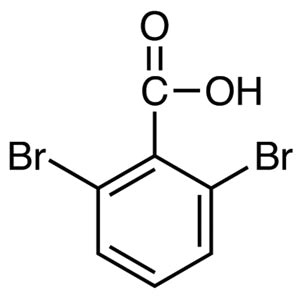
2,6-DibromobenzoicAcid TCI D5485
Regular price From Rp 2.359.350,00Regular price -
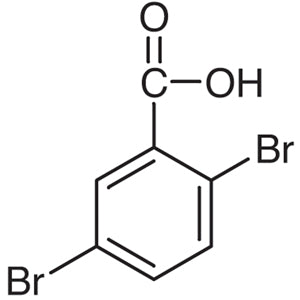
2,5-DibromobenzoicAcid TCI D3439
Regular price From Rp 717.150,00Regular price -
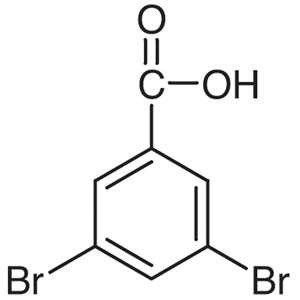
3,5-DibromobenzoicAcid TCI D2353
Regular price From Rp 955.500,00Regular price -
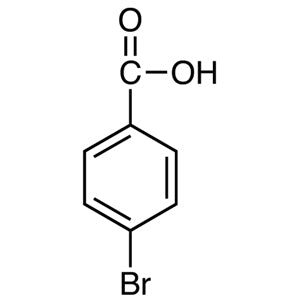
4-BromobenzoicAcid TCI B0553
Regular price From Rp 1.565.550,00Regular price -
2-BromobenzoicAcid TCI B0552
Regular price From Rp 903.000,00Regular price -
3-BromobenzoicAcid TCI B0551
Regular price From Rp 2.041.200,00Regular price -
2,4,6-TribromobenzoicAcid TCI T0619
Regular price From Rp 1.696.800,00Regular price -
Methyl2,5-Dibromobenzoate TCI D2673
Regular price From Rp 1.008.000,00Regular price