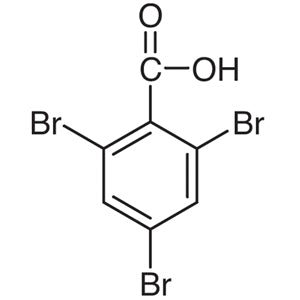
2,4,6-Tribromobenzoic Acid is a chemical compound widely used in laboratory settings for the synthesis of complex organic molecules. It serves as a key building block in various chemical reactions, enabling the creation of a wide range of functional compounds. This compound is particularly valued for its structural versatility and reactivity, making it a fundamental tool in synthetic chemistry. Its molecular structure consists of a benzene ring substituted with three bromine atoms at positions 2, 4, and 6, along with a carboxylic acid group at position 1. This unique arrangement allows for multiple reaction pathways, enhancing its utility in organic synthesis.
The compound is preferred due to its stable chemical properties and controlled reactivity, which make it suitable for a variety of synthetic processes. Its ability to participate in substitution and oxidation reactions is a major factor in its popularity among chemists. The presence of bromine atoms also contributes to its reactivity, allowing for selective modifications during synthesis. These characteristics make it an essential reagent for researchers aiming to develop new compounds with specific functional groups. Its compatibility with a range of reagents further enhances its applicability in diverse chemical contexts.
In Indonesian laboratories, 2,4,6-Tribromobenzoic Acid is commonly used in organic and analytical chemistry research. It is a preferred choice for researchers and industrial practitioners due to its reliability and effectiveness in chemical synthesis. Its availability and cost-effectiveness make it a go-to material for both academic and industrial applications. This compound plays a crucial role in advancing chemical research in Indonesia, supporting the development of new materials, pharmaceuticals, and industrial chemicals.
- Organic synthesis of complex molecules as a versatile building block for functional group introduction
- Bromine substitution reactions due to its brominated aromatic ring structure enabling selective modification
- Oxidation processes where its carboxylic acid functionality enhances reaction pathways and yields
- Pharmaceutical research for the development of new drug compounds with specific molecular frameworks
- Industrial chemical production as a precursor for various organic compounds and specialty chemicals
| Brand | TCI |
|---|---|
| CAS number | 633-12-5 |
| Molecular formula | — |
| Purity | — |
| Category | Chemistry > Building Blocks > Non-Heterocyclic Building Blocks |
| Pack sizes | Available in various quantities as per standard chemical supply specifications |
| Physical form | Solid, typically in crystalline or powder form |
| Storage | Store in a cool, dry place away from light and incompatible materials |
This compound should be stored in a cool, dry environment, away from direct sunlight and sources of heat. It is recommended to keep it in a sealed container to prevent moisture absorption and contamination. Due to its brominated structure, it may react with certain materials, so it should be stored separately from strong bases and reducing agents. Proper ventilation is essential when handling this material to minimize exposure. Laboratory personnel should wear appropriate personal protective equipment, including gloves and safety goggles, to ensure safe handling. Regular monitoring of storage conditions is advised to maintain the integrity and stability of the compound.
—
Produk Terkait
-
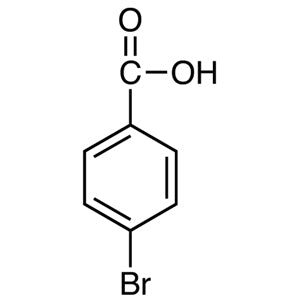
4-BromobenzoicAcid TCI B0553
Regular price Rp 1.618.050,00Regular priceRp 1.146.600,00Sale price Rp 1.618.050,00 -
2-BromobenzoicAcid TCI B0552
Regular price Rp 955.500,00Regular priceRp 683.550,00Sale price Rp 955.500,00 -
3-BromobenzoicAcid TCI B0551
Regular price Rp 2.093.700,00Regular priceRp 1.479.450,00Sale price Rp 2.093.700,00 -
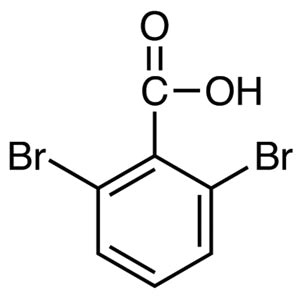
2,6-DibromobenzoicAcid TCI D5485
Regular price Rp 2.411.850,00Regular priceRp 1.702.050,00Sale price Rp 2.411.850,00 -
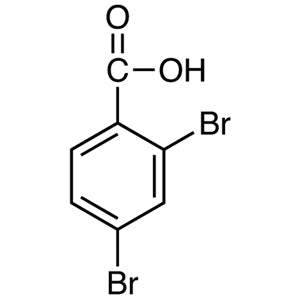
2,4-DibromobenzoicAcid TCI D4278
Regular price Rp 1.192.800,00Regular priceRp 849.450,00Sale price Rp 1.192.800,00 -
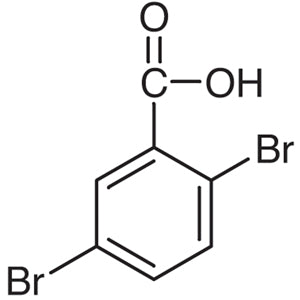
2,5-DibromobenzoicAcid TCI D3439
Regular price Rp 769.650,00Regular priceRp 553.350,00Sale price Rp 769.650,00 -
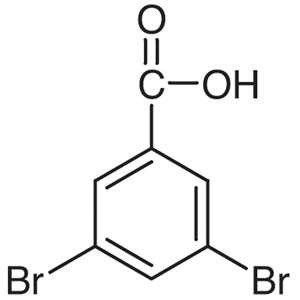
3,5-DibromobenzoicAcid TCI D2353
Regular price Rp 1.008.000,00Regular priceRp 720.300,00Sale price Rp 1.008.000,00 -
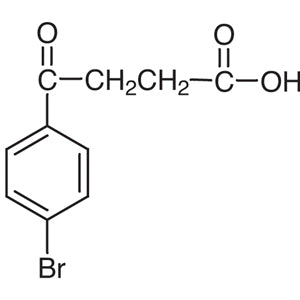
3-(4-Bromobenzoyl)propionicAcid TCI B3129
Regular price Rp 1.881.600,00Regular priceRp 1.331.400,00Sale price Rp 1.881.600,00