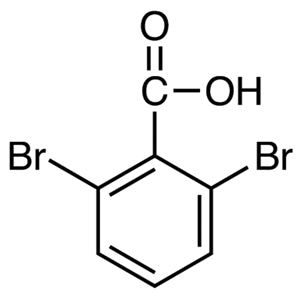
2,6-Dibromobenzoic Acid is a chemical compound widely used in laboratory settings for the synthesis of complex organic molecules. As a building block in chemical reactions, it serves as a key intermediate in the development of aromatic compounds with specific functional groups. Its role in organic chemistry is essential, particularly in reactions involving halogen substitution and electron donation. This compound is commonly found in chemical laboratories as a foundational material for the creation of various organic substances.
The compound’s molecular structure is stable, and its chemical properties are well-defined, making it a reliable choice for synthetic processes. The presence of two bromine atoms at positions 2 and 6 on the benzene ring contributes to its moderate polarity, allowing it to dissolve in organic solvents such as ethyl acetate and chloroform. These solubility characteristics enhance its usability in a wide range of chemical reactions. Its predictable behavior and consistent performance make it a favored material among chemists.
In Indonesian laboratories, 2,6-Dibromobenzoic Acid is frequently used in organic chemistry research, especially in the development of pharmaceutical compounds and industrial chemicals. Its availability in practical packaging formats makes it a popular choice for educational and research institutions. The compound’s versatility and reliability support its widespread application in both academic and industrial chemical research.
- Synthesis of aromatic compounds with bromine substitution at positions 2 and 6, as it provides a stable and predictable starting material for such reactions.
- Development of pharmaceutical compounds due to its structural versatility and ability to participate in various functional group transformations.
- Organic chemistry research in Indonesian academic institutions, where it is used as a fundamental building block for complex molecule synthesis.
- Industrial chemical production processes that require brominated aromatic intermediates for the creation of specialty chemicals.
- Halogen substitution reactions where its bromine atoms can be replaced with other functional groups to produce a wide range of derivatives.
| Brand | TCI |
|---|---|
| CAS number | 601-84-3 |
| Molecular formula | — |
| Purity | — |
| Category | Chemistry > Building Blocks > Non-Heterocyclic Building Blocks |
| Pack sizes | Available in various quantities as per standard laboratory supply formats |
| Physical form | Solid |
| Storage | Store in a cool, dry place away from light and moisture |
This compound should be stored in a cool, dry environment, away from direct sunlight and moisture. It is recommended to use airtight containers to prevent exposure to air and humidity, which could affect its stability. Due to its bromine content, it is advisable to handle it with appropriate personal protective equipment, such as gloves and safety goggles. It should not be stored near incompatible materials like flammable substances or strong oxidizers. Regular inspection of storage conditions is recommended to ensure the integrity of the compound remains unaffected. Proper labeling and storage practices help maintain the safety and effectiveness of the material in laboratory settings.
—
Produk Terkait
-
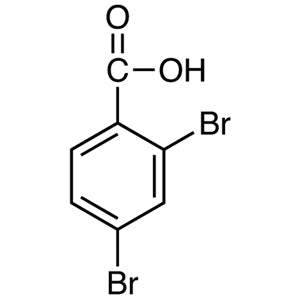
2,4-DibromobenzoicAcid TCI D4278
Regular price From Rp 1.140.300,00Regular price -
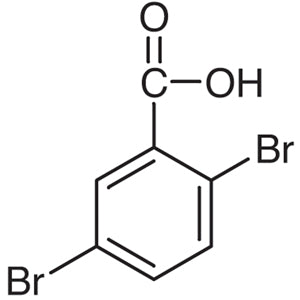
2,5-DibromobenzoicAcid TCI D3439
Regular price From Rp 717.150,00Regular price -
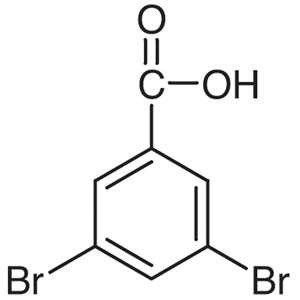
3,5-DibromobenzoicAcid TCI D2353
Regular price From Rp 955.500,00Regular price -
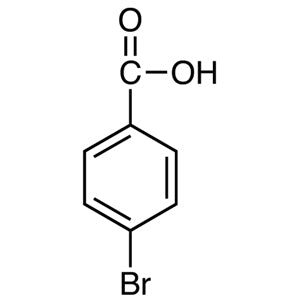
4-BromobenzoicAcid TCI B0553
Regular price From Rp 1.565.550,00Regular price -
2-BromobenzoicAcid TCI B0552
Regular price From Rp 903.000,00Regular price -
3-BromobenzoicAcid TCI B0551
Regular price From Rp 2.041.200,00Regular price -
2,4,6-TribromobenzoicAcid TCI T0619
Regular price From Rp 1.696.800,00Regular price -
Methyl2,5-Dibromobenzoate TCI D2673
Regular price From Rp 1.008.000,00Regular price