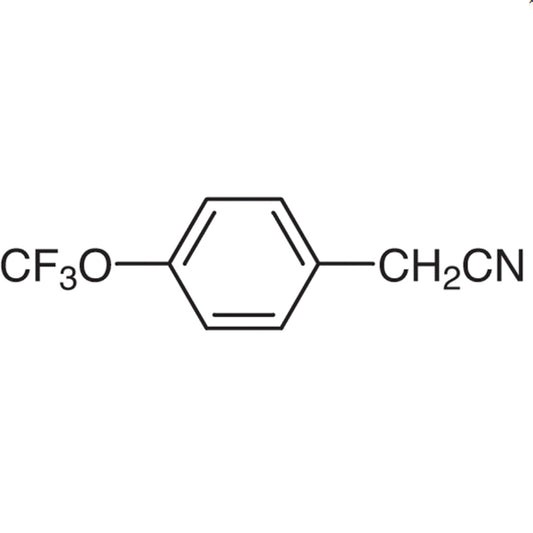
2,3-Difluorophenylacetonitrile is a chemical compound widely used as a building block in the synthesis of complex organic molecules. It plays a crucial role in laboratory settings where researchers aim to develop compounds with specific functional properties, such as biological activity or electronic characteristics. Its unique molecular structure, featuring two fluorine atoms on the phenyl ring and a nitrile group on the carbon chain, makes it an essential reagent for advanced chemical reactions. This compound is frequently employed in organic chemistry research to facilitate substitution reactions and structural modifications.
The compound is valued for its chemical stability and versatility in participating in various reaction mechanisms, including nucleophilic and electrophilic substitutions. Its relatively high polarity allows it to dissolve well in organic solvents such as ethyl acetate and acetone, making it suitable for a wide range of synthetic applications. These properties contribute to its popularity among chemists working on complex molecule synthesis and functional group manipulation.
In Indonesian laboratories, 2,3-Difluorophenylacetonitrile is commonly used in scientific research and development projects. It supports the creation of new compounds with tailored properties, aiding in both academic and industrial chemical innovation. Its reliability and effectiveness make it a preferred choice for researchers aiming to advance their work in organic chemistry.
TCI brochures (PDF)
- Fluorination Reagents, Fluorinated Building Blocks 2026-03-18 · p. 29
Related TCI products
- TCI T3129 113798-74-6 2,3,6-Trifluorophenol
- TCI T2407 209995-38-0 2,4,5-Trifluorophenylacetic Acid
- TCI T2368 2338-75-2 4-(Trifluoromethyl)phenylacetonitrile
- TCI T2367 2338-76-3 3-(Trifluoromethyl)phenylacetonitrile
- TCI T2366 3038-47-9 2-(Trifluoromethyl)phenylacetonitrile
- TCI T2299 99627-05-1 3,4,5-Trifluorophenol
- Organic synthesis of fluorinated compounds due to its fluorine-containing structure and reactivity.
- Development of bioactive molecules for pharmaceutical research as it can be modified to target specific biological functions.
- Structural modification of complex molecules in academic and industrial research settings.
- Preparation of nitrile-based intermediates for further chemical transformations in synthetic pathways.
- Exploration of electronic properties in materials science applications where fluorinated groups are desired.
| Brand | TCI |
|---|---|
| CAS number | 145689-34-5 |
| Molecular formula | — |
| Purity | — |
| Category | Chemistry > Building Blocks > Fluorinated Building Blocks |
| Pack sizes | Available in various quantities as per supplier specifications |
| Physical form | Liquid |
| Storage | Store in a cool, dry, and well-ventilated area away from light and incompatible materials |
This compound should be stored in a cool, dry, and well-ventilated area, away from direct sunlight and sources of heat. It is recommended to use sealed containers made of materials compatible with organic solvents to prevent evaporation and contamination. Due to its chemical reactivity, it should be handled in a fume hood to minimize exposure. Proper personal protective equipment, including gloves and safety goggles, should be worn when handling. Avoid contact with incompatible substances such as strong oxidizing agents or acids. Ensure that storage conditions are maintained to preserve the compound's stability and effectiveness in laboratory applications.
—
Produk Terkait
-
2,3,6-Trifluorophenol TCI T3129
Regular price From Rp 955.500,00Regular price -
2,4,5-TrifluorophenylaceticAcid TCI T2407
Regular price Rp 1.193.850,00Regular price -
4-(Trifluoromethyl)phenylacetonitrile TCI T2368
Regular price Rp 1.353.450,00Regular price -
3-(Trifluoromethyl)phenylacetonitrile TCI T2367
Regular price From Rp 795.900,00Regular price -
2-(Trifluoromethyl)phenylacetonitrile TCI T2366
Regular price From Rp 1.140.300,00Regular price -
3,4,5-Trifluorophenol TCI T2299
Regular price From Rp 1.220.100,00Regular price -
4-(Trifluoromethoxy)phenylacetonitrile TCI T1804
Regular price From Rp 610.050,00Regular price -
2,3,4-Trifluorophenol TCI T1616
Regular price From Rp 875.700,00Regular price