


TCI D4700, with the CAS number 200052-70-6, is a chemical compound used in materials science, particularly in the development of materials for OLED (Organic Light-Emitting Diode) applications. It serves as a key component in the light-emitting layer of OLED devices, where it facilitates the emission of light through electronic interactions. In the laboratory, this compound is essential for researchers aiming to create high-efficiency and long-lasting display technologies. Its role is critical in the formulation of organic materials that are both functional and durable in real-world applications.
The chemical properties of TCI D4700 make it a preferred choice for OLED research. It exhibits chemical stability, which ensures consistent performance during experiments and processing. Its compatibility with various other materials allows for seamless integration into complex formulations. Additionally, its high purity guarantees reliable and reproducible results, which are vital in scientific research. These characteristics make it a trusted material for both academic and industrial applications in Indonesia.
In Indonesian laboratories, TCI D4700 is commonly used in scientific research, especially in universities and research institutions. It supports the development of next-generation display technologies that are both energy-efficient and environmentally friendly. Its availability in the local market ensures that researchers can access this essential material for their experiments without logistical challenges.
TCI brochures (PDF)
- Organic Light-Emitting Diode (OLED) Materials 2026-08-18 · p. 8
Related TCI products
- TCI D2849 51325-91-8 4-(Dicyanomethylene)-2-methyl-6-(4-dimethylaminostyryl)-4H-pyran
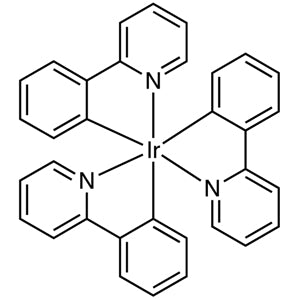
- TCI T3716 94928-86-6 Tris(2-phenylpyridinato)iridium(III)
- TCI T3657 145898-89-1 N,N,N',N'-Tetraphenyl[1,1':4',1'':4'',1'''-quaterphenyl]-4,4'''-diamine
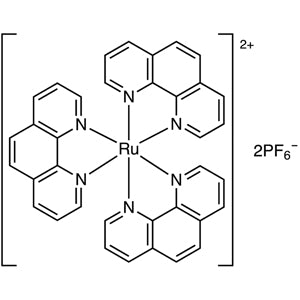
- TCI T3208 60804-75-3 Tris(1,10-phenanthroline)ruthenium(II) Bis(hexafluorophosphate)
- TCI T3206 17568-09-1 Tris(acetylacetonato)(1,10-phenanthroline)europium(III)
- TCI T3053 80663-92-9 2,5,8,11-Tetra-tert-butylperylene
- OLED Display Development: TCI D4700 is ideal for creating high-efficiency OLED displays due to its role in light emission and electronic interactions.
- Material Formulation Research: Its compatibility with various materials makes it suitable for studying new organic light-emitting compounds.
- Semiconductor Layer Testing: The compound is used to test the performance of semiconductor layers in OLED structures.
- Environmental Impact Studies: It supports research into eco-friendly display technologies by enabling the development of sustainable materials.
- Educational Research Projects: TCI D4700 is frequently used in academic settings to teach and explore the principles of OLED technology.
| Brand | TCI |
|---|---|
| CAS number | 200052-70-6 |
| Molecular formula | — |
| Purity | — |
| Category | Materials Science > Electronic Materials > Organic Light-Emitting Diode (OLED) Materials |
| Pack sizes | Available in standard laboratory quantities |
| Physical form | Solid (as per standard product specifications) |
| Storage | Store in a cool, dry place away from direct light |
TCI D4700 should be stored in a cool, dry environment to maintain its chemical stability and prevent degradation. It is recommended to keep the material in a sealed container to minimize exposure to moisture and air. Due to its chemical stability, it does not require refrigeration but should be protected from extreme temperatures. Laboratory personnel should handle the compound with care, using appropriate personal protective equipment when necessary. While it is not highly reactive, it is important to follow standard laboratory safety protocols to ensure safe handling and storage.
—
Produk Terkait
-
4-(Dicyanomethylene)-2-methyl-6-(4-dimethylaminostyryl)-4H-pyran TCI D2849
Regular price Rp 3.710.700,00Regular price -
Tris(2-phenylpyridinato)iridium(III) TCI T3716
Regular price From Rp 5.062.050,00Regular price -
N,N,N',N'-Tetraphenyl[1,1':4',1'':4'',1'''-quaterphenyl]-4,4'''-diamine TCI T3657
Regular price From Rp 1.856.400,00Regular price -
Tris(1,10-phenanthroline)ruthenium(II)Bis(hexafluorophosphate) TCI T3208
Regular price From Rp 1.829.100,00Regular price -
Tris(acetylacetonato)(1,10-phenanthroline)europium(III) TCI T3206
Regular price Rp 5.221.650,00Regular price -
2,5,8,11-Tetra-tert-butylperylene TCI T3053
Regular price Rp 3.683.400,00Regular price -
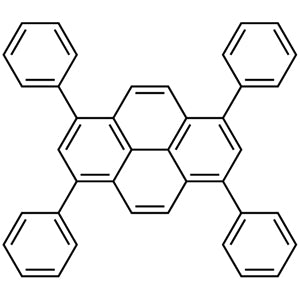
1,3,6,8-Tetraphenylpyrene TCI T3042
Regular price From Rp 2.837.100,00Regular price -
Tris[1-phenylisoquinoline-C2,N]iridium(III)(purifiedbysublimation) TCI T2685
Regular price Rp 10.733.100,00Regular price

![145898-89-1 N,N,N',N'-Tetraphenyl[1,1':4',1'':4'',1'''-quaterphenyl]-4,4'''-diamine - AMI Scientific](http://amiscientific.com/cdn/shop/files/TCI2510T3657.jpg?v=1769181355&width=533)


![435293-93-9 Tris[1-phenylisoquinoline-C2,N]iridium(III) (purified by sublimation) - AMI Scientific](http://amiscientific.com/cdn/shop/files/TCI2510T2685.jpg?v=1767143248&width=533)