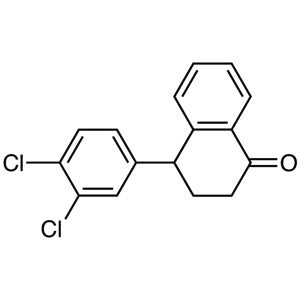
TCI D4766 4-(3,4-Dichlorophenyl)-1-tetralone is a bicyclic ketone built on a 1-tetralone framework bearing a 3,4-dichlorophenyl group at the 4-position. In the laboratory it is recognised as an important non-heterocyclic building block, largely because the 4-aryltetralin framework is a structural core encountered widely among bioactive compounds. One of its best-known roles is as an intermediate in synthetic routes toward tetralin derivatives, including the classical pathway leading to sertraline. The ketone function at position 1 provides a clear entry point for onward transformation into amines, alcohols, and other derivatives.
The property that makes this material a preferred choice lies in the structural complexity that is already available from the outset. Constructing an arylated tetralone framework in the laboratory normally demands several reaction steps together with their associated purification work, so starting from a ready-made material saves time and improves reproducibility. The benzylic ketone group in this compound is highly reactive toward reductive amination, reduction to the corresponding alcohol, and the formation of oximes and hydrazones. The two chlorine atoms on the phenyl ring, meanwhile, exert their own electronic influence on the substrate.
In Indonesian laboratories, a building block of this kind is typically used in organic synthesis and medicinal chemistry work, where a defined aryltetralone core shortens a multi-step route considerably. It suits academic research groups exploring tetralin derivatives, as well as method development and process-oriented studies where a consistent, well-characterised starting material matters. Because it is supplied ready to use, teams can concentrate on the transformation of interest rather than on building and purifying the scaffold itself.
- Reductive amination studies: the reactive benzylic ketone at position 1 converts readily to amine derivatives, making it a direct entry to 4-aryltetralin amines.
- Synthesis of sertraline-related tetralin derivatives: the compound serves as a recognised intermediate along the classical route, giving researchers a validated and well-documented starting point.
- Ketone reduction chemistry: the carbonyl group is reduced to the corresponding secondary alcohol, allowing stereochemical and reagent-screening investigations on an aryl-substituted tetralin framework.
- Oxime and hydrazone formation: condensation chemistry at the position-1 ketone provides derivatives useful for characterisation work and for further nitrogen-containing scaffold construction.
- Medicinal chemistry scaffold elaboration: the 4-aryltetralin core is common among bioactive compounds, so this building block supports analogue design without multi-step scaffold assembly.
| Brand | TCI (Tokyo Chemical Industry) |
|---|---|
| CAS number | 79560-19-3 |
| Molecular formula | — |
| Purity | — |
| Category | Chemistry > Building Blocks > Non-Heterocyclic Building Blocks |
| Pack sizes | available in standard TCI research-scale packaging; please confirm the size required when ordering |
| Physical form | — |
| Storage | store in the original tightly closed container in a cool, dry, well-ventilated place |
- Product code: D4766
Keep the material in its original tightly closed container, stored in a cool, dry and well-ventilated area away from heat, direct sunlight, moisture and incompatible reagents. Chemically resistant glass or the manufacturer's supplied packaging is suitable; label any secondary container clearly with the compound name and CAS number. Handle in a fume hood using safety glasses, gloves and a laboratory coat, and avoid the generation of dust as well as contact with skin, eyes and clothing. Close the container promptly after use to limit moisture uptake, and consult the supplier safety data sheet before first use and for waste disposal guidance in accordance with local laboratory regulations.
—
Produk Terkait
-
6-Bromo-1-tetralone TCI B4841
Regular price From Rp 3.922.800,00Regular price -
7-Bromo-1-tetralone TCI B4545
Regular price From Rp 928.200,00Regular price -
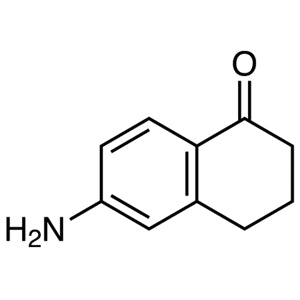
6-Amino-1-tetralone TCI A2642
Regular price From Rp 1.087.800,00Regular price -
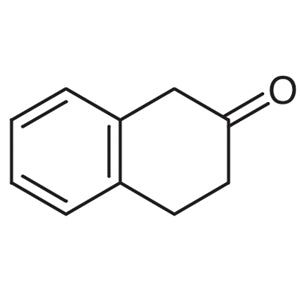
beta-Tetralone TCI T1167
Regular price From Rp 2.862.300,00Regular price -
alpha-Tetralone TCI T0134
Regular price From Rp 769.650,00Regular price -
7-Nitro-1-tetralone TCI N0945
Regular price From Rp 1.115.100,00Regular price -
7-Methyl-1-tetralone TCI M3255
Regular price From Rp 1.776.600,00Regular price -
2-Methyl-1-tetralone TCI M3159
Regular price From Rp 1.565.550,00Regular price