7-Methyl-1-tetralone is a chemical compound widely used as a building block in the synthesis of complex organic compounds. Its simple molecular structure plays a crucial role in the development of heterocyclic compounds and their derivatives. In laboratory settings, this compound serves as a fundamental reagent for reactions requiring a specific molecular framework, such as in pharmaceutical and industrial chemical applications. Due to its stability and controlled reactivity, it is a reliable choice for various chemical processes.
The compound’s non-polar nature makes it highly compatible with solvents, facilitating both dissolution and chemical reactions. Its chemical stability and predictable behavior under different reaction conditions make it a preferred material for synthetic chemists. Additionally, its availability in solid form allows for easy handling and incorporation into diverse chemical protocols. These properties contribute to its popularity among researchers and scientists working in organic chemistry.
In Indonesian laboratories, 7-Methyl-1-tetralone is commonly used in organic chemistry research, drug development, and studies on aromatic reactivity. Its versatility and reliability make it an essential component in various research projects conducted at educational and research institutions. The compound’s broad applications support its significance in both academic and industrial chemical research.
- Organic synthesis research: This compound is ideal for creating complex organic molecules due to its stable structure and reactivity.
- Pharmaceutical development: It serves as a key building block in the synthesis of various drug compounds and medicinal agents.
- Industrial chemical production: Its use in industrial applications supports the manufacture of specialty chemicals and materials.
- Aromatic reactivity studies: The compound's non-polar nature and chemical stability make it suitable for analyzing aromatic compound behavior.
- Educational research projects: It is frequently used in academic settings to teach and demonstrate fundamental chemical synthesis techniques.
| Brand | TCI |
|---|---|
| CAS number | 22009-37-6 |
| Molecular formula | — |
| Purity | — |
| Category | Chemistry > Building Blocks > Non-Heterocyclic Building Blocks |
| Pack sizes | Available in various quantities as per supplier specifications |
| Physical form | Solid |
| Storage | Store in a cool, dry place away from direct sunlight |
This compound should be stored in a cool, dry environment to maintain its chemical stability. It is recommended to keep it in a sealed container to prevent moisture absorption and contamination. Due to its non-polar nature, it is advisable to use glass or high-density polyethylene containers for safe handling. Avoid exposure to strong oxidizing agents or reactive substances to ensure safe storage. Proper labeling and storage conditions help maintain its integrity and usability in laboratory applications. Always follow standard laboratory safety protocols when handling and using this chemical.
—
Produk Terkait
-
6-Bromo-1-tetralone TCI B4841
Regular price From Rp 3.922.800,00Regular price -
7-Bromo-1-tetralone TCI B4545
Regular price From Rp 928.200,00Regular price -
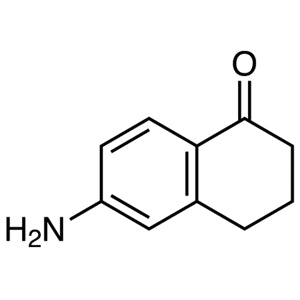
6-Amino-1-tetralone TCI A2642
Regular price From Rp 1.087.800,00Regular price -
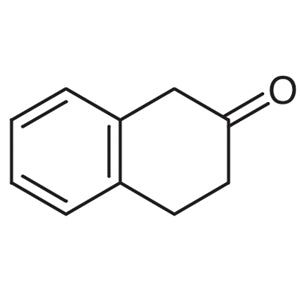
beta-Tetralone TCI T1167
Regular price From Rp 2.862.300,00Regular price -
alpha-Tetralone TCI T0134
Regular price From Rp 769.650,00Regular price -
7-Nitro-1-tetralone TCI N0945
Regular price From Rp 1.115.100,00Regular price -
2-Methyl-1-tetralone TCI M3159
Regular price From Rp 1.565.550,00Regular price -
5-Methoxy-1-tetralone TCI M2297
Regular price From Rp 2.227.050,00Regular price