TCI T0134 alpha-Tetralone, also known as 3,4-dihydro-1(2H)-naphthalenone, is a bicyclic ketone made of a benzene ring fused to a cyclohexanone ring. In organic chemistry laboratories it is a classic non-heterocyclic building block. Chemists often use it to build naphthalene, tetralin and other polycyclic frameworks. Its carbonyl group is conjugated with the aromatic ring, and its alpha position can be deprotonated. Together, these two features make it a starting point for many synthetic transformations.
Chemists choose alpha-tetralone because its reactivity is predictable and well documented. The carbonyl group can be reduced, can react with Grignard reagents, or can be condensed with amines. The alpha position can be alkylated, halogenated or used in aldol condensations. Further dehydrogenation can give naphthol or naphthalene derivatives. The rigid bicyclic framework makes it useful for stereochemistry studies and asymmetric synthesis. At room temperature it is usually a liquid or a low-melting solid, so it is easy to measure out and dissolves in common organic solvents.
In Indonesia, alpha-tetralone is useful for university chemistry departments, research institutes and industrial research and development laboratories. Teaching laboratories can use it to demonstrate classic carbonyl and alpha-carbon reactions. Research groups can use it as a dependable starting material when building polycyclic frameworks, preparing reference compounds or exploring new synthetic routes. Because it comes from TCI, a recognised brand, laboratories can work from a consistent source when planning multi-step syntheses and repeating published procedures.
- Synthesis of polycyclic frameworks: the fused benzene and cyclohexanone rings give a ready-made bicyclic core, which chemists can extend into naphthalene, tetralin and related polycyclic structures.
- Carbonyl transformation studies: the conjugated ketone can be reduced, can react with Grignard reagents or can be condensed with amines, so one starting material supports many functional group conversions.
- Alpha-functionalisation reactions: the alpha position can be deprotonated, which allows alkylation, halogenation and aldol condensation for adding substituents next to the carbonyl group.
- Preparation of naphthol and naphthalene derivatives: further dehydrogenation of the partly saturated ring gives a direct route to aromatic naphthol and naphthalene compounds for further synthetic work.
- Stereochemistry and asymmetric synthesis research: the rigid bicyclic framework limits how the molecule can move, which makes it a useful model substrate for studying stereoselective reactions and asymmetric methods.
| Brand | TCI (product code T0134) |
|---|---|
| CAS number | 529-34-0 |
| Molecular formula | — |
| Purity | — |
| Category | Chemistry > Building Blocks > Non-Heterocyclic Building Blocks |
| Pack sizes | available in TCI's standard pack sizes (see the product listing for current options) |
| Physical form | usually a liquid or a low-melting solid at room temperature |
| Storage | keep in a tightly closed original container in a cool, dry, well-ventilated place |
Keep alpha-tetralone in its original tightly sealed container, or in a compatible glass container with a secure cap. Store it in a cool, dry, well-ventilated area away from direct sunlight, heat sources and strong oxidising agents. Because it may be a liquid or a low-melting solid, check its physical state before weighing or transferring it. If the material has solidified, warm it gently and evenly. Handle it in a fume hood and wear a laboratory coat, chemical-resistant gloves and safety glasses. Avoid breathing in vapours and avoid contact with skin and eyes. Read the manufacturer's Safety Data Sheet before use, and dispose of waste according to institutional and local regulations.
—
Produk Terkait
-
6-Bromo-1-tetralone TCI B4841
Regular price From Rp 3.975.300,00Regular priceRp 2.795.100,00Sale price From Rp 3.975.300,00 -
7-Bromo-1-tetralone TCI B4545
Regular price From Rp 980.700,00Regular priceRp 701.400,00Sale price From Rp 980.700,00 -
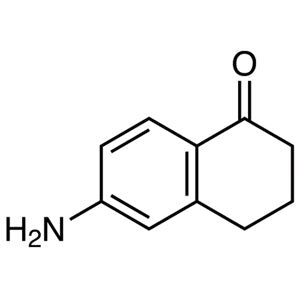
6-Amino-1-tetralone TCI A2642
Regular price From Rp 1.140.300,00Regular priceRp 812.700,00Sale price From Rp 1.140.300,00 -
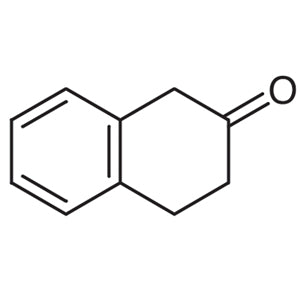
beta-Tetralone TCI T1167
Regular price From Rp 2.862.300,00Regular priceRp 2.001.300,00Sale price From Rp 2.862.300,00 -
7-Nitro-1-tetralone TCI N0945
Regular price From Rp 1.167.600,00Regular priceRp 831.600,00Sale price From Rp 1.167.600,00 -
7-Methyl-1-tetralone TCI M3255
Regular price From Rp 1.776.600,00Regular priceRp 1.242.150,00Sale price From Rp 1.776.600,00 -
2-Methyl-1-tetralone TCI M3159
Regular price From Rp 1.565.550,00Regular priceRp 1.094.100,00Sale price From Rp 1.565.550,00 -
5-Methoxy-1-tetralone TCI M2297
Regular price From Rp 2.279.550,00Regular priceRp 1.609.650,00Sale price From Rp 2.279.550,00