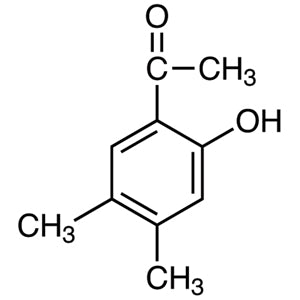
TCI D4812 2'-Hydroxy-4',5'-dimethylacetophenone is a non-heterocyclic synthetic building block: an acetophenone carrying a hydroxyl group ortho to the acetyl function, together with two methyl groups on the aromatic ring. It is this ortho-hydroxyacetophenone arrangement that makes the compound so valuable in the laboratory, because the neighbouring phenol and methyl ketone pair is a classical starting point for the construction of chromone, flavone, and coumarin ring systems. Natural product chemists and medicinal chemists use it to assemble oxygenated heterocyclic frameworks in a concise, well-directed manner.
The characteristic that leads researchers to select this compound is its pair of complementary reactive sites. The methyl ketone is readily deprotonated and participates in aldol and Claisen-Schmidt condensations as well as the Baker-Venkataraman rearrangement, while the ortho hydroxyl group is poised for intramolecular cyclisation to close the pyranone ring. The proximity of the two groups also produces an intramolecular hydrogen bond that stabilises the molecule and gives distinctive signatures in both NMR and infrared spectra, which makes reaction monitoring straightforward. The two ring methyl groups are electron-donating, which further modulates the electronic character of the aromatic system.
In Indonesian laboratories, this building block is typically used in university research groups, natural product and medicinal chemistry programmes, and organic synthesis teaching laboratories that prepare oxygenated heterocycles. It is normally purchased in research-scale quantities for multi-step synthetic routes, method development, and the preparation of reference compounds. Because the material is a defined single substance supported by clear spectroscopic behaviour, it fits well into workflows where reproducibility across repeated preparations matters.
Related TCI products
- TCI H1569 1198-66-9 2'-Hydroxy-3',5'-dimethylacetophenone
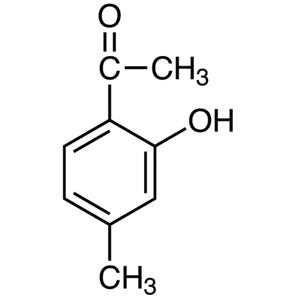
- TCI H1530 6921-64-8 2'-Hydroxy-4'-methylacetophenone
- TCI H1577 39604-66-5 2'-Hydroxy-4',6'-dimethoxy-2-phenylacetophenone
- TCI D4868 5379-16-8 3',5'-Dimethylacetophenone
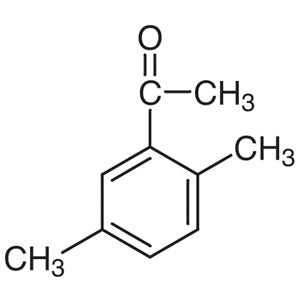
- TCI D1880 2142-73-6 2',5'-Dimethylacetophenone
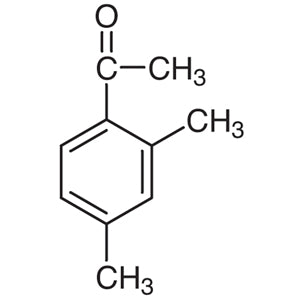
- TCI D1879 89-74-7 2',4'-Dimethylacetophenone
- Chromone and flavone synthesis — the adjacent phenol and methyl ketone give direct access to the pyranone ring closure that defines these two important scaffold families.
- Coumarin preparation — the ortho-hydroxyacetophenone motif serves as a classical precursor for building the coumarin core in natural product oriented synthetic routes.
- Baker-Venkataraman rearrangement studies — the acidic methyl ketone and neighbouring hydroxyl group provide exactly the substitution pattern this rearrangement requires to proceed cleanly.
- Aldol and Claisen-Schmidt condensations — the easily deprotonated methyl ketone reacts with aldehyde partners to extend the carbon skeleton toward larger heterocyclic targets.
- Medicinal chemistry scaffold building — researchers use it to prepare oxygenated heterocyclic frameworks efficiently, with the two ring methyl groups modulating the electronic profile of analogues.
| Brand | TCI |
|---|---|
| CAS number | 36436-65-4 |
| Molecular formula | — |
| Purity | — |
| Category | Chemistry > Building Blocks > Non-Heterocyclic Building Blocks |
| Pack sizes | available in standard TCI research-scale packaging; please confirm the currently listed sizes when ordering |
| Physical form | — |
| Storage | keep in the original tightly closed container, in a cool, dry, well-ventilated place away from light |
- Catalogue number: D4812
Store the material in its original tightly closed container in a cool, dry, and well-ventilated place, protected from direct sunlight and away from strong oxidising agents and sources of ignition. Amber glass or the manufacturer's supplied packaging is the most suitable container, since it limits light exposure and moisture uptake; transfer only the amount needed into clean, dry glassware for weighing. Handle in a fume hood using safety glasses, nitrile gloves, and a laboratory coat, and avoid generating or inhaling dust. Close containers immediately after use, label all secondary containers clearly, and consult the manufacturer's safety data sheet before handling, along with your institution's chemical waste procedures for disposal of residues.
—
Produk Terkait
-
2'-Hydroxy-3',5'-dimethylacetophenone TCI H1569
Regular price From Rp 848.400,00Regular price -
2'-Hydroxy-4'-methylacetophenone TCI H1530
Regular price Rp 2.571.450,00Regular price -
2'-Hydroxy-4',6'-dimethoxy-2-phenylacetophenone TCI H1577
Regular price From Rp 1.326.150,00Regular price -
3',5'-Dimethylacetophenone TCI D4868
Regular price From Rp 717.150,00Regular price -
2',5'-Dimethylacetophenone TCI D1880
Regular price From Rp 2.757.300,00Regular price -
2',4'-Dimethylacetophenone TCI D1879
Regular price From Rp 769.650,00Regular price -
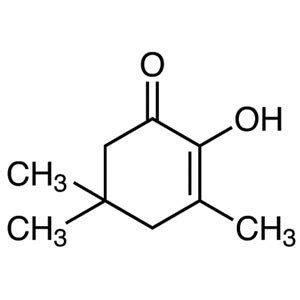
2-Hydroxy-3,5,5-trimethyl-2-cyclohexen-1-one TCI T2723
Regular price Rp 1.273.650,00Regular price -
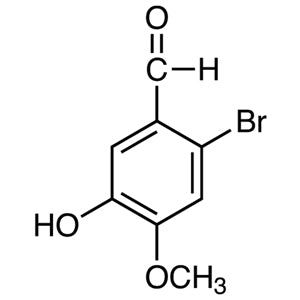
2-Bromo-5-hydroxy-4-methoxybenzaldehyde TCI B4681
Regular price Rp 4.293.450,00Regular price