TCI D4868 3',5'-Dimethylacetophenone is a simple aromatic ketone consisting of a benzene ring carrying methyl groups at the 3 and 5 positions, attached to an acetyl group. This TCI product is classified as a non-heterocyclic building block and serves in the laboratory as a versatile starting material in carbonyl chemistry. Aryl methyl ketones of this type represent one of the most productive classes of starting materials in organic synthesis, because the methyl group adjacent to the carbonyl is sufficiently acidic to form an enolate, while the carbonyl carbon readily accepts nucleophilic attack, providing two directions for structural elaboration at once.
The properties underlying its selection are the reactive flexibility of the acetophenone group combined with the symmetrical 3,5-dimethyl substitution pattern. Through cross aldol condensation with aromatic aldehydes, this compound yields chalcones; through subsequent Claisen–Schmidt condensation and cyclization, it becomes a precursor to pyrazolines, pyrimidines, synthetic flavonoids, and quinolines. Reduction of the carbonyl group gives a benzylic secondary alcohol, while alpha halogenation opens the route to highly reactive phenacyl halides. The two methyl groups at the meta positions impart electron-donating character to the aromatic ring.
In Indonesian laboratories, this material is typically used in university and institutional organic synthesis work, in medicinal chemistry research where chalcone and heterocycle scaffolds are assembled step by step, and in methodology studies on carbonyl reactivity. It is handled as a bench-scale reagent for multi-step preparations, where a single well-defined aryl methyl ketone can feed several parallel routes. Its role as a building block also makes it suitable for teaching and for exploratory reaction screening.
Related TCI products
- TCI H1569 1198-66-9 2'-Hydroxy-3',5'-dimethylacetophenone
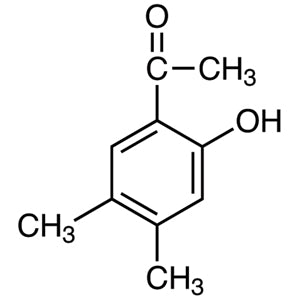
- TCI D4812 36436-65-4 2'-Hydroxy-4',5'-dimethylacetophenone
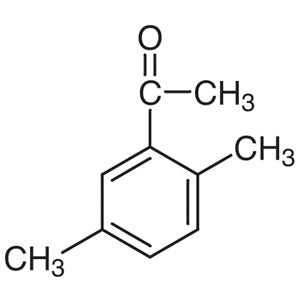
- TCI D1880 2142-73-6 2',5'-Dimethylacetophenone
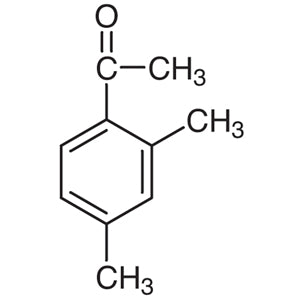
- TCI D1879 89-74-7 2',4'-Dimethylacetophenone
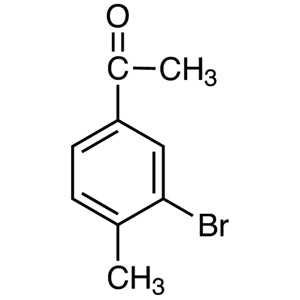
- TCI B4758 40180-80-1 3'-Bromo-4'-methylacetophenone
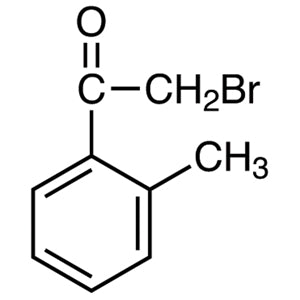
- TCI B4750 51012-65-8 2-Bromo-2'-methylacetophenone
- Chalcone synthesis via Claisen–Schmidt condensation with aromatic aldehydes, where the acidic methyl group next to the carbonyl forms the enolate needed to build the enone framework reliably.
- Heterocycle construction toward pyrazolines and pyrimidines, since the chalcone intermediates derived from this ketone cyclize readily with hydrazines and amidine-type nitrogen nucleophiles.
- Synthetic flavonoid and quinoline preparation, where this aryl methyl ketone supplies the aromatic ketone fragment required in condensation followed by ring-closing sequences.
- Preparation of benzylic secondary alcohols through carbonyl reduction, giving a defined chiral or achiral alcohol handle for further functional group transformation in multi-step routes.
- Access to phenacyl halides by alpha halogenation, producing highly reactive alkylating intermediates useful for coupling the 3,5-dimethylphenyl ketone unit to nucleophilic partners.
| Brand | TCI (Tokyo Chemical Industry) |
|---|---|
| CAS number | 5379-16-8 |
| Molecular formula | — |
| Purity | — |
| Category | Chemistry > Building Blocks > Non-Heterocyclic Building Blocks |
| Pack sizes | available in standard TCI research and laboratory pack sizes |
| Physical form | — |
| Storage | keep in the original tightly closed container in a cool, dry, well-ventilated place |
- Catalogue Code: D4868
Store the material in its original tightly closed container in a cool, dry, well-ventilated area, away from heat, direct sunlight, ignition sources, and strong oxidizing agents. Use compatible tightly sealed glass or manufacturer-supplied containers, and reseal immediately after each withdrawal to limit moisture uptake and vapour release. Handle in a fume hood using safety glasses, chemical-resistant gloves, and a laboratory coat. Avoid inhalation of vapours and contact with skin and eyes, transfer with clean dry glassware to prevent contamination, keep containers clearly labelled, and consult the manufacturer's safety data sheet before use and for waste disposal.
—
Produk Terkait
-
2'-Hydroxy-3',5'-dimethylacetophenone TCI H1569
Regular price From Rp 848.400,00Regular price -
2'-Hydroxy-4',5'-dimethylacetophenone TCI D4812
Regular price From Rp 795.900,00Regular price -
2',5'-Dimethylacetophenone TCI D1880
Regular price From Rp 2.757.300,00Regular price -
2',4'-Dimethylacetophenone TCI D1879
Regular price From Rp 769.650,00Regular price -
3'-Bromo-4'-methylacetophenone TCI B4758
Regular price From Rp 637.350,00Regular price -
2-Bromo-2'-methylacetophenone TCI B4750
Regular price From Rp 848.400,00Regular price -
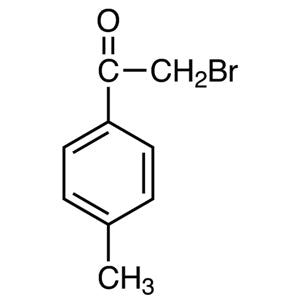
2-Bromo-4'-methylacetophenone TCI B2107
Regular price From Rp 1.220.100,00Regular price -
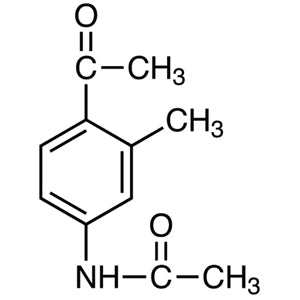
4'-Acetamido-2'-methylacetophenone TCI A2767
Regular price From Rp 1.140.300,00Regular price