2-Bromo-4'-methylacetophenone is a chemical compound widely used as a building block in the synthesis of complex organic molecules. It belongs to the category of non-heterocyclic building blocks and is commonly employed in organic chemistry laboratories for its versatility and reactivity. This compound features an aromatic structure with bromo and methyl substituents, making it a valuable reagent in substitution and electrophilic reactions. Its role in constructing more complex molecular frameworks is essential in both synthetic and pharmaceutical research.
The compound is preferred due to its stable chemical properties and controlled reactivity, allowing chemists to manipulate it under various reaction conditions. It exhibits good solubility in common organic solvents and maintains its integrity during multiple reaction steps. Its relatively high boiling and melting points facilitate purification processes such as distillation and recrystallization. These characteristics make it a reliable choice for researchers aiming to achieve consistent results in their experiments.
In Indonesian laboratories, 2-Bromo-4'-methylacetophenone is extensively used in chemical and pharmaceutical research. It is a key component in the synthesis of bioactive compounds and intermediate molecules. Many research institutions and universities rely on this compound for experiments involving drug development and organic synthesis. Its availability and reliability ensure that it remains a staple in the laboratory toolkit of Indonesian scientists.
Related TCI products
- Organic synthesis applications benefit from its reactivity and structural versatility, enabling the creation of complex molecular frameworks.
- Pharmaceutical research utilizes this compound as a building block for the development of bioactive compounds and drug intermediates.
- Analytical chemistry experiments often incorporate it as a standard for chromatographic and spectroscopic analysis due to its well-defined properties.
- Teaching laboratories use it to demonstrate substitution and electrophilic reactions, providing students with hands-on experience in synthetic chemistry.
- Industrial research and development projects employ it for the synthesis of specialty chemicals and fine chemicals with specific functional groups.
| Brand | TCI |
|---|---|
| CAS number | 619-41-0 |
| Molecular formula | — |
| Purity | — |
| Category | Chemistry > Building Blocks > Non-Heterocyclic Building Blocks |
| Pack sizes | Available in various quantities as per supplier specifications |
| Physical form | Solid or liquid, depending on the specific product variant |
| Storage | Store in a cool, dry place away from light and incompatible substances |
This compound should be stored in a cool, dry environment, away from direct sunlight and sources of heat. It is recommended to keep it in airtight containers made of glass or high-density polyethylene to prevent contamination and maintain purity. Due to its chemical reactivity, it should be handled with care, using appropriate personal protective equipment such as gloves and safety goggles. It is important to ensure that it is stored separately from strong oxidizing agents and incompatible materials to prevent unwanted reactions. Proper labeling of storage containers is essential for safety and traceability in the laboratory setting.
—
Produk Terkait
-
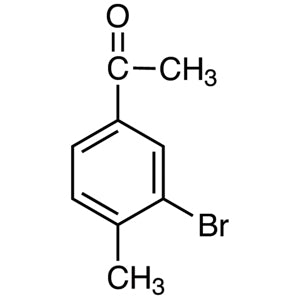
3'-Bromo-4'-methylacetophenone TCI B4758
Regular price From Rp 689.850,00Regular priceRp 497.700,00Sale price From Rp 689.850,00 -
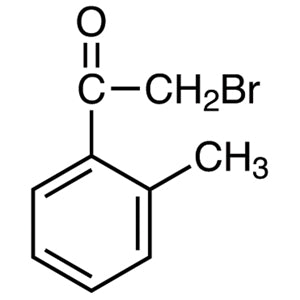
2-Bromo-2'-methylacetophenone TCI B4750
Regular price From Rp 900.900,00Regular priceRp 645.750,00Sale price From Rp 900.900,00 -
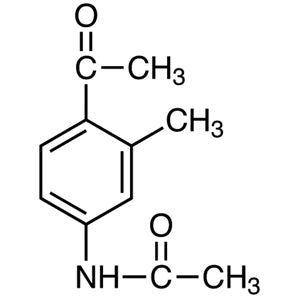
4'-Acetamido-2'-methylacetophenone TCI A2767
Regular price From Rp 1.192.800,00Regular priceRp 849.450,00Sale price From Rp 1.192.800,00 -
2',4',6'-Trimethylacetophenone TCI T1117
Regular price From Rp 795.900,00Regular priceRp 556.500,00Sale price From Rp 795.900,00 -
3'-Methylacetophenone TCI M0191
Regular price From Rp 2.041.200,00Regular priceRp 1.426.950,00Sale price From Rp 2.041.200,00 -
2'-Methylacetophenone TCI M0172
Regular price From Rp 1.829.100,00Regular priceRp 1.278.900,00Sale price From Rp 1.829.100,00 -
4'-Methylacetophenone TCI M0135
Regular price From Rp 477.750,00Regular priceRp 333.900,00Sale price From Rp 477.750,00 -
2'-Hydroxy-3',5'-dimethylacetophenone TCI H1569
Regular price From Rp 900.900,00Regular priceRp 645.750,00Sale price From Rp 900.900,00