TCI T1117 is 2',4',6'-Trimethylacetophenone, CAS number 1667-01-2, an aromatic ketone also known as mesityl methyl ketone. Its benzene ring carries three methyl groups at the 2, 4 and 6 positions, and the acetyl group sits between the two ortho methyl groups. In the TCI catalog it is listed under Chemistry > Building Blocks > Non-Heterocyclic Building Blocks. In the laboratory it serves as a starting material for organic synthesis and as a substrate for studying the reactivity of sterically hindered ketones.
The feature that makes this compound interesting is the steric crowding around the carbonyl group. The two ortho methyl groups push the acetyl group out of the plane of the ring. This reduces conjugation with the ring, so the carbonyl reacts differently from the one in ordinary acetophenone. Researchers can use this to examine how steric effects influence nucleophilic addition, enolate formation and condensation reactions. The methyl group on the α-carbon can also be enolized to form carbon–carbon bonds, for example in aldol condensation, which is why the compound is often chosen as a model in mechanistic studies.
In Indonesian laboratories, this material is most relevant to university research groups, teaching laboratories and synthesis teams that work with organic building blocks. It suits projects that need a well-defined hindered aromatic ketone, whether as a synthetic intermediate or as a comparison substrate against less hindered ketones. AMI Scientific supplies it under the TCI brand, so laboratories can source it alongside other reagents for the same research programs.
Related TCI products
- Organic synthesis starting material: The aromatic ketone framework with its acetyl group and three methyl substituents gives chemists a defined building block for constructing more complex, substituted aromatic molecules.
- Study of hindered ketones: The acetyl group sits between two ortho methyl groups, so researchers can directly observe how steric crowding changes carbonyl behavior compared with ordinary acetophenone.
- Nucleophilic addition studies: Because the carbonyl is shielded by neighboring groups, this compound is a useful substrate for investigating how steric hindrance slows or redirects the attack of nucleophiles.
- Enolate formation research: The α-methyl group can be enolized, so the compound suits experiments on how enolates form and behave when the carbonyl is twisted out of the ring plane.
- Aldol and condensation reactions: The enolizable α-carbon allows carbon–carbon bond formation, making the compound a practical model for aldol-type condensations and for mechanism-focused teaching and research.
| Brand | TCI (product code T1117) |
|---|---|
| CAS number | 1667-01-2 |
| Molecular formula | — |
| Purity | — |
| Category | Chemistry > Building Blocks > Non-Heterocyclic Building Blocks |
| Pack sizes | 5 mL and 25 mL, sold by volume, which indicates a liquid form |
| Physical form | — |
| Storage | Follow the label and the manufacturer's safety data sheet for the exact conditions |
- Chemical name: 2',4',6'-Trimethylacetophenone (mesityl methyl ketone)
Keep the product in its original, tightly closed container, in a cool, dry and well-ventilated place away from heat, open flames and direct sunlight. Store it separately from strong oxidizers and other incompatible chemicals. Check the supplier's safety data sheet for the exact storage requirements. Because the product is supplied by volume, handle it with clean glass or chemically compatible tools and avoid returning unused material to the bottle. Work in a fume hood or a well-ventilated area, and wear suitable gloves, safety glasses and a laboratory coat. Avoid skin contact, eye contact and inhalation of vapors. Label any transferred portions clearly, and dispose of waste according to your laboratory's chemical waste procedures and local regulations.
—
Produk Terkait
-
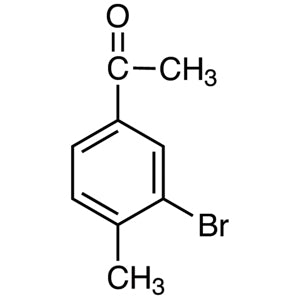
3'-Bromo-4'-methylacetophenone TCI B4758
Regular price From Rp 689.850,00Regular priceRp 497.700,00Sale price From Rp 689.850,00 -
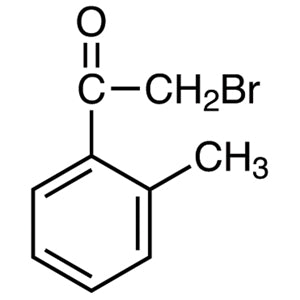
2-Bromo-2'-methylacetophenone TCI B4750
Regular price From Rp 900.900,00Regular priceRp 645.750,00Sale price From Rp 900.900,00 -
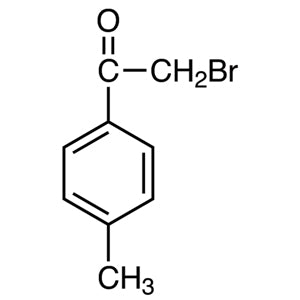
2-Bromo-4'-methylacetophenone TCI B2107
Regular price From Rp 1.272.600,00Regular priceRp 905.100,00Sale price From Rp 1.272.600,00 -
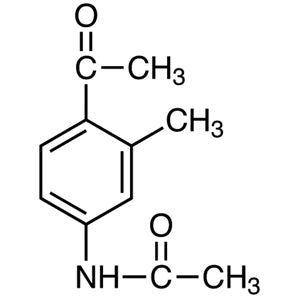
4'-Acetamido-2'-methylacetophenone TCI A2767
Regular price From Rp 1.192.800,00Regular priceRp 849.450,00Sale price From Rp 1.192.800,00 -
3'-Methylacetophenone TCI M0191
Regular price From Rp 2.041.200,00Regular priceRp 1.426.950,00Sale price From Rp 2.041.200,00 -
2'-Methylacetophenone TCI M0172
Regular price From Rp 1.829.100,00Regular priceRp 1.278.900,00Sale price From Rp 1.829.100,00 -
4'-Methylacetophenone TCI M0135
Regular price From Rp 477.750,00Regular priceRp 333.900,00Sale price From Rp 477.750,00 -
2'-Hydroxy-3',5'-dimethylacetophenone TCI H1569
Regular price From Rp 900.900,00Regular priceRp 645.750,00Sale price From Rp 900.900,00