

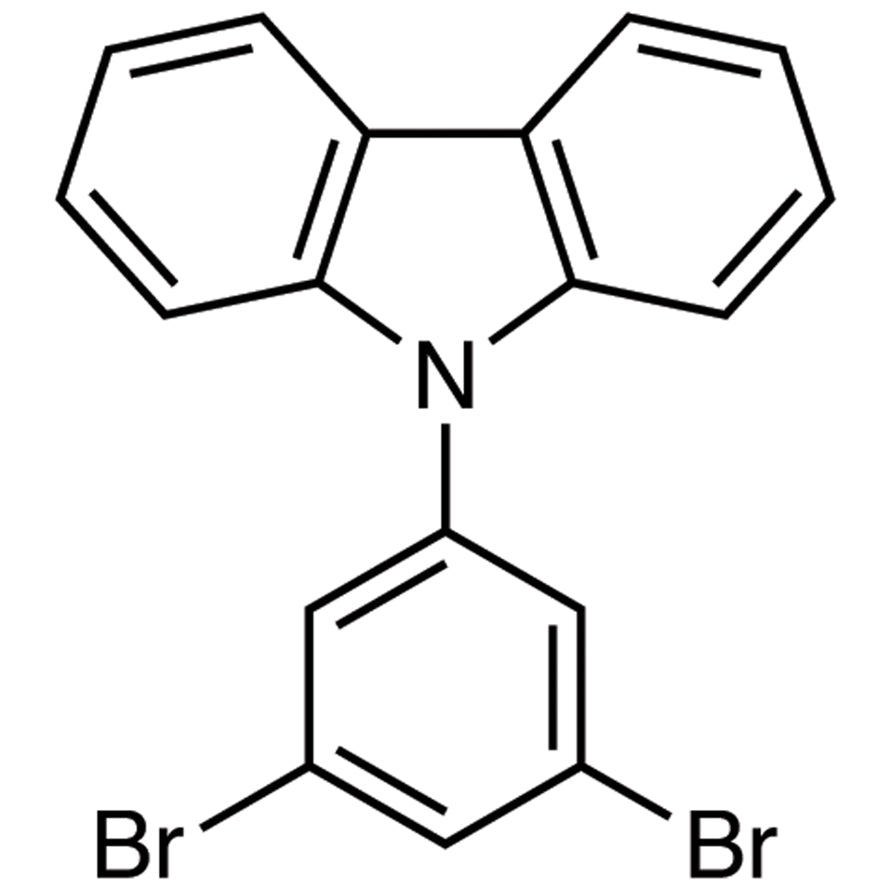
9-(3,5-Dibromophenyl)carbazole is an organic compound widely used in semiconductor material research. This compound plays a crucial role in the development of advanced electronic materials due to its unique molecular structure, which combines a carbazole core with a dibromophenyl group. Its structural complexity makes it a valuable building block for synthesizing other complex compounds, particularly in the fields of materials science and nanotechnology. In laboratory settings, it serves as a foundational material for creating new materials with tailored electronic properties.
The compound is preferred for its chemical stability and controlled reactivity, which allow researchers to manipulate its properties effectively during synthesis. Its ability to remain stable under normal conditions makes it a reliable choice for various experimental applications. Additionally, the compound exhibits interesting optical properties, making it relevant in optical and semiconductor material research. These characteristics make it a versatile and essential material for scientific investigations.
In Indonesian laboratories, 9-(3,5-Dibromophenyl)carbazole is commonly used in material development and semiconductor research. It is a key component in experiments aimed at creating new electronic materials with enhanced performance. Its availability through trusted suppliers like AMI Scientific ensures that researchers have access to high-quality materials for their studies. Its role in advancing scientific research is significant, particularly in the context of Indonesia’s growing focus on material science and technology.
TCI brochures (PDF)
- Carbazoles 2025-06-27 · p. 5
- Building Blocks for Organic Semiconductor 2026-03-24 · p. 20
Related TCI products
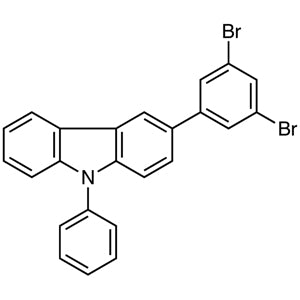
- TCI D4979 1345021-52-4 3-(3,5-Dibromophenyl)-9-phenyl-9H-carbazole
- TCI T3882 6558-85-6 1,3,6,8-Tetramethyl-9H-carbazole
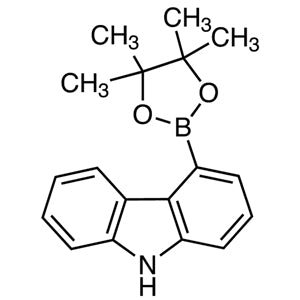
- TCI T3747 1255309-13-7 4-(4,4,5,5-Tetramethyl-1,3,2-dioxaborolan-2-yl)-9H-carbazole
- TCI T3642 1630723-98-6 N,N,N',N'-Tetrakis(4-methoxyphenyl)-9H-carbazole-3,6-diamine
- TCI T3612 1345614-94-9 3-(4,4,5,5-Tetramethyl-1,3,2-dioxaborolan-2-yl)-9-(p-tolyl)-9H-carbazole
- TCI T3452 785051-54-9 9-[4-(4,4,5,5-Tetramethyl-1,3,2-dioxaborolan-2-yl)phenyl]-9H-carbazole
- Semiconductor material synthesis due to its unique electronic properties and structural versatility.
- Optical material research because of its interesting optical characteristics and potential for light interaction.
- Organic electronics development as a building block for creating advanced electronic components.
- Material characterization experiments for studying molecular behavior and reactivity under different conditions.
- Nanotechnology applications in the fabrication of nanostructured materials with tailored properties.
| Brand | TCI |
|---|---|
| CAS number | 750573-26-3 |
| Molecular formula | — |
| Purity | — |
| Category | Materials Science > Material Building Blocks > Small Molecule Semiconductor Building Blocks |
| Pack sizes | 25 g, 100 g |
| Physical form | Solid powder |
| Storage | Store in a cool, dry place away from light and moisture. |
This compound should be stored in a cool, dry place, away from direct light and moisture to maintain its chemical stability. It is recommended to use airtight containers made of glass or high-density polyethylene to prevent contamination and degradation. Due to its organic nature, it should be handled in a well-ventilated area, and appropriate personal protective equipment should be worn when handling. Avoid exposure to heat or open flames, as it may react under extreme conditions. Proper storage ensures the compound remains effective for use in laboratory applications. Always follow standard laboratory safety protocols when working with this material.
—
Produk Terkait
-
3-(3,5-Dibromophenyl)-9-phenyl-9H-carbazole TCI D4979
Regular price From Rp 1.035.300,00Regular price -
1,3,6,8-Tetramethyl-9H-carbazole TCI T3882
Regular price From Rp 4.056.150,00Regular price -
4-(4,4,5,5-Tetramethyl-1,3,2-dioxaborolan-2-yl)-9H-carbazole TCI T3747
Regular price Rp 5.194.350,00Regular price -
N,N,N',N'-Tetrakis(4-methoxyphenyl)-9H-carbazole-3,6-diamine TCI T3642
Regular price From Rp 9.726.150,00Regular price -
3-(4,4,5,5-Tetramethyl-1,3,2-dioxaborolan-2-yl)-9-(p-tolyl)-9H-carbazole TCI T3612
Regular price From Rp 1.060.500,00Regular price -
9-[4-(4,4,5,5-Tetramethyl-1,3,2-dioxaborolan-2-yl)phenyl]-9H-carbazole TCI T3452
Regular price From Rp 1.749.300,00Regular price -
2-(4,4,5,5-Tetramethyl-1,3,2-dioxaborolan-2-yl)-9H-carbazole TCI T3441
Regular price From Rp 2.545.200,00Regular price -
9-[3-(4,4,5,5-Tetramethyl-1,3,2-dioxaborolan-2-yl)phenyl]carbazole TCI T3386
Regular price From Rp 1.961.400,00Regular price



![785051-54-9 9-[4-(4,4,5,5-Tetramethyl-1,3,2-dioxaborolan-2-yl)phenyl]-9H-carbazole - AMI Scientific](http://amiscientific.com/cdn/shop/files/TCI2510T3452.jpg?v=1769143736&width=533)

![870119-58-7 9-[3-(4,4,5,5-Tetramethyl-1,3,2-dioxaborolan-2-yl)phenyl]carbazole - AMI Scientific](http://amiscientific.com/cdn/shop/files/TCI2510T3386.jpg?v=1769143726&width=533)