

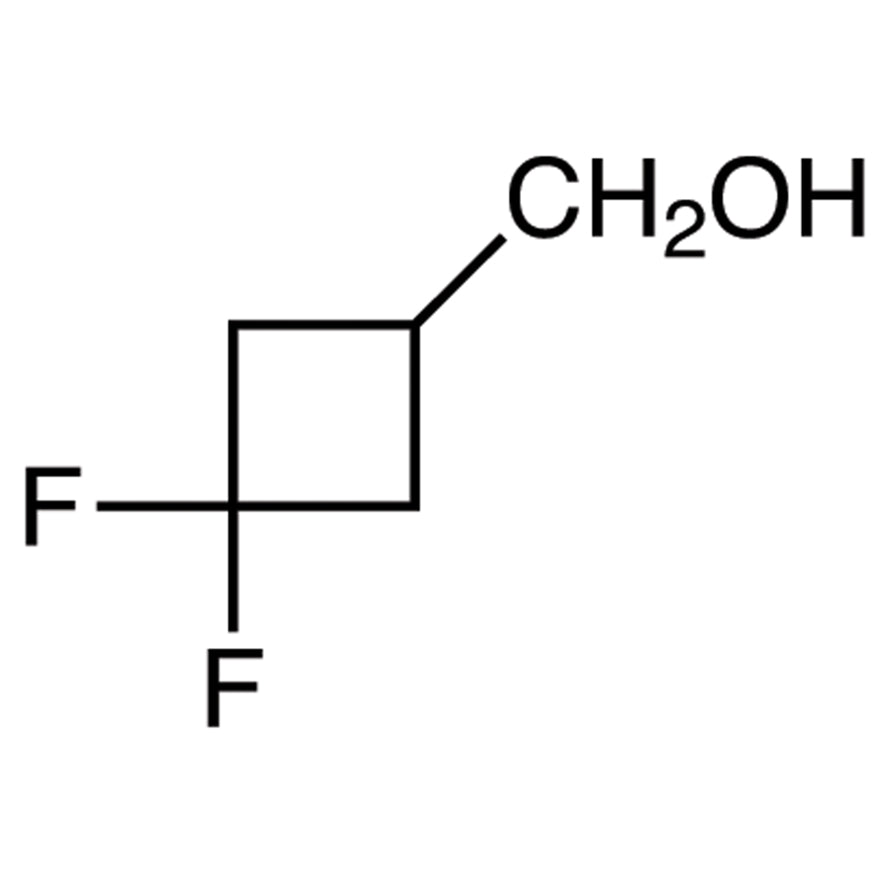
(3,3-Difluorocyclobutyl)methanol is a chemical compound widely used as a building block in the synthesis of complex molecules. This compound plays a crucial role in organic chemistry laboratories, where it is employed to construct molecules with specific functional groups and desired properties. Its unique molecular structure, featuring two fluorine atoms attached to a cyclobutane ring, makes it an essential tool for researchers aiming to modify molecular frameworks. The presence of fluorine significantly influences the electronic properties of the molecule, making it highly versatile for various chemical applications.
The compound's fluorinated structure provides it with distinct chemical properties that make it a preferred choice in synthetic chemistry. Fluorine’s high electronegativity alters the reactivity and stability of the molecule, enabling it to participate in a wide range of chemical reactions. This characteristic allows chemists to tailor the properties of target compounds, such as polarity and solubility. Additionally, the compound exhibits chemical stability under certain conditions, which enhances its utility in laboratory settings. These features make it a valuable resource for researchers working on advanced chemical syntheses.
In Indonesian laboratories, (3,3-Difluorocycbutyl)methanol is commonly used in research and development projects aimed at creating new chemical compounds. It is particularly favored by academic institutions and research organizations for its reliability and effectiveness in molecular synthesis. The compound’s unique properties support a variety of experimental approaches, making it an essential component in the chemical research landscape of Indonesia.
Related TCI products
- TCI D5597 637031-93-7 3,3-Difluorocyclobutanamine Hydrochloride
- TCI D5225 107496-54-8 3,3-Difluorocyclobutanecarboxylic Acid
- TCI T3247 431-46-9 Trifluoroacetaldehyde Methyl Hemiacetal (contains ca. 10% Methanol)
- TCI D6473 509072-57-5 (2,2-Difluorocyclopropyl)methanol
- TCI D4330 122665-97-8 4,4-Difluorocyclohexanecarboxylic Acid
- TCI D5540 22419-35-8 4,4-Difluorocyclohexanol
- Organic synthesis applications benefit from this compound's fluorinated structure, enabling precise molecular modifications and enhanced reactivity.
- It is ideal for creating fluorinated derivatives, which are crucial in pharmaceutical and agrochemical research due to their unique biological properties.
- The compound supports the development of new materials with tailored electronic and physical properties, making it valuable in polymer science and nanotechnology.
- It is frequently used in academic research to explore novel synthetic pathways and to study the effects of fluorination on molecular behavior.
- Its stability under controlled conditions makes it suitable for use in long-term chemical reactions and complex multi-step syntheses.
| Brand | TCI |
|---|---|
| CAS number | 681128-39-2 |
| Molecular formula | — |
| Purity | — |
| Category | Chemistry > Building Blocks > Fluorinated Building Blocks |
| Pack sizes | Available in various quantities as per supplier specifications |
| Physical form | Liquid or crystalline, depending on purity and storage conditions |
| Storage | Store in a cool, dry place away from light and incompatible substances |
This compound should be stored in a cool, dry environment, away from direct sunlight and sources of heat. It is recommended to keep it in a tightly sealed container to prevent moisture absorption and contamination. Due to its fluorinated nature, it may react with strong oxidizing agents or acids, so it should be handled with care in a well-ventilated laboratory setting. Always use appropriate personal protective equipment, such as gloves and safety goggles, when handling this material. Proper labeling and storage conditions are essential to ensure safety and maintain the compound's integrity for research purposes.
—
Produk Terkait
-
3,3-DifluorocyclobutanamineHydrochloride TCI D5597
Regular price From Rp 875.700,00Regular price -
3,3-DifluorocyclobutanecarboxylicAcid TCI D5225
Regular price From Rp 610.050,00Regular price -
TrifluoroacetaldehydeMethylHemiacetal(containsca.10%Methanol) TCI T3247
Regular price From Rp 980.700,00Regular price -
(2,2-Difluorocyclopropyl)methanol TCI D6473
Regular price From Rp 1.936.200,00Regular price -
4,4-DifluorocyclohexanecarboxylicAcid TCI D4330
Regular price From Rp 1.510.950,00Regular price -
4,4-Difluorocyclohexanol TCI D5540
Regular price From Rp 1.590.750,00Regular price -
2-Fluorocyclohexanol TCI F0631
Regular price From Rp 2.016.000,00Regular price -
4,4-Difluorocyclohexanone TCI D4516
Regular price From Rp 1.140.300,00Regular price


