DNP-Li, also known as 4-Dimethylaminophenyl-1,1-dimethyl-1H-pyrazol-5-yl, is a chemical compound widely used in laboratory settings as a building block for the synthesis of heterocyclic compounds. It plays a crucial role in organic chemistry, particularly in the development of complex molecular structures. This compound is valued for its ability to participate in various chemical reactions, making it an essential tool for researchers in both academic and industrial environments. Its unique molecular structure allows it to interact with a wide range of functional groups, enhancing its versatility in synthetic pathways.
DNP-Li is preferred due to its high reactivity and stability under controlled conditions. It exhibits a strong tendency to undergo substitution and cyclization reactions, making it ideal for the synthesis of bioactive molecules. Its chemical properties allow it to be used in a variety of reaction conditions, including high-temperature environments and catalytic systems. The compound's ability to form stable intermediates during synthesis contributes to its popularity among chemists and pharmaceutical researchers. Additionally, its compatibility with various reagents and solvents broadens its applicability in laboratory processes.
In Indonesian laboratories, DNP-Li is commonly used by chemists and pharmacologists in the development of new compounds and drug candidates. It is a key component in the synthesis of biologically active substances, supporting research in medicinal chemistry and pharmaceutical sciences. Its widespread use in both academic and research institutions highlights its importance in advancing chemical and pharmaceutical innovations in the region.
Advantages (TCI brochure)
- Naphthazarin-based positive electrode material
- Multielectron-transfer type redox reaction
- High capacity (416 mAh/g) and energy density (1.1 Wh/g)
- Long cycle-life (300 mAh/g after 100 cycles)
TCI brochures (PDF)
- High Capacity Organic Positive-electrode Material DNP-Li 2026-09-16 · p. 1
- Pyrene Derivatives Bearing Diketone Moieties for Battery Materials and Building Blocks 2023-11-22 · p. 2
- Battery Research Reagents 2026-09-18 · p. 6
Related TCI products
- TCI T4344 1128-13-8 2,3,5,6-Tetraaminocyclohexa-2,5-diene-1,4-dione
- TCI T3991 370-69-4 Tris(2,2,2-trifluoroethyl) Phosphite
- TCI T3987 1779-34-6 Tripropargyl Phosphate
- TCI T3447 115-96-8 Tris(2-chloroethyl) Phosphate
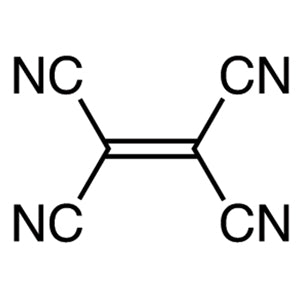
- TCI T3264 670-54-2 Tetracyanoethylene (purified by sublimation)
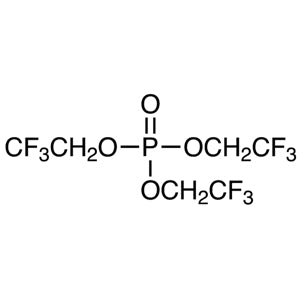
- TCI T3203 358-63-4 Tris(2,2,2-trifluoroethyl) Phosphate
- Organic synthesis of heterocyclic compounds due to its reactivity and structural versatility
- Development of pharmaceuticals as a key intermediate in the synthesis of bioactive molecules
- Research in medicinal chemistry for the creation of new drug candidates and therapeutic agents
- Cyclization reactions where DNP-Li's unique molecular structure facilitates ring formation
- Functional group modification in complex molecule synthesis due to its compatibility with various reagents
From the TCI brochure
- Positive-electrode material: composite sheet with acetylene black and PTFE pressed onto mesh-type aluminum current collector
- Battery testing in IEC R2032 coin-type cells with lithium metal negative electrode and electrolyte solution
| Brand | TCI |
|---|---|
| CAS number | 1882849-59-3 |
| Molecular formula | — |
| Purity | — |
| Category | Chemistry > Building Blocks > Heterocyclic Building Blocks |
| Pack sizes | — |
| Physical form | — |
| Storage | Store in a cool, dry place away from light and incompatible materials |
Data from the TCI brochure
| Kapasitas | 416 mAh/g |
|---|---|
| Densitas energi | 1.1 Wh/g |
| Siklus hidup | 300 mAh/g after 100 cycles |
Source: TCI brochure FF124 (2026-09-16)
DNP-Li should be stored in a cool, dry environment, away from direct light and sources of heat. It is recommended to keep the compound in a sealed container to prevent moisture absorption and contamination. Suitable storage containers include glass or high-density polyethylene (HDPE) vessels that are resistant to chemical reactions. General laboratory precautions include handling the compound in a well-ventilated area and wearing appropriate personal protective equipment such as gloves and safety goggles. Due to its reactivity, it is important to avoid contact with incompatible substances and to follow standard laboratory safety protocols when working with this compound.
—
Product Categories
Produk Terkait
-
2,3,5,6-Tetraaminocyclohexa-2,5-diene-1,4-dione TCI T4344
Regular price From Rp 2.942.100,00Regular priceRp 2.072.700,00Sale price From Rp 2.942.100,00 -
Tris(2,2,2-trifluoroethyl)Phosphite TCI T3991
Regular price From Rp 1.538.250,00Regular priceRp 1.075.200,00Sale price From Rp 1.538.250,00 -
TripropargylPhosphate TCI T3987
Regular price From Rp 2.782.500,00Regular priceRp 1.961.400,00Sale price From Rp 2.782.500,00 -
Tris(2-chloroethyl)Phosphate TCI T3447
Regular price From Rp 582.750,00Regular priceRp 423.150,00Sale price From Rp 582.750,00 -
Tetracyanoethylene(purifiedbysublimation) TCI T3264
Regular price From Rp 1.934.100,00Regular priceRp 1.368.150,00Sale price From Rp 1.934.100,00 -
Tris(2,2,2-trifluoroethyl)Phosphate TCI T3203
Regular price From Rp 2.332.050,00Regular priceRp 1.646.400,00Sale price From Rp 2.332.050,00 -
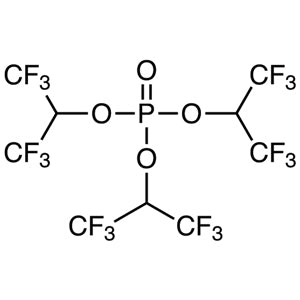
Tris(1,1,1,3,3,3-hexafluoro-2-propyl)Phosphate TCI T3041
Regular price From Rp 3.551.100,00Regular priceRp 2.499.000,00Sale price From Rp 3.551.100,00 -
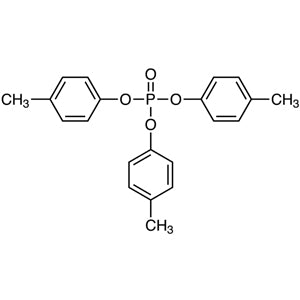
Tri-p-cresylPhosphate TCI T2209
Regular price From Rp 1.643.250,00Regular priceRp 1.164.450,00Sale price From Rp 1.643.250,00