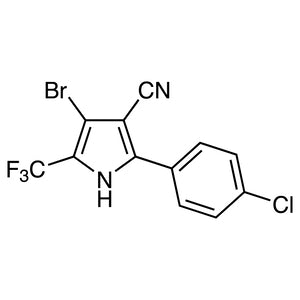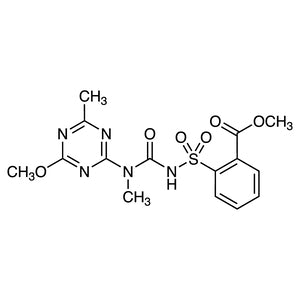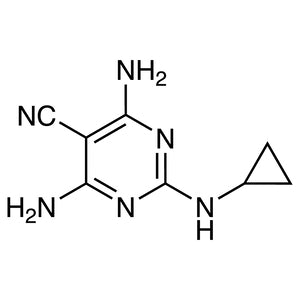
Dicyclanil is a chemical compound widely used in life science research, particularly in the fields of cell biology and nutrition studies. It serves as an essential tool for researchers aiming to investigate enzymatic inhibition and microbial metabolism. This compound is commonly employed in experiments that require precise control over biochemical processes, making it a valuable asset in modern laboratory settings. Its versatility and effectiveness in modulating enzyme activity have made it a preferred choice for various scientific investigations.
Dicyclanil is valued for its chemical stability and good solubility in organic solvents, which simplifies its preparation and application in diverse laboratory conditions. These properties ensure consistent performance across different experimental setups, enhancing the reliability of research outcomes. Additionally, its non-toxic nature at appropriate dosages contributes to its safety profile, making it suitable for use in laboratory environments. Its ability to maintain activity under specific conditions further enhances its utility in controlled experiments.
In Indonesian laboratories, Dicyclanil is frequently utilized in nutritional research, cell biology studies, and microbiological investigations. It is commonly found in experiments involving enzyme inhibition and microbial response testing. Its role in supporting scientific inquiry is crucial, especially in academic and research institutions focused on advancing knowledge in life sciences.
- Nutritional Research: Dicyclanil is used to study enzyme inhibition in food digestion and nutrient absorption processes.
- Microbial Metabolism Studies: It helps in investigating how microorganisms respond to enzymatic activity under controlled conditions.
- Enzyme Inhibition Experiments: Its ability to inhibit specific enzymes like amylase and protease makes it ideal for biochemical studies.
- Cell Culture Experiments: It supports research on how enzyme activity affects cellular processes and metabolic pathways.
- Biotechnology Applications: Dicyclanil is employed in bioprocessing to control microbial growth and enzymatic reactions in fermentation systems.
| Brand | TCI |
|---|---|
| CAS number | 112636-83-6 |
| Molecular formula | — |
| Purity | — |
| Category | Life Science > Cell Biology > Nutrition Research |
| Pack sizes | Available in various quantities as per standard laboratory requirements |
| Physical form | Solid powder |
| Storage | Store in a cool, dry place away from direct sunlight |
Dicyclanil should be stored in a cool, dry environment to maintain its chemical stability and prevent degradation. It is recommended to keep the compound in airtight containers to minimize exposure to moisture and air, which could affect its solubility and effectiveness. Proper labeling of storage containers is essential to ensure safe handling and prevent accidental contamination. Laboratory personnel should wear appropriate personal protective equipment when handling the compound to ensure safety. Regular monitoring of storage conditions is advised to maintain the integrity of the material during long-term use.
—
Produk Terkait
-
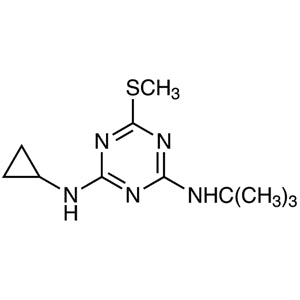
2-(tert-Butylamino)-4-(cyclopropylamino)-6-(methylthio)-1,3,5-triazine TCI I0842
Regular price From Rp 1.644.300,00Regular price -
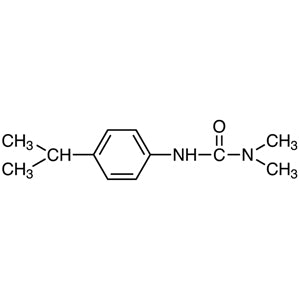
Isoproturon TCI I0843
Regular price From Rp 1.298.850,00Regular price -
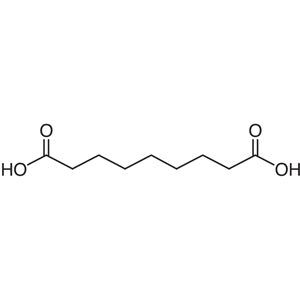
AzelaicAcid TCI A0561
Regular price From Rp 505.050,00Regular price -
AbieticAcid TCI A0001
Regular price From Rp 1.510.950,00Regular price -
Sulfentrazone TCI U0110
Regular price From Rp 2.411.850,00Regular price -
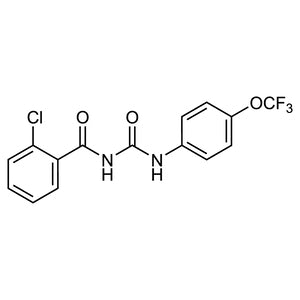
Triflumuron TCI T4364
Regular price From Rp 1.220.100,00Regular price -
Tralopyril TCI T4109
Regular price From Rp 2.730.000,00Regular price -
Tribenuron-methyl TCI T4085
Regular price From Rp 2.359.350,00Regular price