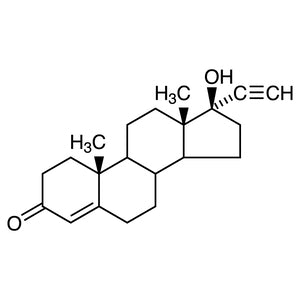
Ethisterone is a chemical compound widely used in pharmacological and biochemical research. As a steroid compound, it shares structural similarities with sex hormones, making it a valuable tool for studying steroid metabolism and its biological effects. This reagent plays a crucial role in life science laboratories, particularly in experimental settings requiring active ingredients for clinical trials or chemical analysis. Its presence in research protocols supports the development of new pharmaceuticals and the understanding of hormonal mechanisms. Ethisterone is a key component in various scientific investigations aimed at uncovering the biochemical pathways associated with steroid-based compounds.
Ethisterone is valued for its chemical stability and solubility in specific organic solvents such as ethyl acetate and acetone. These properties make it highly suitable for chemical synthesis and analytical procedures. Its consistent performance in laboratory conditions ensures reliable results, which is essential for scientific accuracy. The compound's ability to dissolve in organic solvents simplifies its use in a wide range of experimental applications. Additionally, its predictable behavior under controlled laboratory environments enhances its utility in both qualitative and quantitative studies.
In Indonesian laboratories, Ethisterone is commonly used by researchers in pharmaceutical, biotechnology, and health sciences. It is particularly relevant for drug development, biological activity testing, and steroid metabolism studies. Its availability and reliability make it a preferred choice for researchers aiming to advance their scientific work. Ethisterone supports a variety of experimental needs, contributing to the growth of scientific research in the region.
TCI brochures (PDF)
- Steroids 2026-07-28 · p. 4
- Pharmaceutical Ingredients for Research and Experimental Use 2026-03-09 · p. 44
- Pharmaceutical Research: Ethisterone is used to study steroid metabolism and its impact on biological systems, aiding in the development of new therapeutic agents.
- Biochemical Analysis: Its solubility in organic solvents makes it ideal for chemical synthesis and analytical procedures in biochemistry laboratories.
- Clinical Trials: Ethisterone serves as an active ingredient in experimental protocols for testing drug efficacy and safety in controlled environments.
- Hormonal Studies: Its structural similarity to sex hormones allows researchers to investigate hormonal pathways and their physiological effects.
- Drug Development: Ethisterone is a key compound in the formulation and testing of steroid-based pharmaceutical products for various medical applications.
| Brand | TCI |
|---|---|
| CAS number | 434-03-7 |
| Molecular formula | — |
| Purity | — |
| Category | Life Science > Biochemicals and Reagents > Pharmaceutical Research Reagents |
| Pack sizes | Available in standard laboratory quantities |
| Physical form | Solid powder |
| Storage | Store in a cool, dry place away from direct sunlight |
Ethisterone should be stored in a cool, dry environment to maintain its chemical stability. It is recommended to keep it in a tightly sealed container to prevent exposure to moisture and air. Proper ventilation is essential when handling the compound to minimize inhalation risks. Laboratory personnel should wear appropriate personal protective equipment, such as gloves and safety goggles, when working with Ethisterone. It should be handled in accordance with standard laboratory safety protocols to ensure safe usage. Avoid contact with skin and eyes, and ensure that spillage is cleaned up promptly using appropriate safety measures. Ethisterone is not classified as hazardous under standard laboratory classifications, but caution is advised during its use.
—
Product Categories
- Biochemicals and ReagentsPharmaceutical Research Reagents (for Experimental Use)Pharmaceutical Research Reagents (Others)
- Biochemicals and ReagentsSteroidsAndrostanes (Androgens) [Steroids]
- Cell BiologyCell Signaling and NeuroscienceCytokines, Growth Factors and Hormones
- Pharmaceutical Development and Drug Discovery ResearchPharmaceutical Research Reagents (for Experimental Use)Pharmaceutical Research Reagents (Others)
Produk Terkait
-
MethenoloneEnanthate TCI M3092
Regular price From Rp 3.949.050,00Regular price -
NorethisteroneEnanthate TCI N1290
Regular price From Rp 2.254.350,00Regular price -
NorethisteroneAcetate TCI N0450
Regular price From Rp 1.008.000,00Regular price -
Norethisterone TCI N0449
Regular price From Rp 795.900,00Regular price -
UlipristalAcetate TCI U0102
Regular price From Rp 5.062.050,00Regular price -
Trilostane TCI T4049
Regular price From Rp 1.696.800,00Regular price -
AbirateroneAcetate TCI A2891
Regular price From Rp 4.028.850,00Regular price -
Lynestrenol TCI L0246
Regular price Rp 2.306.850,00Regular price