Sodium 4-Ethylbenzenesulfonate from TCI, supplied under catalogue code E0104, is the sodium salt of 4-ethylbenzenesulfonic acid — an aromatic compound carrying a strong sulfonate group on one side of the ring and an ethyl group at the para position. That combination produces a molecule that is highly water soluble while still retaining a hydrophobic portion. In the laboratory the compound is therefore used as a synthetic building block, as a model compound for the alkylbenzenesulfonate class, and as a supporting reagent across a range of analytical studies. The sodium salt form is easier to handle and weigh out than the free sulfonic acid, which is strongly hygroscopic.
The properties that make this material attractive are its mildly amphiphilic character and its chemical stability. The sulfonate group is a strong acid that has already been neutralised, so solutions of the salt are close to neutral, resist hydrolysis, and remain stable across a wide pH range. The short ethyl chain makes this compound the simplest member of the alkylbenzenesulfonate family — a position that is genuinely useful when researchers need a structural comparison against the long alkyl chains found in commercial surfactants. As a building block, the sulfonate group can be carried through onward chemistry, while the ethyl-substituted ring offers a defined aromatic scaffold.
In Indonesian laboratories this material fits naturally into organic synthesis and analytical chemistry work at universities, research institutes, and industrial quality control units. Its ready water solubility suits aqueous-phase preparation, which is convenient where solvent handling is kept to a minimum. Groups studying surfactant chemistry, detergent formulation, or aromatic sulfonate behaviour use it as a reference member of the series, while synthesis laboratories draw on it as a stable, easily weighed starting material.
Related TCI products
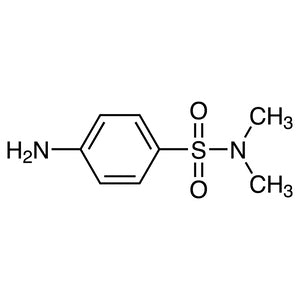
- TCI A3570 1709-59-7 4-Amino-N,N-dimethylbenzenesulfonamide
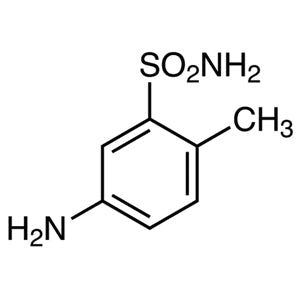
- TCI A2552 6973-09-7 5-Amino-2-methylbenzenesulfonamide
- TCI A0896 6627-59-4 Sodium 2-Amino-4-chloro-5-methylbenzenesulfonate
- TCI M3506 77544-68-4 2-[2-(2-Hydroxyethoxy)ethoxy]ethyl 4-Methylbenzenesulfonate
- TCI M3122 62921-74-8 2-[2-(2-Methoxyethoxy)ethoxy]ethyl 4-Methylbenzenesulfonate
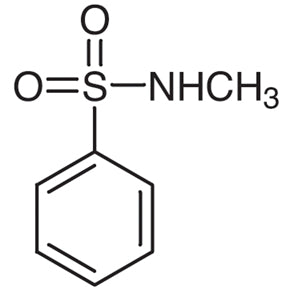
- TCI M0157 5183-78-8 N-Methylbenzenesulfonamide
- Organic synthesis building block: the para-substituted aromatic sulfonate provides a defined scaffold that can be carried into onward reactions without the handling difficulties of the free sulfonic acid.
- Model compound for alkylbenzenesulfonate studies: as the simplest member of the family, it gives researchers a short-chain baseline against which longer-chain commercial surfactant homologues can be compared.
- Analytical chemistry reference and supporting reagent: its high water solubility and chemical stability make it dependable in aqueous analytical systems where consistent behaviour of the sulfonate group matters.
- Surfactant and detergent research: the mildly amphiphilic structure, combining a hydrophilic sulfonate head with a short hydrophobic ethyl tail, allows systematic investigation of chain-length effects.
- Aqueous-phase method development: because the neutralised sulfonate resists hydrolysis and stays stable over a wide pH range, it performs reliably in solutions prepared across varied conditions.
| Brand | TCI (Tokyo Chemical Industry) |
|---|---|
| CAS number | 14995-38-1 |
| Molecular formula | — |
| Purity | — |
| Category | Chemistry > Building Blocks > Non-Heterocyclic Building Blocks |
| Pack sizes | available in standard TCI research-scale packaging; please confirm the sizes currently listed for this catalogue code |
| Physical form | — |
| Storage | keep in a tightly closed container, protected from moisture |
- Catalogue code: E0104
Store the material in its original tightly closed container in a cool, dry, well-ventilated area, away from moisture and incompatible substances. Although the sodium salt is far less hygroscopic than the corresponding free sulfonic acid, containers should still be resealed promptly after each use and weighing carried out without prolonged exposure to humid air. Glass or suitable chemically resistant plastic containers are appropriate, with the label kept intact and legible. Handle as with any laboratory chemical: work in a fume hood or well-ventilated area, wear a laboratory coat, safety glasses, and suitable gloves, avoid generating dust, and wash hands after handling. Consult the manufacturer's safety data sheet before use, and dispose of residues according to institutional chemical waste procedures.
—
Produk Terkait
-
4-Amino-N,N-dimethylbenzenesulfonamide TCI A3570
Regular price Rp 2.359.350,00Regular price -
5-Amino-2-methylbenzenesulfonamide TCI A2552
Regular price Rp 769.650,00Regular price -
Sodium2-Amino-4-chloro-5-methylbenzenesulfonate TCI A0896
Regular price From Rp 452.550,00Regular price -
2-[2-(2-Hydroxyethoxy)ethoxy]ethyl4-Methylbenzenesulfonate TCI M3506
Regular price Rp 5.247.900,00Regular price -
2-[2-(2-Methoxyethoxy)ethoxy]ethyl4-Methylbenzenesulfonate TCI M3122
Regular price From Rp 2.889.600,00Regular price -
N-Methylbenzenesulfonamide TCI M0157
Regular price From Rp 1.749.300,00Regular price -
4-Ethylbenzenesulfonamide TCI E0773
Regular price From Rp 769.650,00Regular price -
4-EthylbenzenesulfonylChloride TCI E0065
Regular price Rp 2.359.350,00Regular price

![77544-68-4 2-[2-(2-Hydroxyethoxy)ethoxy]ethyl 4-Methylbenzenesulfonate - AMI Scientific](http://amiscientific.com/cdn/shop/files/TCI2510M3506.jpg?v=1767128334&width=533)
![62921-74-8 2-[2-(2-Methoxyethoxy)ethoxy]ethyl 4-Methylbenzenesulfonate - AMI Scientific](http://amiscientific.com/cdn/shop/files/TCI2510M3122.jpg?v=1767127774&width=533)