
![6-Ethoxy-2,2,4-trimethyl-1,2-dihydroquinoline [Antioxidant for rubber] (CAS 91-53-2) - TCI E0237 - AMI Scientific](http://amiscientific.com/cdn/shop/files/TCI2510E0237.jpg?v=1767110893&width=1946)
![6-Ethoxy-2,2,4-trimethyl-1,2-dihydroquinoline [Antioxidant for rubber] (CAS 91-53-2) - TCI E0237 - AMI Scientific](http://amiscientific.com/cdn/shop/files/TCI2510E0237.jpg?v=1767110893&width=1445)
6-Ethoxy-2,2,4-trimethyl-1,2-dihydroquinoline is a chemical compound widely used in laboratory settings as a building block for organic synthesis. It belongs to the class of heterocyclic compounds and is known for its antioxidant properties, making it essential in applications where oxidation resistance is required. This compound plays a crucial role in the development of rubber compounds and other polymer-based materials, where it acts as a stabilizer to prevent degradation. Its unique molecular structure allows it to participate in various chemical reactions, providing versatility in synthetic pathways.
The compound's stability and controlled reactivity make it a preferred choice for researchers working in controlled environments. Its ethoxy group contributes to solubility in organic solvents, enhancing its utility in different reaction conditions. Additionally, its molecular structure enables it to function effectively in both acidic and basic conditions, broadening its applicability. These properties ensure that it remains a reliable and consistent material for laboratory use, especially in applications requiring precise chemical behavior.
In Indonesian laboratories, this compound is extensively used in chemical research, particularly in the synthesis of organic compounds and the formulation of chemical products. It is commonly found in academic and industrial research settings where stability and reactivity are key considerations. Its reliability and effectiveness have made it a standard component in many chemical laboratories across Indonesia, supporting a wide range of scientific investigations.
- Organic synthesis: This compound is ideal for organic synthesis due to its stable structure and reactivity, enabling the creation of complex molecules with controlled oxidation resistance.
- Rubber stabilization: It is used in rubber formulations to act as an antioxidant, preventing degradation caused by oxidative processes during manufacturing and storage.
- Polymer chemistry research: Its heterocyclic nature makes it suitable for polymer chemistry studies, where it can participate in cross-linking and chain extension reactions.
- Industrial chemical formulation: It is a key component in the development of industrial chemicals that require long-term stability and resistance to environmental factors.
- Analytical testing: It serves as a reference standard in analytical chemistry for testing the purity and reactivity of other compounds in controlled environments.
| Brand | TCI |
|---|---|
| CAS number | 91-53-2 |
| Molecular formula | — |
| Purity | — |
| Category | Chemistry > Building Blocks > Heterocyclic Building Blocks |
| Pack sizes | Available in various sizes as per standard laboratory supply |
| Physical form | Liquid |
| Storage | Store in a cool, dry place away from light and incompatible materials |
This compound should be stored in a cool, dry environment, away from direct sunlight and sources of heat. It is recommended to use airtight containers made of glass or high-density polyethylene to prevent contamination and maintain its chemical integrity. Due to its reactivity in certain conditions, it should be handled with care, using appropriate personal protective equipment such as gloves and safety goggles. It is important to ensure proper ventilation when working with this compound to minimize exposure. In laboratory settings, it should be kept in a designated chemical storage area that is accessible only to authorized personnel. Regular monitoring of storage conditions is advised to maintain its stability and effectiveness for research applications.
—
Produk Terkait
-
6-Bromo-2-chloroquinoline TCI B5628
Regular price From Rp 1.565.550,00Regular price -
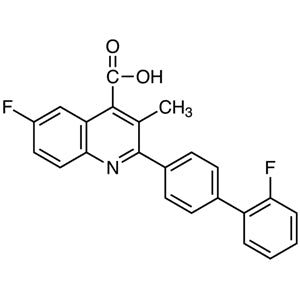
Brequinar TCI B5707
Regular price From Rp 3.180.450,00Regular price -
BicinchoninicAcidDisodiumSalt[forProteinResearch] TCI B5838
Regular price Rp 5.565.000,00Regular price -
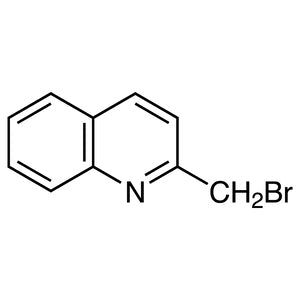
2-(Bromomethyl)quinoline TCI B6387
Regular price Rp 2.969.400,00Regular price -
DibucaineHydrochloride TCI B6467
Regular price From Rp 1.060.500,00Regular price -
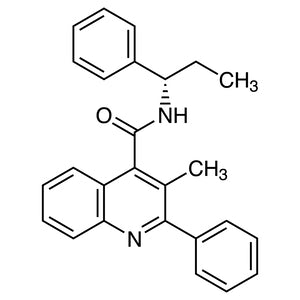
SB222200 TCI B6551
Regular price Rp 4.584.300,00Regular price -
tert-Butyl7'-Fluoro-1',4'-dihydro-2'H-spiro[piperidine-4,3'-quinoline]-1-carboxylate TCI B6776
Regular price Rp 7.182.000,00Regular price -
tert-Butyl5'-Fluoro-1',4'-dihydro-2'H-spiro[piperidine-4,3'-quinoline]-1-carboxylate TCI B6777
Regular price Rp 7.182.000,00Regular price


![Bicinchoninic Acid Disodium Salt [for Protein Research] (CAS 979-88-4) - TCI B5838 - AMI Scientific](http://amiscientific.com/cdn/shop/files/TCI2510B5838.jpg?v=1769180237&width=533)

![tert-Butyl 7'-Fluoro-1',4'-dihydro-2'H-spiro[piperidine-4,3'-quinoline]-1-carboxylate (CAS 1402232-83-0) - TCI B6776 - AMI Scientific](http://amiscientific.com/cdn/shop/files/TCI2510B6776.jpg?v=1771058548&width=533)
![tert-Butyl 5'-Fluoro-1',4'-dihydro-2'H-spiro[piperidine-4,3'-quinoline]-1-carboxylate (CAS 1402232-95-4) - TCI B6777 - AMI Scientific](http://amiscientific.com/cdn/shop/files/TCI2510B6777.jpg?v=1768816103&width=533)