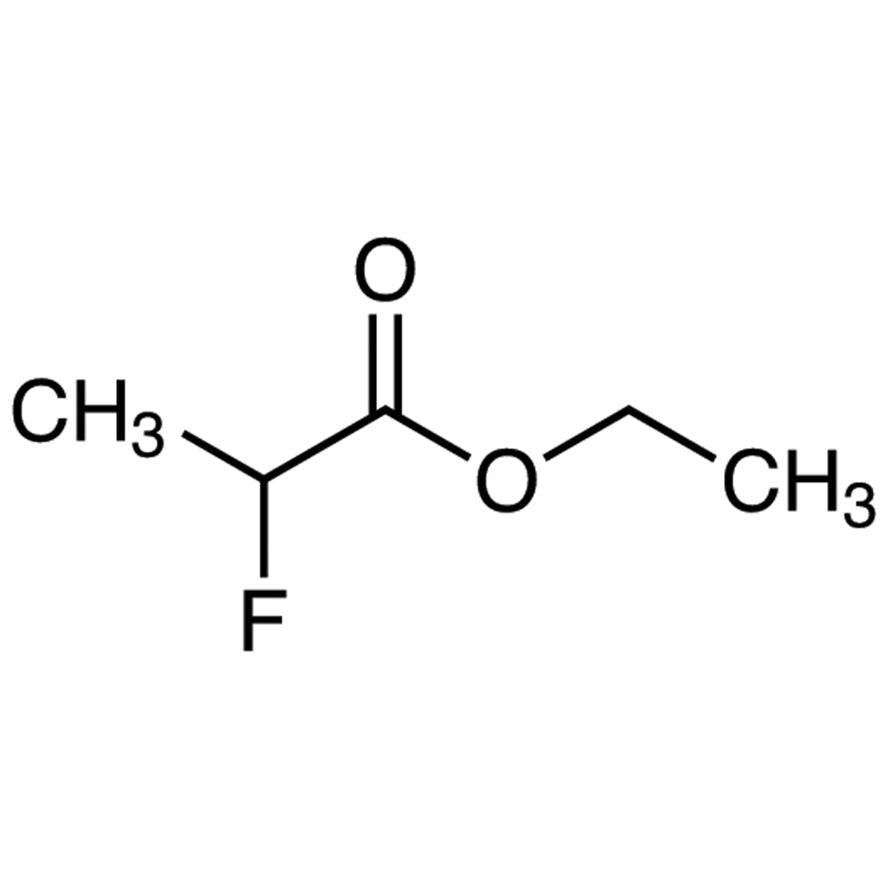
Ethyl 2-Fluoropropionate from TCI is a short aliphatic ester carrying a single fluorine atom on the alpha carbon, positioned directly adjacent to the carbonyl group. The compound belongs to the fluorinated building block family, a class of starting materials supplied specifically for introducing fluorine atoms into target molecules. Its role in the laboratory is to deliver a 2-fluoropropionyl unit or an alpha-fluoroester fragment directly, so that researchers do not have to perform fluorination reactions that generally require hazardous reagents, specialised equipment, and far stricter control of reaction conditions.
The property that makes this reagent a preferred choice is the strong influence the fluorine atom exerts on the molecule around it. Fluorine is highly electronegative, so it increases the acidity of the alpha proton, lowers the electron density at the carbonyl, and alters both the conformation and the dipole moment of the molecule. In drug design and agrochemical work, inserting fluorine frequently improves metabolic stability, tunes acidity, and enhances membrane permeability. The ethyl ester group adds further versatility: it is readily hydrolysed to the acid, converted to an amide, reduced to an alcohol, or used in Claisen condensations, so a single reagent opens several synthetic routes.
In Indonesian laboratories, this material is typically used in university and institutional research groups working on organic synthesis, medicinal chemistry, and agrochemical development, as well as in industrial R&D units preparing fluorinated intermediates. It is generally handled at bench scale in fume-hooded synthesis laboratories where fluorine-containing fragments are needed but on-site fluorination is impractical. Purchasing a ready-made fluorinated building block also reduces the burden of managing dedicated fluorination infrastructure.
TCI brochures (PDF)
- Fluorination Reagents, Fluorinated Building Blocks 2026-03-18 · p. 52
Related TCI products
- Medicinal chemistry intermediate synthesis: it supplies an alpha-fluoroester fragment directly, allowing candidate molecules to be fluorinated for improved metabolic stability without running a separate fluorination step.
- Agrochemical research and development: fluorine insertion is a common strategy for tuning the properties of active ingredients, and this reagent provides the fluorinated unit in ready-to-use ester form.
- Amide and peptide-like bond formation: the ethyl ester is readily converted to amides, letting researchers install a 2-fluoropropionyl group onto amine-bearing scaffolds in a single transformation.
- Claisen condensation and carbon chain extension: the acidified alpha proton next to the fluorine makes enolate chemistry accessible for building longer fluorinated carbon frameworks.
- Preparation of 2-fluoropropionic acid and derivatives: straightforward hydrolysis of the ethyl ester gives access to the corresponding acid, and reduction gives the corresponding alcohol.
| Brand | TCI |
|---|---|
| CAS number | 349-43-9 |
| Molecular formula | — |
| Purity | — |
| Category | Chemistry > Building Blocks > Fluorinated Building Blocks |
| Pack sizes | available in standard TCI research-scale packaging; please confirm the pack size options at the time of ordering |
| Physical form | — |
| Storage | store in a tightly closed original container in a cool, dry, well-ventilated area away from ignition sources and incompatible materials |
- Chemical class: aliphatic ester bearing one fluorine atom on the alpha carbon (fluorinated building block)
Store the reagent in a cool, dry, well-ventilated place, keeping the container tightly closed to limit exposure to air and atmospheric moisture, since esters can hydrolyse over time. The original manufacturer container is the most suitable primary packaging; if transfer is necessary, use chemically compatible glassware with a secure closure and label it clearly. All handling should take place inside a working fume hood, with safety glasses, a laboratory coat, and appropriate chemical-resistant gloves. Keep the material away from open flames, hot surfaces, and strong oxidising agents, and separate it from strong bases and strong acids that could promote ester cleavage. Follow the manufacturer's safety data sheet and institutional chemical waste procedures for disposal of residues and contaminated materials.
—
Produk Terkait
-
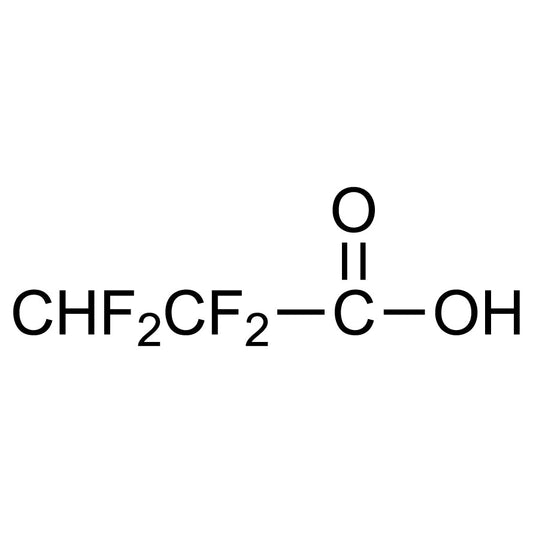
2,2,3,3-TetrafluoropropionicAcid TCI T1777
Regular price Rp 3.472.350,00Regular price -
3,3,3-TrifluoropropionicAcid TCI T1713
Regular price From Rp 1.115.100,00Regular price -
MethylPentafluoropropionate TCI P1352
Regular price From Rp 1.008.000,00Regular price -
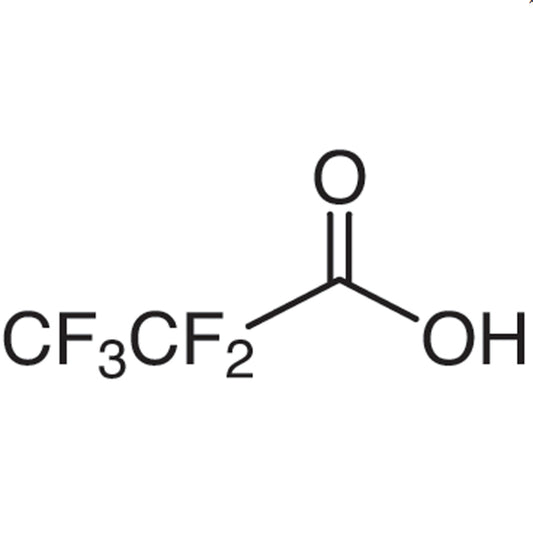
PentafluoropropionicAcid TCI P1125
Regular price From Rp 2.094.750,00Regular price -
EthylPentafluoropropionate TCI P1123
Regular price From Rp 505.050,00Regular price -
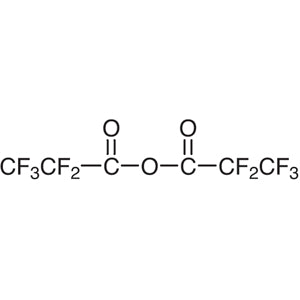
PentafluoropropionicAnhydride TCI P0566
Regular price From Rp 1.008.000,00Regular price -
Methyl3,3,3-Trifluoropropionate TCI M2783
Regular price From Rp 2.227.050,00Regular price -
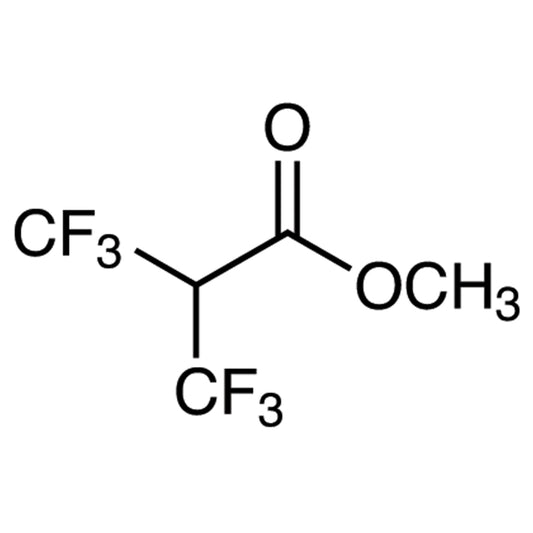
Methyl2-(Trifluoromethyl)-3,3,3-trifluoropropionate TCI M2496
Regular price From Rp 2.625.000,00Regular price