TCI E0670 5-(Ethylthio)-1H-tetrazole, commonly abbreviated by researchers as ETT, is a thioether-substituted tetrazole compound that occupies a special position in synthetic nucleic acid chemistry. In the laboratory, this material is best known as an activator in oligonucleotide synthesis using the phosphoramidite method — a weakly acidic reagent that protonates the phosphoramidite nitrogen so that the diisopropylamino group becomes a good leaving group and the coupling reaction with a free hydroxyl group can proceed. Without a suitable activator, the synthesis cycle for DNA and RNA chains cannot run with adequate efficiency.
The advantage that makes ETT a widely preferred choice is its higher acidity compared with classical 1H-tetrazole, together with better solubility in dry acetonitrile, the standard solvent in automated synthesis. The combination of these two properties produces faster activation and higher coupling efficiency per cycle — something that matters greatly when assembling long chains, because the success of each step is multiplied across the sequence. ETT also performs well with bulky RNA monomers that are more difficult to activate, and it reduces the risk of failure sequences accumulating during the run.
In Indonesian laboratories, this material is typically used in molecular biology, biotechnology, and synthetic organic chemistry groups that assemble their own oligonucleotides, as well as in heterocyclic chemistry work where the tetrazole ring serves as a building block. It is supplied as a research chemical in packaging that suits both automated synthesizer use and bench-scale reactions, and it is generally ordered alongside anhydrous acetonitrile and the phosphoramidite monomers that form the rest of the synthesis cycle.
TCI brochures (PDF)
- Easy-to-Handle and Safe Phosphitylation Reagent for DNA and RNA Fragment Synthesis 2026-07-23 · p. 1
- Coupling Activators for Oligonucleotide Synthesis 2025-06-30 · p. 2
- Nucleic Acid Medicine Synthesis Research Reagents 2024-11-07 · p. 1
- Oligonucleotide Synthesis Reagents 2025-07-24 · p. 1
- Nucleosides, Nucleotides, Nucleic Acids and Related Reagents 2026-03-23 · p. 14
Related TCI products
- Oligonucleotide synthesis activation — ETT protonates the phosphoramidite nitrogen so the coupling step proceeds efficiently, making it the working reagent of the activator bottle on automated DNA and RNA synthesizers.
- RNA chain assembly — bulky 2'-protected RNA monomers activate slowly with classical tetrazole, and the higher acidity of ETT gives the faster activation these sterically demanding monomers require.
- Long-sequence DNA construction — because per-cycle coupling efficiency is multiplied across every step, the improved efficiency of ETT translates into markedly better full-length yield on long sequences.
- Heterocyclic building block chemistry — the substituted tetrazole ring serves as a starting structure in synthetic organic work where a tetrazole moiety must be carried into a larger target molecule.
- Method development and coupling optimisation — laboratories comparing activator systems use ETT as the higher-performance reference point against 1H-tetrazole when tuning cycle times and reagent concentrations.
| Brand | TCI (Tokyo Chemical Industry) |
|---|---|
| CAS number | 89797-68-2 |
| Molecular formula | — |
| Purity | — |
| Category | Chemistry > Building Blocks > Heterocyclic Building Blocks |
| Pack sizes | available in the research-scale pack sizes listed on this product page |
| Physical form | — |
| Storage | store in a cool, dry place in a tightly closed container, protected from moisture |
- Product code: E0670
Store 5-(Ethylthio)-1H-tetrazole in a cool, dry location inside a tightly closed original container, kept away from moisture since the activator function depends on the material and its working solution remaining anhydrous. Solutions prepared in acetonitrile should be made with dry solvent and kept sealed under an inert atmosphere where possible. Handle the solid in a fume hood using gloves, safety glasses, and a laboratory coat, avoiding dust formation and contact with skin or eyes. Keep the container away from strong oxidising agents, heat sources, and open flame. Always consult the manufacturer's safety data sheet before use and follow institutional procedures for chemical waste disposal.
—
Product Categories
- Building BlocksHeterocyclic Building BlocksNon-Halogenated Heterocyclic Building Blocks
- Chemical BiologyNucleic Acid ChemistryCoupling Activators and Condensing Agents [Nucleic Acid Synthesis]
- Pharmaceutical Development and Drug Discovery Research ReagentsNucleic Acid ChemistryCoupling Activators and Condensing Agents [Nucleic Acid Synthesis]
Produk Terkait
-
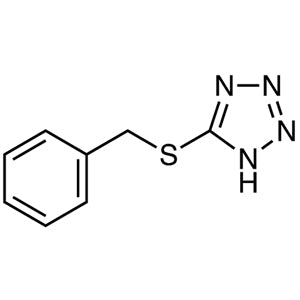
5-(Benzylthio)-1H-tetrazole TCI B3020
Regular price Rp 3.817.800,00Regular price -
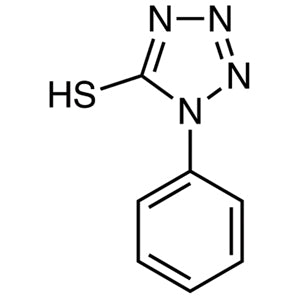
5-Mercapto-1-phenyl-1H-tetrazole TCI P0640
Regular price From Rp 875.700,00Regular price -
5-Amino-1H-tetrazole TCI A0427
Regular price From Rp 1.776.600,00Regular price -
1H-Tetrazole-5-aceticAcid TCI T2737
Regular price From Rp 5.619.600,00Regular price -
5-(p-Tolyl)-1H-tetrazole TCI T2486
Regular price From Rp 1.538.250,00Regular price -
5-(4-Bromophenyl)-1H-tetrazole TCI B5308
Regular price From Rp 2.411.850,00Regular price -
5-Benzyl-1H-tetrazole TCI B3086
Regular price Rp 1.961.400,00Regular price -
5-(4-Methoxyphenyl)-1H-tetrazole TCI M3820
Regular price From Rp 2.386.650,00Regular price